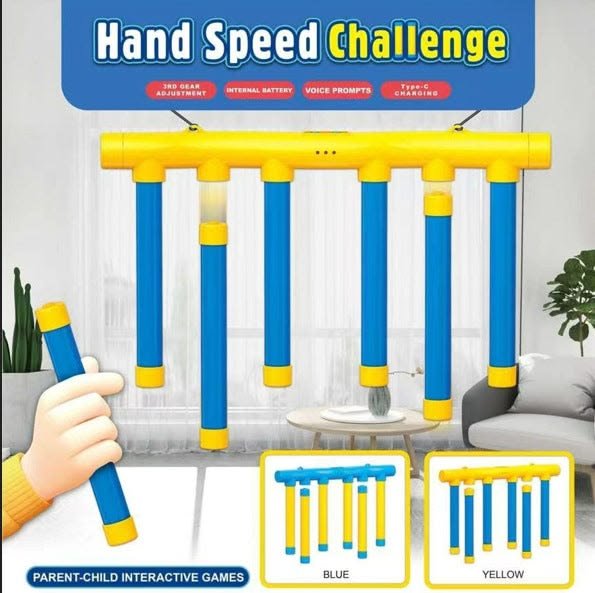
You have probably seen it at a family gathering, a university hostel, or a school break: two people face each other, hands hovering, and one tries to tap or slap the other’s hand before it moves away. People laugh, groan, and ask for another round. If you want to know how a hand speed challenge game in Pakistan works, what versions people play, and how to get better without hurting yourself, this guide covers all of it in plain language.
Nexora Mart is your trusted destination for Online Shopping in Pakistan, offering quality toys, home appliances, energy-saving fans, and everyday products at competitive prices.
What Is a Hand Speed Challenge Game?
A hand speed challenge game is any game that tests how quickly your hands react to a signal. The signal can be a sound, a movement, a light, or the action of another player. The goal is simple: respond faster than your opponent, or complete a task faster than your own previous best.
The direct answer to what people usually mean in Pakistan is this: it is a quick, friendly reaction contest played between two or more people, usually with no equipment. Some versions use a coin, a ruler, a pen, or a deck of cards. Others are digital, played on a phone with tapping or swiping tests. All of them measure the same thing, which is how fast your eyes, brain, and hand work together.
Why These Games Are So Popular in Pakistan
Part of the appeal is that you need almost nothing to start. Pakistan has a strong culture of informal games played in courtyards, rooftops, school corridors, and tea-time gatherings. A game that needs only two pairs of hands fits that culture perfectly.
Another reason is the social side. Hand speed games create instant rivalry in a harmless way. Cousins challenge each other, classmates keep scores, and friends record short videos to share. Mobile phones have also made reaction games easy to reach. Many people now play tapping and reflex games during commutes or load-shedding hours, when they want a short distraction.
Common Types of Hand Speed Games You Can Try
Slap-Style Reaction Games
In this classic version, one player holds their palms out flat, and the other places their hands underneath. The top player tries to tap the back of the bottom player’s hands before they pull away. Players then swap roles. It is quick and funny, but it is also the version where people most often get hurt, so it needs rules, which I explain below.
Catch the Ruler or Pen
One person holds a ruler or pen vertically and drops it without warning. The other tries to catch it as soon as it moves. Where you catch it on the ruler shows how fast you reacted: a catch lower down means a slower reaction. This version is safe, needs no contact, and works well for beginners and children.
Card and Coin Games
Many groups play with a deck of cards. When a matching card appears, everyone races to put a hand on the pile first. Coin games work in a similar way, with players grabbing a coin from the table when someone gives a signal. These games reward attention as much as speed, because grabbing too early counts as a mistake.
Phone and Screen Challenges
Digital hand speed tests ask you to tap a button when it changes color, tap targets as they appear, or tap as many times as you can in ten seconds. These are useful for tracking your own progress because the app records your results. Keep in mind that scores vary by device, screen quality, and even how warm your fingers are, so compare your own results over time rather than chasing other people’s numbers.
How to Play a Simple Hand Speed Challenge Step by Step
The easiest way to start is the ruler drop, because it is fair and safe. Sit across from a friend with a table or chair arm available. Your friend holds a 30 centimeter ruler at the top, letting it hang straight down. You place your thumb and finger around the bottom end without touching it. Your friend lets go at a random moment, and you catch it as fast as you can.
Play five rounds each and compare where you caught the ruler. The point is not to prove who is the best forever. The point is to notice how your reaction changes with focus, tiredness, and practice. If your friend always drops the ruler after a clear countdown, you will react to the countdown rather than the drop, so ask them to vary the timing.
For a group game, try the card version. Shuffle the deck, place one card at a time in the center, and agree on one trigger, such as two cards of the same number. First hand on the pile wins that round. Decide beforehand what happens when two players touch at nearly the same time, since that argument comes up in almost every game.
How to Improve Your Hand Speed and Reaction Time
Reaction time depends on several things at once: how quickly your eyes notice a signal, how quickly your brain decides, and how quickly your muscles move. You cannot change your biology completely, but practice does help, and most people see some improvement within a few weeks of regular play.
Start with focus. Many slow reactions come from a wandering mind, not slow hands. Put your phone away, sit comfortably, and look at the place where the signal will appear instead of at your own hand. Keep your hand relaxed and slightly open. A tense, tightly clenched hand actually reacts more slowly because the muscles must relax before they can move.
Next, practice short sessions. Ten minutes of attentive play is better than an hour of tired, careless play. Sleep matters too. Anyone who has played a reflex game at the end of a long night knows how much slower the hands feel. Hydration, regular meals, and a bit of light exercise also support alertness, though no food or habit will transform you overnight.
Shop the hand speed challenge game in Pakistan at Nexora Mart for fun, interactive play and exciting family entertainment.
Finally, train both hands. Most people play only with their dominant hand, but switching hands improves coordination and makes the game more interesting. Simple exercises like squeezing a soft ball, tapping your fingers one by one against your thumb, or shuffling cards can build comfort and control. These are general habits, not medical treatments, and they should never replace advice from a doctor if you have pain or a hand condition.
Safety Rules and Common Mistakes
The biggest mistake in slap-style games is playing too hard. Slapping the back of a hand again and again can cause redness, bruising, and sore wrists. Agree on a light tap as the rule, stop when anyone says stop, and never use force to win. Children should play the ruler or card versions instead.
Another common mistake is ignoring the surroundings. Do not play near sharp furniture, hot tea, or a staircase. People lean, jump back, and pull their hands away quickly, so give yourselves room. Also avoid playing when someone is angry or tired, because a friendly game can turn into an argument fast.
Players also fall into the trap of comparing themselves with online scores. Videos and apps can make results look better than they are, since many use different tests, devices, or edited clips. Treat them as entertainment. Your best measure is your own average over several days.
For anyone with arthritis, wrist pain, a recent injury, or a medical condition affecting the hands, it is wise to ask a doctor before doing fast, repetitive hand movements. Hand speed games are for fun and light practice, not for diagnosing or treating anything.
Hosting a Hand Speed Challenge at Home, School, or a Gathering
A small event can be easy to organize. Choose two or three games, such as the ruler drop, the card pile, and a phone tapping test. Give each game a simple scoring system and keep one person responsible for fairness, so nobody argues about close calls. Keep rounds short so people who are waiting do not lose interest.
In a classroom, a teacher can use the ruler drop to talk about reaction time and attention in a light way. At a family event, mix age groups so younger players get a fair chance against older ones, perhaps by letting children play against each other first and then challenge adults with a small handicap. The best events are the ones where people laugh more than they compete.
Frequently Asked Questions
Is a hand speed challenge game in Pakistan safe for children?
Yes, as long as you choose the right version. The ruler drop and card games are safe and need no contact. Avoid slap-style games for young children, and always have an adult nearby to set the rules.
Can I really improve my hand speed?
Most people can improve with regular, focused practice. Better attention, good sleep, and relaxed hands make the biggest difference. Your natural limit exists, so avoid expecting dramatic results.
What is the best hand speed game for beginners?
The ruler drop is a good starting point. It is easy to understand, needs only a ruler, and gives you a clear sense of your own reaction pattern. Once you feel comfortable, add card games for group fun.
Do I need any equipment to play?
Not really. Two players and a flat surface are enough for most versions. A ruler, a pen, a coin, or a deck of cards adds variety, and a phone helps if you want to track your own results.
Your Next Step
A hand speed challenge game in Pakistan is simple, social, and affordable, and it works for almost any age when played with sensible rules. Focus, relaxed hands, short practice sessions, and safe play matter more than raw power. Tonight, grab a ruler and a friend, play five rounds of the ruler drop, and write down your results. Repeat it in a week and see what changed.