Ottomans are one of the easiest ways to make a living room feel finished. They work as extra seating, a footrest, a coffee table, or even hidden storage. But even though ottomans look simple, a lot of people end up making small mistakes that throw off the whole room.
If you’ve ever bought an ottoman and felt like it “just doesn’t sit right” in your space, you’re not alone. Most of the time, it’s not the ottoman itself it’s how it was chosen or placed.
This guide walks through the most common mistakes people make when decorating with ottomans, so you can avoid them and get a look that actually works.
What Is the Most Common Mistake When Choosing an Ottoman?
The most common mistake is picking an ottoman based on looks alone, without measuring the space first. An ottoman that seems perfectly sized in a shop can feel too big or too small once it’s home.
A good rule of thumb: your ottoman should be around two-thirds the width of your sofa if you’re using it as a coffee table substitute. Anything bigger can crowd the room, and anything much smaller can look lost in front of a large sofa.
Before buying, measure:
- The distance between your sofa and any other furniture
- The height of your sofa seat (your ottoman should sit close to that height)
- The walking space you’ll have left around it
Should the Ottoman Match Your Sofa Exactly?
No and this is where many people go wrong. Matching your ottoman exactly to your sofa’s fabric and colour can make a room feel flat and overly matched, almost like a showroom display rather than a lived-in home.
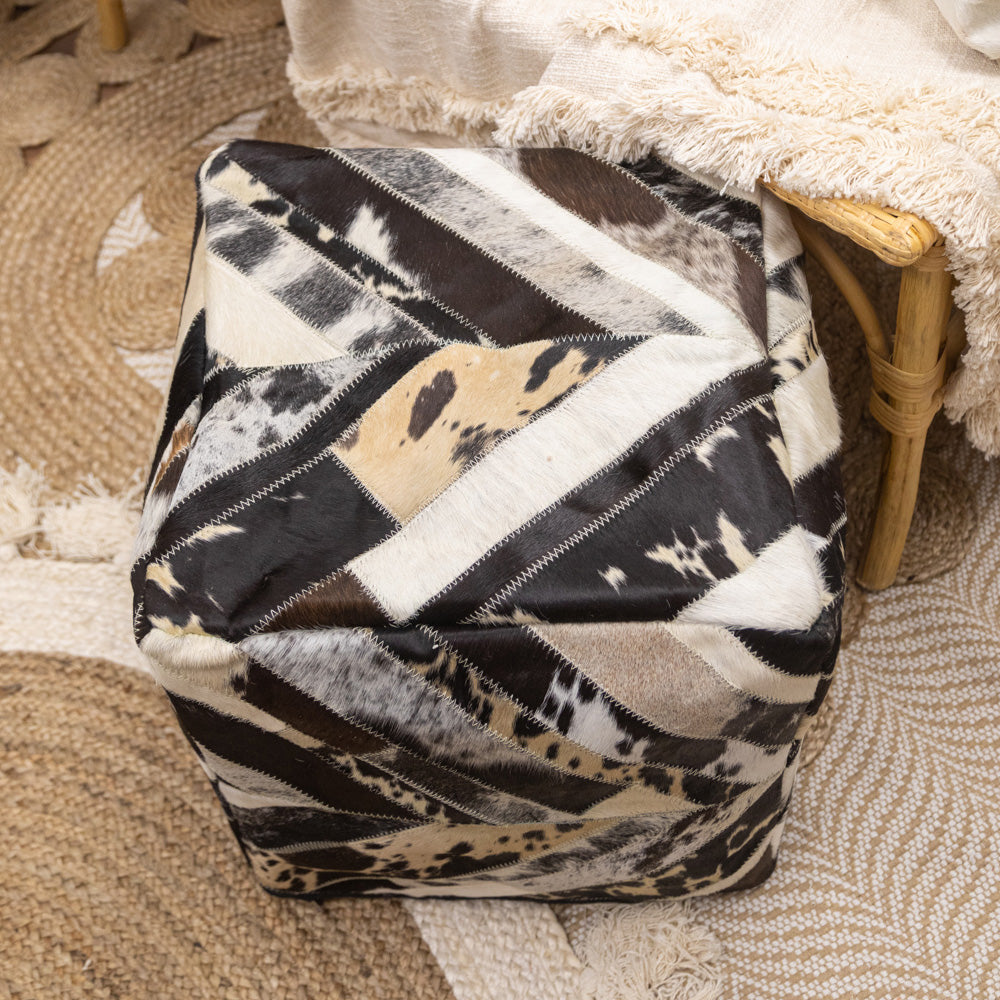
Instead, aim for a piece that complements your existing furniture rather than duplicating it. A Genuine Leather Cowhide Ottoman, for example, brings texture and natural variation that a plain fabric sofa often lacks. The contrast between a soft sofa and a textured leather ottoman actually makes both pieces stand out more, not less.
Is Leather or Fabric Better for an Ottoman?
Both work, but the right choice depends on how you’ll use the ottoman.
- Fabric ottomans are soft and cosy, but they show stains and wear faster, especially with kids, pets, or if it’s used as a footrest daily.
- Leather ottomans, especially a Genuine Leather Cowhide Ottoman, are far more durable, easy to wipe clean, and age well over time instead of looking worn out.
If your ottoman will get regular use as a footrest, extra seat, or even a spot for kids to climb on, leather is usually the more practical long-term choice. It also tends to suit more styles, from modern to rustic, without going out of fashion.
Where Should You Not Place an Ottoman?
It’s an easy mistake to make – putting the ottoman too close to walkways or doorways and then it’s a hazard to trip over rather than something to use.
Ottomans work best when they are:
- Close enough to the sofa to rest your feet on or to set a tray within easy reach
- Away from the high-traffic routes such as the path to the kitchen or hallway
- Not blocking access to drawers, side tables and other furniture
If you have a small living room, try a round ottoman instead of a square one. Round shapes are easier to walk around and reduce the chance of bumped knees.
Can You Use More Than One Ottoman in a Room?
Yes, and it’s actually a great way to add flexible seating but only if it’s planned properly. A mistake many people make is scattering multiple ottomans without any visual connection between them.
If you’re using two or more ottomans:
- Keep them the same height, even if the shapes are different
- Choose materials or colours from the same family (for example, two leather ottomans in different tones)
- Group them close together rather than spreading them across the room, so they read as a set rather than random pieces
Does the Ottoman Need to Match the Room’s Style?
Not exactly match, but it should feel like it belongs. A modern glass-and-metal living room with a very rustic, distressed ottoman can feel disconnected unless there’s some other element tying the two together, like a matching rug or cushion colour.
A Genuine Leather Cowhide Ottoman is a flexible choice here because natural leather works across many styles; modern, industrial, coastal, and traditional homes all tend to suit it well. This makes it a safer choice if you’re not planning to redecorate often.
What’s the Biggest Mistake People Make After Buying an Ottoman?
Not checking how it will be used day to day. Many people choose an ottoman purely for looks and forget to think about function do you need storage inside it? Will it double as extra seating for guests? Will it be used as a footrest often?
Before you finalise a purchase, it helps to ask:
- Do I need storage space inside the ottoman?
- Will it need to hold weight regularly, like being sat on often?
- Does it need to be easy to move around, or will it stay in one spot?
Answering these questions first makes it much easier to pick the right size, shape, and material instead of buying something that looks nice but doesn’t actually suit your lifestyle.
Quick Recap: Ottoman Decorating Mistakes to Avoid
- Buying without measuring the space first
- Matching the ottoman exactly to your sofa
- Choosing fabric over leather for heavy daily use
- Placing it in a walkway or high-traffic area
- Using multiple ottomans that don’t visually connect
- Ignoring how the ottoman needs to function day to day
Getting these details right makes a noticeable difference. A well-chosen ottoman doesn’t just fill space it pulls the whole room together.
Find the Right Ottoman for Your Home
If you’re ready to add an ottoman that’s both practical and built to last, explore the range of ottomans and poufs at Melbourne Leather Co. From versatile leather designs to statement cowhide pieces, you’ll find options that suit almost any living room style.