Introduction
The treatment of EGFR-mutated non-small cell lung cancer (NSCLC) has undergone a remarkable transformation over the past decade. Advances in molecular testing and targeted therapies have shifted the focus from a one-size-fits-all approach to personalised treatment based on the genetic profile of a patient’s tumour.
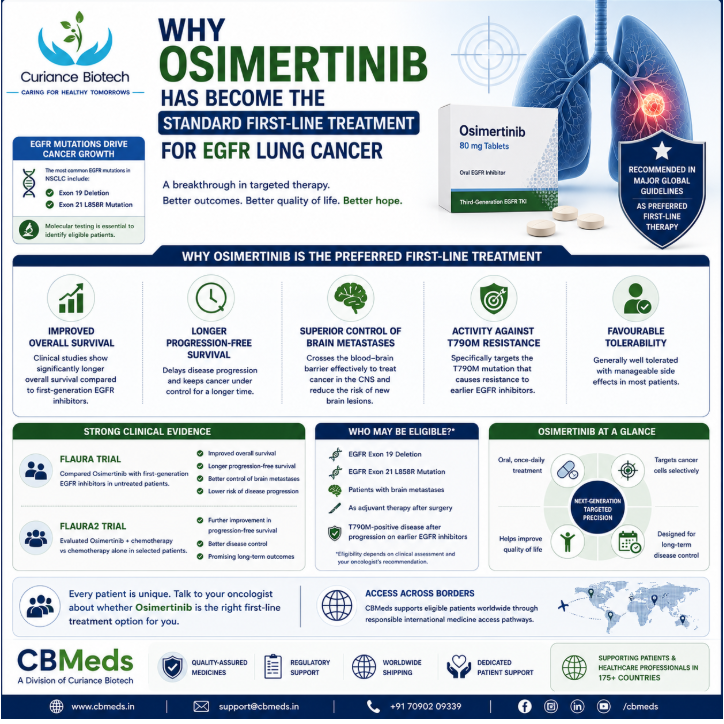
Among these advancements, Osimertinib has emerged as the preferred first-line treatment for many patients with EGFR-mutated NSCLC. Backed by robust clinical evidence and incorporated into major international treatment guidelines, Osimertinib has redefined the standard of care by improving survival outcomes and offering better control of disease, including cancer that has spread to the brain.
At CBMeds, a division of Curiance Biotech, we are committed to educating patients and healthcare professionals about the latest advances in precision oncology and supporting responsible access to quality cancer medicines.
What Is EGFR-Mutated Lung Cancer?
The Epidermal Growth Factor Receptor (EGFR) is a protein involved in cell growth and division. In some patients with NSCLC, mutations in the EGFR gene cause cancer cells to grow uncontrollably.
The most common EGFR mutations include:
- Exon 19 Deletion
- Exon 21 L858R Mutation
Patients with these mutations often respond well to EGFR-targeted therapies, making molecular testing an essential step before treatment begins.
Osimertinib NSCLC First-Line Treatment: A Complete Patient Guide
What Is Osimertinib?
Osimertinib is a third-generation EGFR tyrosine kinase inhibitor (EGFR-TKI) designed to target common activating EGFR mutations while also overcoming certain resistance mutations, including T790M.
Unlike earlier generations of EGFR inhibitors, Osimertinib has been developed to:
- Target EGFR mutations more selectively
- Penetrate the blood-brain barrier effectively
- Delay disease progression
- Improve overall survival
- Reduce the likelihood of central nervous system (CNS) recurrence
These characteristics have made it a cornerstone of modern EGFR-positive lung cancer treatment.
Why Is Osimertinib Preferred as First-Line Therapy?
1. Improved Overall Survival
Clinical studies have shown that patients treated with Osimertinib experience longer overall survival compared with earlier-generation EGFR inhibitors.
Longer survival is one of the key reasons it has become the preferred first-line therapy in many treatment guidelines.
2. Longer Progression-Free Survival
Progression-free survival (PFS) refers to the length of time during which the cancer remains under control without worsening.
Compared with first-generation EGFR inhibitors such as Erlotinib and Gefitinib, Osimertinib has demonstrated significantly longer progression-free survival in eligible patients.
3. Superior Control of Brain Metastases
Brain metastases are common in EGFR-mutated NSCLC.
One of Osimertinib’s greatest strengths is its ability to cross the blood-brain barrier, allowing it to reach and treat cancer cells within the central nervous system.
This provides:
- Better control of existing brain metastases
- Reduced risk of new CNS lesions
- Improved neurological outcomes for many patients
4. Activity Against T790M Resistance
A common reason earlier EGFR inhibitors stop working is the development of the T790M resistance mutation.
Osimertinib was specifically designed to target this mutation, making it effective in patients who develop resistance after earlier EGFR-targeted treatments.
5. Favourable Tolerability
While every medicine has potential side effects, Osimertinib is generally well tolerated in many patients.
Common side effects may include:
- Diarrhoea
- Skin rash
- Dry skin
- Nail changes
- Fatigue
Patients should always discuss any side effects with their oncology team.
The Evidence Behind Osimertinib
The FLAURA Trial
The landmark FLAURA study compared Osimertinib with first-generation EGFR inhibitors in previously untreated patients with EGFR-mutated NSCLC.
The trial demonstrated:
- Improved overall survival
- Longer progression-free survival
- Better control of brain metastases
- Lower risk of disease progression
These results established Osimertinib as a preferred first-line treatment option.
The FLAURA2 Trial
The more recent FLAURA2 study evaluated Osimertinib in combination with platinum-based chemotherapy for selected patients.
The findings suggested:
- Further improvement in progression-free survival
- Better disease control in certain patient groups
- Continued support for personalised treatment strategies
Why Molecular Testing Is Essential
Not every patient with lung cancer will benefit from Osimertinib.
Before starting treatment, oncologists typically perform molecular testing using:
- Tissue biopsy
- Liquid biopsy (circulating tumour DNA)
Testing identifies whether a patient’s tumour carries an EGFR mutation and helps guide the most appropriate treatment.
Who May Be Eligible for Osimertinib?
Depending on clinical assessment and current treatment guidelines, Osimertinib may be considered for patients with:
- EGFR Exon 19 deletion
- EGFR Exon 21 L858R mutation
- Certain patients with brain metastases
- Selected patients following surgery as adjuvant therapy
- Patients with T790M-positive disease after progression on earlier EGFR inhibitors
Treatment decisions should always be individualised and made by the treating oncologist.
Accessing Osimertinib Internationally
Access to Osimertinib varies between countries due to differences in regulatory approvals, reimbursement policies, and local availability.
For eligible patients, regulated pathways such as the Named Patient Medicine framework may facilitate access to prescribed treatment where permitted by law.
How CBMeds Supports Patients Worldwide
CBMeds, a division of Curiance Biotech, supports patients, hospitals, and healthcare professionals by facilitating responsible international access to prescribed oncology medicines.
Our services include:
- Quality-assured medicine sourcing
- Regulatory documentation support
- International logistics
- Worldwide shipping
- Patient assistance
- Support across 175+ countries
We are committed to transparency, quality, and regulatory compliance at every stage of the process.
Frequently Asked Questions
Why is Osimertinib considered first-line treatment?
It has demonstrated improved overall survival, longer progression-free survival, and superior control of brain metastases compared with earlier-generation EGFR inhibitors in eligible patients.
Does every lung cancer patient need Osimertinib?
No. Osimertinib is prescribed only for patients whose tumours have specific EGFR mutations confirmed through molecular testing.
Can Osimertinib treat brain metastases?
Osimertinib has demonstrated strong activity within the central nervous system because it effectively crosses the blood-brain barrier.
Is molecular testing necessary?
Yes. Molecular testing is essential to determine whether a patient is eligible for EGFR-targeted therapy.
Final Thoughts
The introduction of Osimertinib has fundamentally changed the treatment landscape for EGFR-mutated NSCLC.
Its ability to improve survival, delay disease progression, control brain metastases, and address certain resistance mutations has established it as the preferred first-line therapy for many eligible patients around the world.
As precision medicine continues to evolve, molecular testing and personalised treatment planning remain essential for achieving the best possible outcomes.
At CBMeds, a division of Curiance Biotech, we remain dedicated to supporting healthcare professionals and patients through education, responsible medicine access, and quality-focused oncology care.
About CBMeds
CBMeds, a division of Curiance Biotech, facilitates responsible international access to quality-assured oncology medicines. Supporting patients and healthcare professionals in 175+ countries, CBMeds is committed to improving access to prescribed cancer treatments through compliant regulatory pathways and trusted global logistics.
Medical Disclaimer
This article is intended for educational purposes only and should not replace professional medical advice. Always consult your oncologist regarding diagnosis, molecular testing, and treatment decisions.