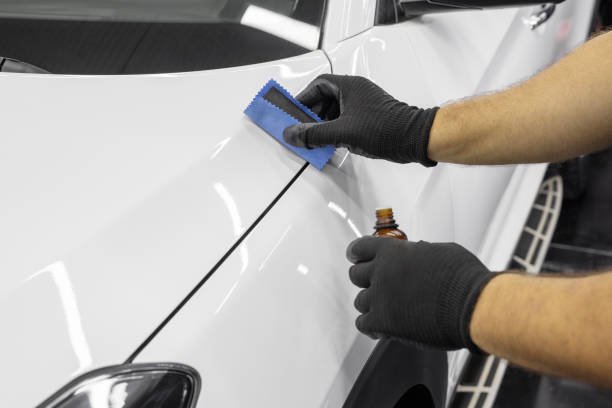
The process of applying a nano-ceramic coating on the car
Your vehicle’s paint endures constant assault from UV rays, bird droppings, tree sap, road salts, and environmental contaminants that gradually degrade its appearance. Many car owners invest thousands in their vehicles only to watch paint fade and dull within a few years of daily exposure. At Guardian Detail Co. , we’ve witnessed how advanced protection technologies transform vehicle preservation, extending that showroom finish for years beyond expectations. Ceramic coating represents the pinnacle of paint protection, creating an invisible shield that repels contaminants and simplifies maintenance dramatically. Understanding this technology helps you make informed decisions about safeguarding your automotive investment.
What Is Ceramic Coating?
The Science Behind the Shield
Ceramic coating is a liquid polymer that chemically bonds with your vehicle’s factory paint, creating a permanent or semi-permanent protective layer. Unlike traditional waxes or sealants that sit on top of paint, ceramic coatings actually become part of the surface. This molecular bonding creates exceptional durability that withstands environmental stress far longer than conventional protection methods.
The primary component in professional-grade ceramic coatings is silicon dioxide (SiO2), derived from quartz or silica. When applied correctly, these nanoparticles fill microscopic pores in your paint’s clear coat, forming a hydrophobic surface that repels water and contaminants. This technology has evolved significantly from early formulations, now offering enhanced hardness, gloss, and longevity.
How It Differs from Traditional Protection
Traditional waxes provide temporary protection lasting weeks to months, requiring frequent reapplication to maintain effectiveness. Sealants offer extended durability but still degrade through washing, weather exposure, and UV radiation. Ceramic coating dramatically outperforms both options, delivering protection that can last several years with proper maintenance.
The hydrophobic properties of ceramic coatings cause water to bead and roll off surfaces, carrying dirt and debris with it. This self-cleaning effect reduces wash frequency and minimizes the risk of scratches from improper washing techniques. The enhanced gloss and depth of reflection distinguish coated vehicles from those protected by conventional products.
The Application Process
Surface Preparation Is Everything
Successful ceramic coating application depends entirely on meticulous surface preparation. Paint must be perfectly clean, decontaminated, and polished before coating application. Any existing defects, swirl marks, or oxidation will become permanently sealed beneath the coating, so correction must occur beforehand.
Professional preparation includes thorough washing, clay bar treatment to remove embedded contaminants, and paint correction to eliminate imperfections. This process typically requires several hours or even days, depending on paint condition. Rushing this phase compromises final results and coating durability.
Professional Application Techniques
Ceramic coating application demands steady hands, appropriate environmental conditions, and precise timing. Technicians apply the liquid polymer in small sections, allowing it to flash or partially cure before leveling with specialized applicators. Temperature, humidity, and lighting all affect application success.
Multiple layers may be applied to achieve desired thickness and performance characteristics. Each layer requires proper curing time before the next application. Professional installers understand these variables and adjust techniques accordingly, ensuring consistent, high-quality results.
Curing and Maintenance Requirements
After application, ceramic coatings require adequate curing time to achieve full hardness and bonding strength. Most formulations cure within 24 to 48 hours, during which the vehicle should remain dry and protected. Full chemical curing may take up to seven days, depending on product specifications.
Initial maintenance involves careful washing with pH-neutral soaps to preserve coating integrity. Avoiding automatic car washes with harsh chemicals and abrasive brushes protects the coating during its vulnerable early stages. Following manufacturer recommendations ensures maximum longevity and performance.
Benefits of Ceramic Coating
Superior Paint Protection
Ceramic coatings provide exceptional resistance to UV damage, preventing oxidation and fading that dulls vehicle appearance. The protective layer blocks harmful rays that break down paint polymers and clear coats. This UV protection preserves color depth and clarity remarkably well over time.
Chemical resistance protects against acidic contaminants like bird droppings, tree sap, and industrial fallout. These substances typically etch paint surfaces quickly, causing permanent damage. Ceramic coatings create a sacrificial barrier that prevents direct contact between contaminants and paint.
Simplified Maintenance
The hydrophobic nature of ceramic coatings dramatically reduces cleaning time and effort. Water sheets off surfaces, carrying dirt and debris with minimal agitation. Light contamination often rinses away with water alone, while stubborn dirt lifts easily with gentle washing.
Reduced cleaning frequency and effort translates to long-term savings in time and money. Owners spend less on washing supplies and professional detailing services while maintaining excellent appearance. The self-cleaning effect particularly benefits daily drivers exposed to varied weather conditions.
Enhanced Appearance
Ceramic coatings create exceptional gloss and depth that enhances your vehicle’s color and metallic characteristics. The optical clarity of properly applied coatings intensifies paint reflections, creating a deep, wet-looking shine that attracts attention. This enhanced appearance persists throughout the coating’s lifespan.
The slick, smooth surface feels noticeably different to the touch, similar to freshly waxed paint but with significantly greater durability. This tactile quality indicates effective protection and contributes to the premium feel of coated vehicles.
Types of Ceramic Coatings
Consumer-Grade Options
Consumer-grade ceramic coatings offer accessible protection at more affordable price points. These formulations typically contain lower SiO2 percentages, providing good protection with moderate durability. Application is possible for experienced DIY enthusiasts with proper preparation and patience.
These products generally last 1 to 3 years with careful maintenance, substantially outperforming traditional waxes and sealants. Kits include applicators, prep solutions, and detailed instructions for home application. Results depend heavily on preparation quality and application technique.
Professional-Grade Formulations
Professional ceramic coatings contain higher SiO2 concentrations, often exceeding 80%, providing superior hardness and longevity. These products require specialized application techniques and controlled environments. Professional installation typically includes comprehensive paint correction and preparation.
Durability ranges from 3 to 7 years or more, depending on the specific product and maintenance. Professional-grade coatings offer enhanced chemical resistance, UV protection, and hydrophobic properties. The investment reflects superior performance and extended protection periods.
Specialty Coatings
Some manufacturers offer coatings designed for specific applications or surfaces. Wheel coatings provide high-temperature resistance and brake dust repellency. Glass coatings improve visibility and water repellency. Trim coatings protect plastic and rubber components from UV degradation.
Interior coatings protect leather, fabric, and vinyl surfaces from staining and wear. These specialized products extend ceramic protection throughout the vehicle, addressing all exposed surfaces. Comprehensive protection strategies incorporate multiple coating types for complete coverage.
Cost Considerations
Initial Investment Analysis
Ceramic coating costs vary significantly based on vehicle size, paint condition, and product selection. Professional installation represents a substantial initial investment compared to traditional waxing or sealing. However, this upfront cost should be evaluated against long-term benefits and savings.
Factors affecting cost include paint correction requirements, coating quality, and installer expertise. Larger vehicles and complex paint colors typically command higher prices. Transparent pricing and detailed service descriptions help owners understand what they’re purchasing.
Long-Term Value Assessment
Ceramic coating eliminates the need for frequent waxing, sealant application, and polishing. Over several years, these savings add up substantially, offsetting initial investment costs. Reduced cleaning time and product purchases contribute to ongoing savings.
Paint protection preserves vehicle appearance and resale value, providing additional financial benefits. Well-maintained paint commands premium prices in private sales and trade-in scenarios. Ceramic coating represents smart long-term financial planning for vehicle owners.
Myths and Misconceptions
Scratch-Proof Misunderstandings
One common misconception is that ceramic coatings make vehicles scratch-proof. While coatings provide exceptional hardness and scratch resistance, they cannot prevent all damage. Severe impacts, careless washing, and abrasive contact can still mar coated surfaces.
Coatings do reduce micro-scratching from regular washing and drying significantly. This reduction helps maintain appearance longer than unprotected paint. Understanding realistic protection expectations helps owners maintain appropriate care practices.
Permanent Misconceptions
Another myth suggests ceramic coatings are permanent, requiring no maintenance. While durable, coatings eventually degrade and require reapplication. Proper maintenance extends coating life significantly but cannot prevent eventual wear.
The semi-permanent nature means coatings can be removed through polishing when desired. This reversibility allows for paint correction and reapplication as needed. Professional guidance helps owners understand realistic life expectancies and maintenance requirements.
Maintenance Best Practices
Proper Washing Techniques
Maintaining ceramic coatings requires appropriate washing methods that preserve coating integrity. Two-bucket washing with grit guards minimizes scratch risks during cleaning. pH-neutral soaps prevent coating degradation and maintain hydrophobic properties.
Avoiding automatic car washes with harsh chemicals and abrasive brushes preserves coating performance. Touchless washing with appropriate products offers safer alternatives. Proper drying techniques prevent water spotting and maintain appearance.
Inspection and Touch-Up
Regular inspection identifies any coating degradation or damage requiring attention. Minor issues can often be addressed with coating maintenance products or light polishing. Professional assessment helps determine when reapplication becomes necessary.
Ceramic coating boosters or toppers extend coating life and enhance hydrophobic properties. These products refresh the coating’s water-repellent characteristics. Following manufacturer recommendations ensures optimal performance and longevity.
Frequently Asked Questions
How long does ceramic coating last?
Professional ceramic coatings typically last 3 to 7 years depending on product quality, application, and maintenance practices.
Can I apply ceramic coating myself?
DIY ceramic coatings are available, but professional application ensures proper preparation, technique, and optimal results.
Will ceramic coating prevent rock chips?
While ceramic coating provides excellent scratch resistance, it cannot prevent rock chips from high-impact debris.
Is ceramic coating worth the cost?
For owners prioritizing paint preservation and reduced maintenance, ceramic coating offers excellent long-term value.
Can ceramic coating be removed?
Yes, ceramic coatings can be removed through professional polishing or compounding when desired.
How soon can I wash my car after coating?
Most coatings require 24 to 48 hours of initial curing, with full chemical curing taking up to 7 days.
Conclusion
Professional Ceramic Coating in Sandy UT provides unmatched paint protection, enhanced appearance, and simplified maintenance for your vehicle. Whether you drive daily or preserve a weekend collector, this advanced protection delivers exceptional value and peace of mind. Trust experts who understand proper application and maintenance for lasting results.