You have chosen the wood, finish, and hardware, and installation day is finally approaching. Still, it can be difficult to know what the appointment will actually look like once the contractor arrives.
Will the entrance stay open for hours? Could the surrounding trim or flooring be affected? What happens if the doorway is not as straightforward as it appears?
These questions are common, especially for homeowners replacing an older entrance for the first time. Knowing what to expect from professional wood door installation can make the experience feel less uncertain and help you approach the project with greater confidence.
Key Takeaways
- Installers confirm measurements, door specifications, and delivery condition before removal.
- Protective coverings help prevent damage to nearby floors, walls, and furnishings.
- The rough opening must be structurally sound before the new frame is secured.
- Shims and fasteners support the frame without causing bowing or twisting.
- Final testing checks clearances, locking, weatherstripping, and overall door operation.
Things to Expect During Professional Wood Door Installation
Confirmation of Door Measurements and Details
A professional wood door installation starts with verifying the rough opening, jamb depth, swing direction, door style, and product labels. Contractors compare these details with the approved order before removing the existing door.
When the unit arrives through a residential freight service, they also examine the packaging, glass, finish, and frame for transit damage. Identifying a sizing problem, a missing component, or a surface defect at this stage prevents the old door from being removed until the replacement is confirmed to be ready.
Protection of the Installation Area
Before wood door installation begins, workers create a safe, organized work zone around the entrance. Cardboard, drop cloths, or protective film may cover floors, walls, trim, and nearby furnishings.
Tools and removed materials are placed where they will not block walkways or damage finished surfaces. This protection is particularly valuable when the project forms part of broader custom home services, since newly installed flooring, decorative trim, and wall finishes may surround the doorway. Pets, children, plants, and fragile objects should remain outside the area.
Removal of the Existing Door
Installers remove the old slab, hinge pins, hardware, casing, and jamb components required for the chosen replacement method. They work carefully around drywall, siding, flooring, and interior trim to limit unnecessary repairs. Once the assembly is out, previously concealed areas become visible, allowing contractors to identify water staining, decayed wood, insect activity, or missing insulation. If addition construction is taking place nearby, door removal should be coordinated with interior and exterior crews so access, materials, and weather exposure do not disrupt the schedule.
Checking of the Rough Opening
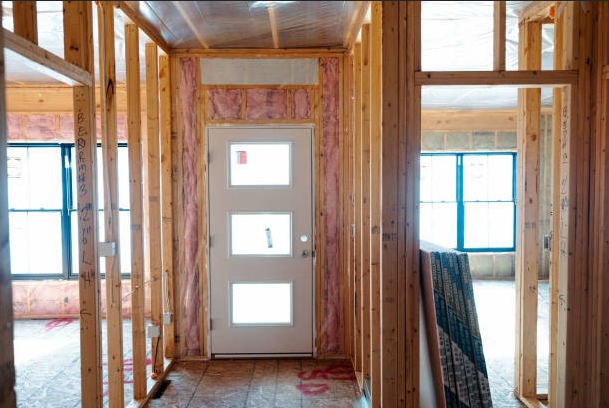
The exposed opening is inspected for structural stability before the new door is fitted. Contractors inspect the sill, studs, sheathing, wall depth, and floor transition for deterioration or movement.
They confirm that the opening provides enough space for the selected unit without forcing the frame into position. Rot, loose framing, or an uneven threshold should be corrected first because covering these defects can shorten the door’s service life. Any repair that changes the price or timeline should be explained before additional work proceeds.
Setting of the Frame and Shims
During wood door installation, the frame is placed inside the prepared opening and supported with shims at key hinge, head, and latch locations. The installer uses these supports to position the jamb accurately while maintaining space for insulation and fastening.
Screws are tightened gradually so the frame remains stable without bowing or twisting. This stage establishes the door’s permanent position and transfers its weight safely into the surrounding framing. Correct support also helps protect hinges and lock components from unnecessary strain during repeated daily use.
Hanging and Testing of the Door
The slab or prehung assembly is secured, then checked through several complete opening, closing, locking, and unlocking cycles. Contractors check the clearances at the top and sides, following the measurements specified by the door manufacturer.
They also confirm threshold contact, weatherstrip compression, hinge security, and strike-plate engagement. The door hardware finish may coordinate with lighting, faucets, or long cabinet pulls, but secure operation remains the priority. Final corrections address scraping, resistance, visible light, or excessive force at the latch.
Conclusion
A professionally installed wood door should feel secure, operate smoothly, and complement the surrounding home. The best results come from careful preparation, accurate positioning, and clear communication whenever unexpected conditions are discovered.
Homeowners should review the finished entrance closely, ask about care requirements, and keep warranty or product information in a safe place. A final walkthrough also provides an opportunity to address small concerns before the installer leaves. When a wood door installation is completed with attention to both function and finish, the new entrance can deliver dependable daily performance and lasting visual appeal.
FAQs
Should homeowners remove the doorbell before installation?
Not always. Tell the installer about wired doorbells, cameras, alarm contacts, or access controls so the appropriate person can disconnect and reconnect them safely.
Can decorative trim from the old door be reused?
Possibly. Reuse depends on the condition, dimensions, and profile, as well as whether removal can be completed without cracking or splitting the material.
Can a new door be locked immediately after installation?
Most doors can be used immediately after final adjustments. Sealants, paint, or stain may require additional curing time based on the product instructions.
Who handles unexpected rot around the frame?
Some installers can complete minor repairs, while more extensive damage may require a carpenter or contractor. The scope and added cost should be approved before work continues.
Is dust expected during installation?
Some dust and small debris are normal, especially when trim or framing must be cut. Protective coverings and cleanup should limit disruption to nearby rooms.
Can the installer adjust an uneven floor beneath the threshold?
Minor differences may be addressed during sill preparation. Significant settlement or structural movement may require separate repairs before the door can be fitted correctly.
Should the old keys be kept after replacement?
Keep them only when locks or hardware will be reused elsewhere. Otherwise, dispose of them securely after confirming the new lock operates correctly.