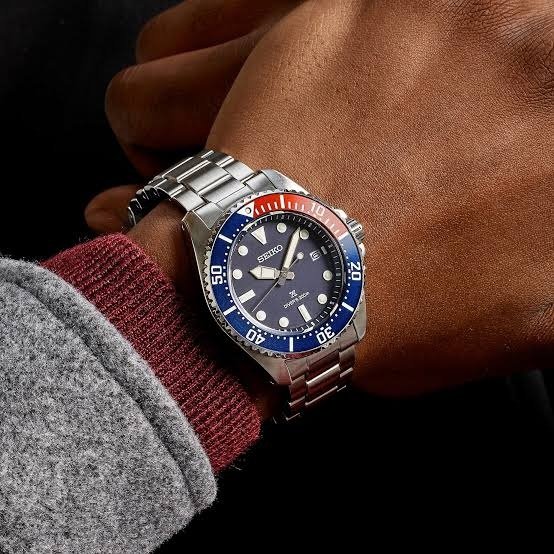
Some watch collections are designed primarily to look good in a display case. Seiko Prospex was never one of them. Seiko’s professional sports and diving line has spent decades being tested in genuinely hostile environments, from the depths of the ocean to the summit of Everest, and that hard-earned reliability is exactly why it has become one of the most respected tool watch collections in the world, worn by professionals and enthusiasts alike.
Born From Real-World Demands
Prospex traces its lineage back to Seiko’s earliest dive watches of the 1960s, a period when the brand set out to prove it could produce diving instruments capable of matching anything coming out of Switzerland. The 1965 62MAS is widely regarded as the origin point of Seiko’s diving watch heritage, a rugged, purpose-built piece that laid the groundwork for everything that followed. From there, Seiko continued pushing boundaries, eventually producing watches capable of professional saturation diving, extreme cold resistance, and depths that few other manufacturers even attempted to certify for.
The Prospex name itself, short for “Professional Specification,” was formally introduced in 1985 to unify Seiko’s various professional sports watches, including diving, mountaineering, and other extreme-environment pieces, under a single recognisable collection. That naming decision mattered, giving Seiko’s toughest watches a clear identity that made them instantly recognisable to buyers who wanted a genuinely capable instrument rather than just a watch that looked rugged.
The Divers That Built the Reputation
Within Prospex, certain divers have taken on near-legendary status among collectors, often earning fan nicknames since Seiko itself has traditionally avoided flashy model naming. The “Turtle,” recognisable by its distinctive cushion-shaped case, pays homage to Seiko’s 1970s diving watches and remains a favourite for its comfortable proportions and old-school charm. The “Samurai,” with its sharper, more angular case design, offers a more modern aesthetic while retaining the same core diving credentials. Both models typically offer 200 metres of water resistance, unidirectional rotating bezels for tracking dive time, and Seiko’s dependable automatic movements.
At the more extreme end sits the Marinemaster and the professional-grade Prospex divers capable of saturation diving, built with helium escape valves to handle the pressure changes divers experience during decompression in saturation diving bells. These aren’t watches designed primarily for wrist appeal; they exist because actual working divers needed equipment that wouldn’t fail hundreds of metres below the surface.
Beyond the Ocean
While diving watches dominate the Prospex conversation, the collection extends well beyond underwater use. Seiko’s Alpinist line, designed originally with mountaineering in mind, offers a more understated aesthetic with an internal compass bezel, a genuinely useful feature for anyone navigating without modern GPS tools. The Prospex Speedtimer chronograph line brings motorsport-inspired design into the collection, while Seiko’s solar and radio-controlled Prospex models cater to buyers who want the rugged design language of a tool watch paired with modern quartz-based convenience and near-zero maintenance.
This range demonstrates something important about Prospex’s identity: it was never only about diving, but about producing watches engineered to perform reliably under whatever specific extreme conditions their intended use demanded, whether that’s ocean depth, mountain altitude, or motorsport environments.
Why Enthusiasts Keep Coming Back
Part of Prospex’s enduring popularity comes from a combination that’s genuinely hard to find elsewhere: legitimate professional-grade durability at a price point most people can actually justify. While flagship saturation dive models can run into the thousands, most of the popular Prospex divers sit comfortably in a mid-range bracket, delivering ISO-certified dive watch performance without requiring a luxury watch budget.
There’s also a design consistency that has aged remarkably well. Many current Prospex models draw direct visual lineage from decades-old references, meaning a modern Prospex diver doesn’t look dramatically different from one worn in the 1970s, not from a lack of innovation, but because the fundamental design solved the problem correctly from early on. That kind of restraint has made Prospex pieces feel timeless rather than trend-driven, an important quality in a tool watch category where gimmicky redesigns tend to age poorly.
A Collection Built on Substance
What ultimately defines Prospex isn’t marketing language about adventure and exploration, though Seiko certainly leans into that narrative. It’s the fact that these watches have genuinely been used in the environments they claim to be built for, by actual divers, mountaineers, and professionals who needed equipment that wouldn’t let them down. That track record, more than any advertising campaign, is why Prospex continues to command such deep respect among watch enthusiasts, and why a collection built primarily for function has become just as beloved for its form.