Introduction
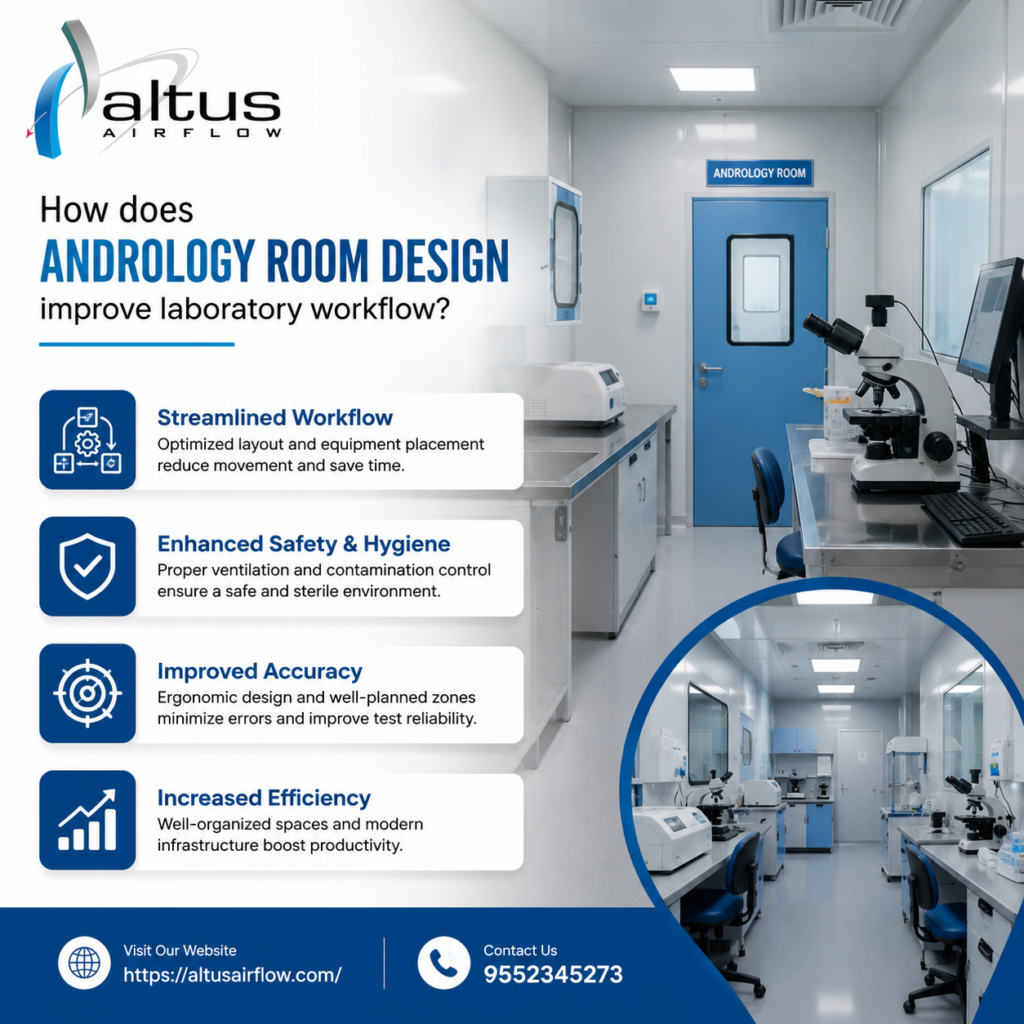
Andrology Room Design plays an important role in creating efficient, organized, and controlled laboratory environments where reproductive sample handling, testing, and analysis can be performed with accuracy. A well-planned andrology room is not limited to providing physical space; it focuses on optimizing workflow, improving staff efficiency, maintaining hygiene, and reducing unnecessary movement within the laboratory.
Modern andrology laboratories require proper planning of workstations, equipment placement, storage areas, ventilation systems, lighting, and contamination control measures. A professionally designed room helps laboratory professionals complete procedures smoothly while maintaining the quality and safety standards required for sensitive reproductive testing.
Importance of Workflow Planning in Andrology Laboratories
Laboratory workflow directly affects productivity, accuracy, and operational efficiency. In an andrology laboratory, multiple activities such as sample collection, preparation, examination, storage, and reporting must be performed in a systematic sequence.
Poorly planned layouts can result in:
- Unnecessary staff movement
- Delays in sample processing
- Increased contamination risks
- Reduced workplace efficiency
- Difficulty in equipment access
A structured design approach ensures that every area supports smooth movement of staff, samples, and equipment.
How Andrology Room Design Supports Better Workflow?
A professional Andrology Room Design focuses on creating an organized environment where each activity has a dedicated space. Proper planning improves coordination between different laboratory sections and helps maintain efficient operations.
Workflow improvements are achieved through:
- Logical space arrangement
- Proper workstation placement
- Efficient equipment positioning
- Organized storage systems
- Controlled movement pathways
These elements allow laboratory professionals to perform procedures with greater accuracy and efficiency.
Optimized Laboratory Layout Planning
One of the most important aspects of laboratory design is creating an optimized layout. The arrangement of different areas should support the natural flow of laboratory activities.
An efficient andrology laboratory may include:
- Sample collection area
- Sample processing section
- Examination workstation
- Microscopy area
- Storage section
- Documentation area
- Utility zones
Proper zoning reduces unnecessary movement and helps prevent cross-contamination between different activities.
Dedicated Workstations for Better Efficiency
Laboratory workstations are essential for performing detailed procedures. Properly designed workstations improve comfort, accessibility, and productivity.
A well-planned workstation includes:
- Adequate working space
- Proper lighting
- Equipment accessibility
- Storage availability
- Ergonomic positioning
This allows technicians to focus on procedures without interruptions caused by poor workspace organization.
Equipment Placement and Accessibility
The placement of laboratory equipment has a direct impact on workflow efficiency. Frequently used equipment should be positioned where it can be easily accessed by laboratory staff.
Proper equipment planning helps:
- Reduce unnecessary movement
- Improve procedure speed
- Maintain organized work areas
- Enhance staff productivity
A professional design considers equipment dimensions, operational requirements, and workflow patterns before finalizing the layout.
Improving Sample Handling Procedures
Sample handling requires careful planning because accuracy and contamination control are essential.
A well-designed laboratory supports:
- Smooth sample movement
- Proper processing sequence
- Secure storage
- Controlled handling areas
By creating separate zones for different activities, the risk of workflow interruptions and procedural errors can be reduced.
Role of Storage Solutions in Laboratory Organization
Storage planning is an important part of efficient laboratory workflow.
Proper storage systems help organize:
- Laboratory supplies
- Testing materials
- Documentation
- Equipment accessories
- Sample-related items
Organized storage reduces clutter and ensures that staff can quickly locate required materials during procedures.
Importance of Ergonomic Design
Ergonomics plays a significant role in improving laboratory productivity. Laboratory professionals often perform detailed tasks that require concentration and precision.
An ergonomic design provides:
- Comfortable working positions
- Reduced physical strain
- Better staff efficiency
- Improved focus
Proper furniture selection, workstation height, and equipment placement contribute to a healthier working environment.
Supporting Hygiene and Contamination Control
Workflow efficiency is closely connected with laboratory hygiene. A well-planned room design helps maintain clean conditions by controlling movement and separating different activities.
Important contamination control features include:
- Smooth wall surfaces
- Easy-to-clean flooring
- Proper ventilation
- Controlled access points
- Organized work zones
These features support safer laboratory operations.
Airflow Management and Laboratory Performance
Air quality is an important factor in reproductive laboratories. Proper ventilation systems help maintain suitable environmental conditions.
A professionally planned Andrology Room Design integrates:
- HVAC systems
- Air filtration
- Temperature control
- Humidity management
- Air circulation planning
Stable environmental conditions improve laboratory comfort and support reliable procedures.
Lighting Design for Better Laboratory Activities
Lighting directly influences visibility and accuracy during laboratory work.
Proper lighting solutions provide:
- Clear visibility
- Reduced eye strain
- Better observation conditions
- Improved workstation performance
Different areas may require different lighting levels depending on their functions.
Integration of Laboratory Furniture
Laboratory furniture is an essential component of workflow optimization.
Well-designed furniture includes:
- Laboratory benches
- Storage cabinets
- Work tables
- Equipment platforms
- Ergonomic seating
Proper furniture placement creates organized work areas and supports efficient daily operations.
Technology Integration in Modern Andrology Rooms
Modern laboratories use advanced technologies to improve workflow and accuracy.
Technology integration may include:
- Digital documentation systems
- Monitoring solutions
- Advanced laboratory equipment
- Data management tools
Proper design ensures that technology systems are easily accessible and properly integrated.
Benefits of Improved Laboratory Workflow
A well-planned andrology room provides several operational advantages.
Increased Productivity
Efficient layouts help laboratory staff complete tasks faster.
Better Accuracy
Organized workflows reduce the possibility of procedural mistakes.
Enhanced Safety
Controlled movement and hygiene planning improve laboratory safety.
Reduced Operational Delays
Proper planning minimizes interruptions and improves coordination.
Better Staff Experience
Comfortable and organized workspaces improve employee efficiency.
Importance of Professional Design Expertise
Creating an effective andrology laboratory requires knowledge of healthcare engineering, laboratory operations, and contamination control.
Professional designers consider:
- Laboratory requirements
- Workflow patterns
- Equipment needs
- Safety standards
- Future expansion possibilities
Expert planning ensures that the final laboratory environment supports both current and future operational needs.
Future-Ready Andrology Laboratory Planning
Modern fertility laboratories continue to adopt advanced technologies and improved workflows. Flexible designs allow laboratories to adapt to changing requirements.
Future-ready planning includes:
- Expandable layouts
- Modular infrastructure
- Efficient utility systems
- Advanced monitoring solutions
This approach helps laboratories remain efficient over the long term.
Choosing the Right Laboratory Design Partner
Selecting an experienced design partner is essential for developing an efficient and reliable andrology laboratory.
A professional provider offers:
- Customized planning
- Engineering expertise
- Quality materials
- Workflow-focused layouts
- Installation support
- Technical guidance
The right expertise helps create laboratories that balance efficiency, safety, and functionality.
Conclusion
Effective Andrology Room Design improves laboratory workflow by creating organized layouts, optimizing equipment placement, supporting contamination control, and improving staff efficiency. From dedicated workstations and storage planning to airflow management and ergonomic solutions, every design element contributes to a more productive and reliable laboratory environment.
With expertise in advanced healthcare infrastructure and laboratory solutions, Altus Airflow develops customized andrology room environments designed for efficient workflow, safety, and operational excellence. Through innovative planning and quality-focused implementation, Altus Airflow helps healthcare facilities create modern laboratories that support accurate and effective reproductive healthcare procedures.
Frequently Asked Questions (FAQs)
1. How does Andrology Room Design improve laboratory workflow?
Andrology Room Design improves laboratory workflow by optimizing layouts, organizing workstations, improving equipment placement, supporting contamination control, and reducing unnecessary movement during laboratory procedures.
2. Why is workflow planning important in an andrology laboratory?
Workflow planning helps improve efficiency, reduce delays, and maintain organized laboratory operations.
3. How does equipment placement affect laboratory productivity?
Proper equipment placement reduces movement, improves accessibility, and allows technicians to complete procedures more efficiently.
4. Does laboratory design include storage planning?
Yes, professional designs include storage solutions for supplies, equipment accessories, and laboratory materials.
5. How does design help control contamination?
Design helps control contamination through zoning, controlled movement pathways, ventilation systems, and easy-to-clean surfaces.
Read Our Previous Blog —————>Can Modular Cardiac OT Manufacturers build hybrid cardiac operation theatres?