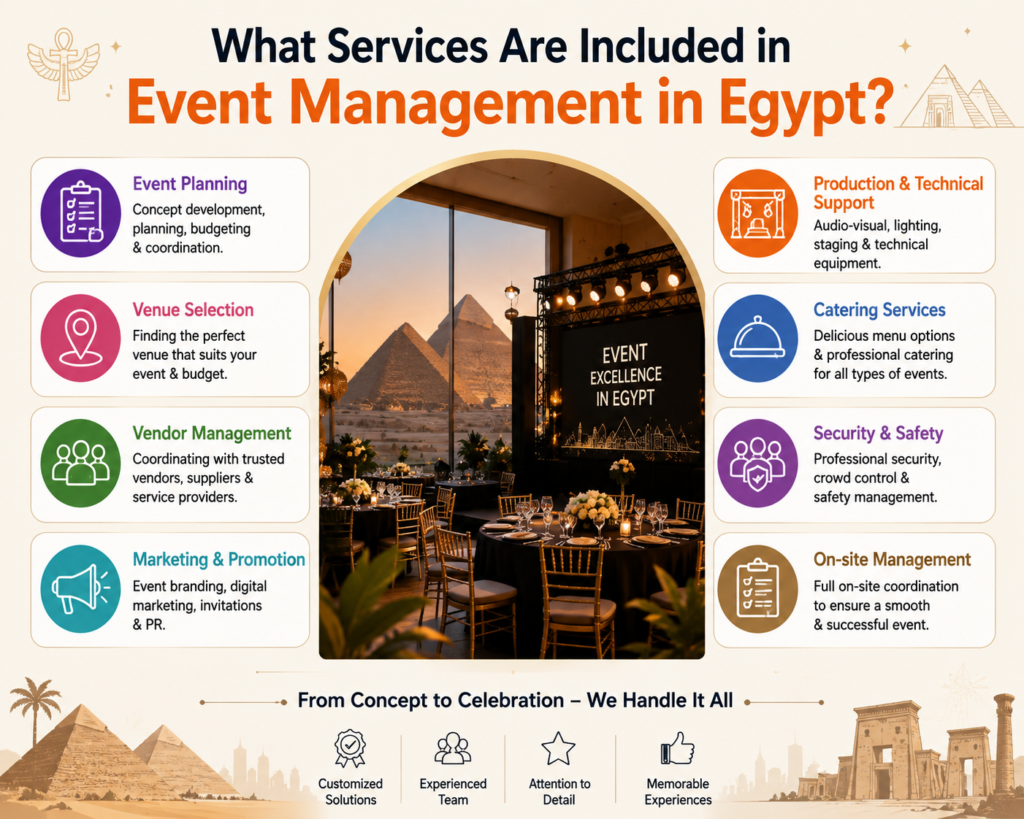
Egypt has become one of the most sought-after destinations for events of every scale — from intimate weddings on the Red Sea coast to massive international conferences in Cairo and Sharm El Sheikh. As the country’s tourism, business, and hospitality sectors continue to grow, the event management industry has expanded to match, offering comprehensive, end-to-end services that take the stress out of planning and execution. Whether you are organizing a corporate summit, a destination wedding, a product launch, or a cultural festival, understanding what a professional event management in Egypt actually provides can help you choose the right partner and get the most value from your investment.
This article breaks down the core services typically included in event management packages across Egypt, explaining what each one covers and why it matters.
1. Event Planning and Conceptualization
At the foundation of every successful event is careful planning. Event management companies in Egypt begin by understanding the client’s vision, goals, budget, and target audience. This phase typically includes:
- Concept development — translating a client’s idea into a cohesive theme, mood, and narrative for the event.
- Budget planning — creating a detailed cost breakdown covering venue, catering, decor, entertainment, and logistics.
- Timeline creation — establishing a project timeline with clear milestones from initial planning to the final wrap-up.
- Vendor sourcing — identifying and negotiating with trusted local suppliers, from florists to audiovisual technicians.
This stage sets the direction for everything that follows, ensuring that all subsequent decisions align with the client’s original vision and financial parameters.
2. Venue Sourcing and Management
Egypt offers an extraordinary range of venues, from five-star hotel ballrooms in Cairo and Alexandria to open-air desert settings near the Pyramids, beachfront resorts in Sharm El Sheikh and Hurghada, and historic sites along the Nile. Event management companies typically assist with:
- Venue scouting and shortlisting based on capacity, location, and budget.
- Site visits and inspections to confirm suitability before booking.
- Contract negotiation with venue owners or hotel management.
- Layout and floor planning, including seating arrangements, stage placement, and guest flow.
Because many premium venues in Egypt require advance booking and specific permits (especially historical or government-owned sites), local expertise here is invaluable.
3. Logistics and On-Site Coordination
Logistics is often the most complex and least visible part of event management, yet it is what determines whether an event runs smoothly. Services usually include:
- Transportation arrangements for guests, speakers, or VIPs, including airport transfers.
- Accommodation booking for out-of-town or international attendees.
- Equipment and supply delivery, ensuring everything from chairs to signage arrives on time.
- On-site event management, with a dedicated team present throughout the event to handle real-time issues, coordinate vendors, and keep the schedule on track.
For international clients unfamiliar with Egyptian customs procedures, import regulations for equipment, or local traffic patterns, this logistical support is often the deciding factor in hiring a professional agency.
4. Catering and Menu Design
Food and beverage service is central to almost every event, and Egyptian event planners typically offer:
- Menu curation blending traditional Egyptian cuisine with international options to suit diverse guest preferences.
- Dietary accommodation for vegetarian, halal, vegan, or allergy-specific requirements.
- Beverage service, including non-alcoholic options that respect local cultural and religious sensitivities.
- Staffing, including waitstaff, bartenders, and kitchen coordination with the venue or an external catering partner.
Given Egypt’s rich culinary heritage, many event companies also offer themed catering experiences, such as traditional Egyptian buffets or Nile-inspired dining setups, to give international guests an authentic taste of the destination.
5. Decor, Styling, and Theming
Visual presentation is a major component of any memorable event, and Egyptian event management firms typically provide:
- Theme design and styling, from minimalist modern setups to elaborate Pharaonic or Arabian Nights themes.
- Floral arrangements and centerpieces sourced from local growers.
- Lighting design, including ambient, structural, and stage lighting.
- Furniture and rental coordination, covering everything from lounge seating to custom-built stages.
- Signage and branding elements for corporate events, including step-and-repeat banners, directional signage, and branded merchandise displays.
Egypt’s unique architectural and cultural backdrop — think ancient temples, desert landscapes, and Mediterranean coastlines — often becomes part of the design itself, and skilled planners know how to integrate these elements tastefully.
6. Audiovisual and Technical Production
For conferences, product launches, and large-scale celebrations, technical production is critical. This service category usually covers:
- Sound systems and microphones tailored to venue acoustics and guest count.
- Lighting and stage design, including LED walls and projection mapping for high-impact visuals.
- Live streaming and hybrid event technology, increasingly important for international conferences with remote attendees.
- Simultaneous interpretation equipment, often necessary for events with Arabic and English (or other language) speakers.
Technical reliability is especially important in Egypt’s outdoor and heritage venues, where planners must account for factors like power supply limitations and weather conditions.
7. Entertainment and Talent Booking
No event feels complete without the right entertainment, and Egyptian event management companies often handle:
- Live performers, including traditional Egyptian musicians, belly dancers, tanoura performers, and modern DJs or bands.
- MC and host booking for corporate and social events.
- Celebrity or influencer appearances, particularly for high-profile brand launches.
- Cultural performances, which are especially popular for destination weddings and international guests seeking an authentic Egyptian experience.
8. Guest Management and Registration
For larger events, particularly conferences and weddings with extensive guest lists, dedicated guest management services are essential:
- Invitation design and distribution, both digital and printed.
- RSVP tracking and guest list management.
- On-site registration and check-in, often supported by badge printing or digital check-in apps.
- VIP handling, ensuring key guests receive personalized attention throughout the event.
9. Security and Permits
Given Egypt’s regulatory environment, particularly for events involving public spaces, historical sites, or large crowds, event management companies frequently coordinate:
- Government permits and approvals, especially for events at archaeological or government-controlled sites.
- Security personnel for crowd control and guest safety.
- Emergency medical support, particularly for large outdoor or multi-day events.
- Insurance coordination to protect against unforeseen incidents.
10. Photography, Videography, and Post-Event Services
Capturing the event and managing its aftermath is often included as a final service layer:
- Professional photography and videography, including drone coverage for large venues or scenic locations.
- Live social media coverage for brand-focused events.
- Post-event reporting, useful for corporate clients needing to measure ROI or share outcomes with stakeholders.
- Vendor payment settlement and wrap-up, ensuring all contracts and invoices are closed out properly.
Choosing the Right Event Management Partner in Egypt
With such a wide array of services available, selecting the right event management company comes down to a few key considerations: their portfolio of past events, familiarity with your specific event type (corporate, wedding, cultural, or exhibition), local vendor relationships, and ability to navigate Egyptian regulations and customs. Many companies offer customizable packages, allowing clients to pick and choose specific services rather than committing to a full-service package — which can be a cost-effective option for smaller or more straightforward events.
Conclusion
Event management in Egypt has evolved into a sophisticated, full-service industry capable of handling everything from initial concept to final cleanup. By bundling planning, logistics, catering, design, technical production, entertainment, and post-event services under one roof, professional event companies allow clients — whether local businesses, international corporations, or couples planning a destination wedding — to focus on enjoying the occasion rather than managing its countless moving parts. Given Egypt’s unique blend of ancient heritage, modern infrastructure, and world-class hospitality, partnering with an experienced local team is often the key to transforming an ambitious vision into a flawless, unforgettable event.