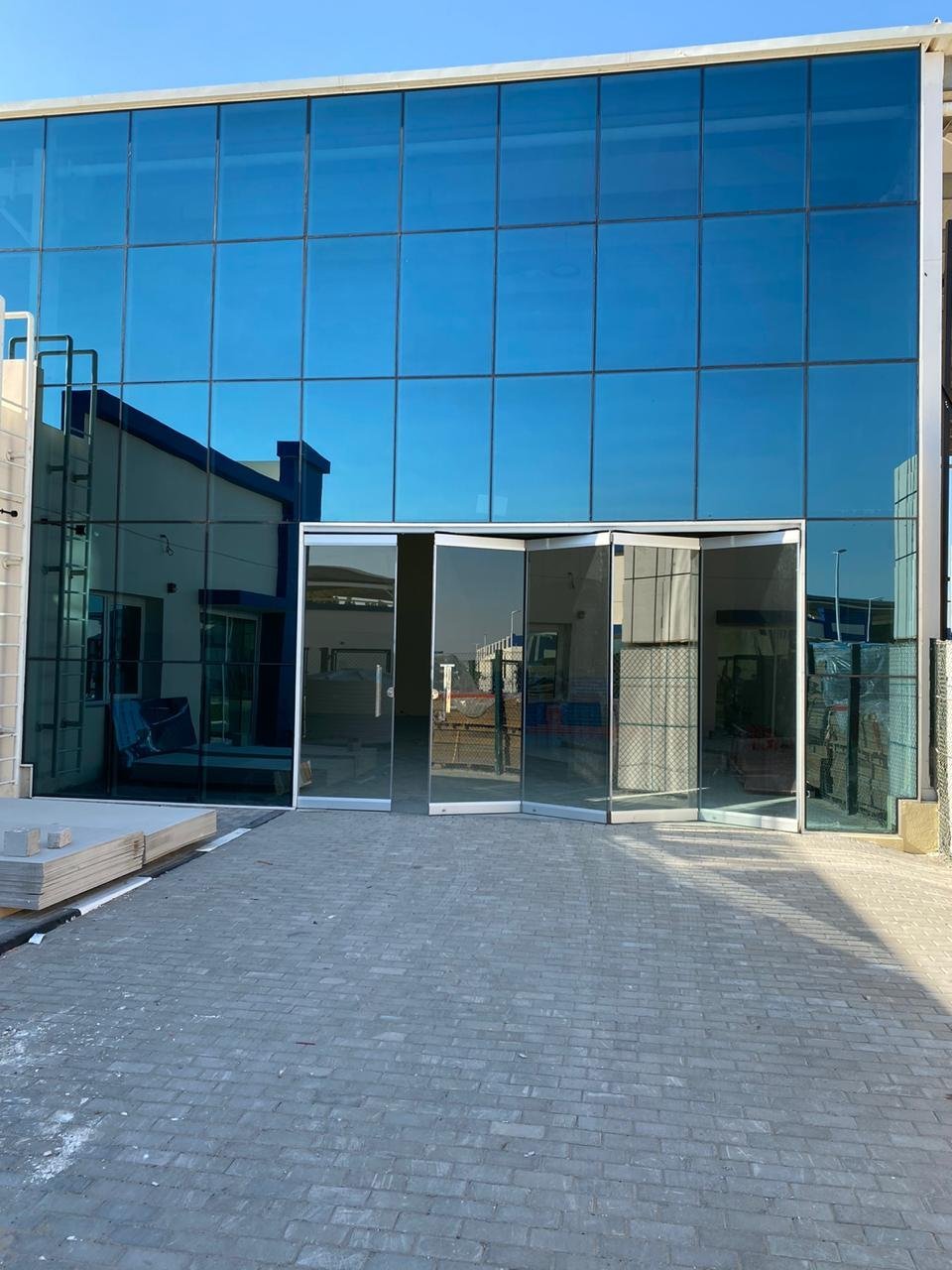
Drive down Sheikh Zayed Road any evening around sunset and you’ll see it: glass towers catching the last light, going gold, then pink, then that deep blue you only get in the desert. It looks effortless. It isn’t. A huge part of what holds that skyline together, literally and visually, is a material most people never think about unless they work with it every day. Aluminum.
We’re Al Basira Aluminum & Glass, and if there’s one question we get asked on repeat, it’s some version of “why aluminum, though?” Usually from a developer comparing quotes, sometimes from a homeowner staring at a kitchen renovation, occasionally from someone who just wants to understand what they’re paying for. Fair question. So let’s actually answer it properly instead of throwing brochure language at you.
This is going to cover the big stuff, the aluminum curtain wall systems you see on towers across Dubai and Abu Dhabi, and the smaller, quieter versions of the same idea: an aluminum kitchen cabinet that won’t warp in a humid kitchen, aluminum doors windows that don’t rot at the frame, a glass partition Dubai offices use to carve up open-plan space, and the glass room trend that’s popping up on rooftops and gardens across the Emirates.
Let’s Talk About the Heat First, Because You Can’t Not
Anyone who’s lived here for even one summer knows the drill. June through September, temperatures sit north of 45°C, and building surfaces baking in direct sun get hotter still. Most materials start to complain under that kind of punishment. Timber cracks or swells. Some metals corrode faster than you’d expect once the humid Gulf air gets into the mix. Cheaper composites fade and go brittle.
Aluminum, honestly, just shrugs it off. It doesn’t rust the way steel does near the coast, which matters more than people realize if you’re building in Dubai Marina, JBR, or anywhere close to the water. It also handles thermal expansion better than a lot of alternatives, so you don’t get that slow, ugly warping over a few years of brutal summers followed by icy interiors.
And it’s light. Genuinely, meaningfully lighter than steel. For a country that’s still building up, not out, that’s not a footnote. Less weight on the structural frame means faster builds, lower structural costs, and frankly, safer buildings over the long run. An aluminum curtain wall isn’t just a good-looking skin on a tower, it’s doing real structural math for the engineers behind it.
Energy Bills Don’t Lie
Here’s a thing nobody tells you until you’re staring at your first summer DEWA bill: cooling is expensive, and a huge chunk of that cost comes down to how well your building envelope keeps heat where it belongs, outside. Dubai’s green building codes have caught up to this reality, and honestly, so have most people’s wallets.
Good aluminum curtain wall systems use thermal breaks, essentially a strip of insulating material built into the aluminum profile that stops heat from just marching straight through the metal. Pair that with double or even triple glazed glass, and you’re looking at a facade that genuinely earns its keep every single month, not just on the day it’s installed.
We see this same conversation happen at a much smaller scale too. Someone comes in asking about aluminum doors windows for a villa, and within five minutes we’re talking about their AC bill, not the frame color. That’s usually the moment people realize window frames aren’t just a finishing touch, they’re a running cost.
Light Doesn’t Mean Weak
There’s this assumption we run into a lot, that if something’s lightweight, it must be flimsy. With aluminum, that’s just not how it works. Engineered properly, aluminum profiles carry serious glass loads, hold up against wind pressure on a 60-storey tower, and shrug off the occasional sandstorm without needing babysitting.
That strength-to-weight balance is exactly why aluminum curtain wall systems became the default across the region’s skyline, and honestly, the same logic scales down beautifully. A glass partition Dubai company installs in a corporate office relies on that same principle: slim aluminum framing that doesn’t chew up floor space but still holds tempered glass rock solid.
It’s Not Just Skyscraper Talk
Say “curtain wall” and people picture a 40-storey office block. Understandable, that’s where the technology made its name. But we’ve watched the same thinking quietly show up in homes and interiors all over the UAE, just wearing a different outfit.
Take the aluminum kitchen cabinet. Wooden cabinetry has a rough time in this climate, steam from cooking, humidity, the occasional splash, all of it adds up to swelling, warping, cabinets that stop closing properly after a couple of years. Aluminum doesn’t have that weakness. No swelling, no termites (a real problem in some of the older buildings here, more than people admit), and the finish holds up for years with barely any effort on your part. It’s also just easier to wipe down, which matters when Dubai dust finds its way into everything anyway.
Then there’s the glass room Dubai homeowners keep asking us about lately, enclosed balconies, garden pavilions, that indoor-outdoor lounge everyone seems to want now. Same principle underneath: strong, corrosion-resistant aluminum framing holding glass panels in place, slim enough that it doesn’t block your view, sturdy enough that it doesn’t need replacing in five years. A well-built glass room means you actually get to use that outdoor space instead of admiring it from behind a window with the AC on.
Dubai Likes to Look Good, and Aluminum Cooperates
Let’s be honest, this city doesn’t do understated. Developers want facades that turn heads, and homeowners increasingly want interiors that feel current rather than something out of 2009. Aluminum happens to be one of the more flexible materials out there when it comes to finish and style.
Powder-coated in almost any color you want. Anodized for that clean metallic look. Even finished to mimic wood grain if you want warmth without the maintenance headache. Profiles can go razor-slim for a minimalist glass facade or a bit chunkier for something more traditional. That range is a big reason aluminum doors windows have become the default from villas in Arabian Ranches to office units in Business Bay. The material just adapts to whatever the project needs without asking you to compromise on how it performs.
Nobody Wants to Deal With Maintenance Every Year
Talk to any facilities manager in this city and maintenance will come up early, usually with a sigh. Materials that need constant repainting, resealing, or replacing cost real money over a building’s life, not just at handover.
An aluminum curtain wall, put in properly with decent sealants and hardware, needs very little from you afterward. No rust, no rot, no repainting cycle every few years. Same story with an aluminum kitchen cabinet or a set of aluminum doors windows, wipe them down occasionally and that’s about it. In a market where labour isn’t cheap and time is money, that lower lifetime cost isn’t a marketing line, it’s just arithmetic.
Why Local Know-How Actually Matters Here
Something worth saying plainly: aluminum and glass systems don’t perform identically everywhere. What works in a cooler, drier climate isn’t automatically right for the UAE. Profile design, glass specification, sealant type, thermal break quality, all of it needs to be matched against extreme heat, coastal humidity, dust, and the occasional sandstorm that rolls through and tests everything at once.
This is really where experience on the ground makes the difference. At Al Basira Aluminum & Glass, every project starts with the same blunt question: how does this actually hold up here, on a real UAE building, ten or fifteen years from now, not in a catalogue photo. Whether that’s a full aluminum curtain wall on a tower, a glass partition Dubai office needs for a new fit-out, a custom aluminum kitchen cabinet, or a private glass room on someone’s rooftop.
The Short Version
An aluminum curtain wall isn’t a trend borrowed from an architecture magazine. In the UAE, it’s a practical answer to a genuinely harsh climate, rising energy costs, and a design culture that expects buildings to perform as well as they photograph. The same reasoning that puts aluminum on a 50-storey facade is what’s nudging homeowners toward an aluminum kitchen cabinet over wood, pushing businesses toward a glass partition Dubai offices can count on for years, and convincing families a glass room is worth the investment.
If you’re planning something, whether that’s a full commercial facade or just a set of aluminum doors windows for a villa you’re renovating, it’s worth talking to people who work with these materials in this exact climate, every day. That’s a conversation we’re always up for at Al Basira Aluminum & Glass.
Frequently Asked Questions
1. What actually makes an aluminum curtain wall different from a normal glass facade?
A curtain wall hangs off the building’s structural frame rather than bearing weight itself. The aluminum framing holds the glass in place while allowing for thermal breaks, drainage, and weatherproofing that a basic glass facade usually skips.
2. Is aluminum genuinely better than uPVC or timber for this climate?
For most commercial work and a lot of residential projects, yes. It resists UV damage, doesn’t warp under heat like timber can, and generally outperforms uPVC on strength for larger openings and taller buildings. uPVC still has its place for budget-conscious residential jobs, worth saying that too.
3. Will an aluminum kitchen cabinet actually survive Dubai’s humidity and heat near a stove?
Yes. Unlike wood, it doesn’t absorb moisture or swell from steam and heat, which makes it a solid, low-fuss choice for kitchens, especially in apartments where ventilation isn’t always great.
4. Are glass partitions in Dubai offices actually soundproof?
Depends what you install. Standard single-pane partitions give you basic noise reduction. Acoustic-rated laminated or double-glazed options cut sound transfer significantly, worth discussing upfront if privacy between meeting rooms is a priority for you.
5. How long does an aluminum curtain wall usually last here?
With decent installation and materials, you’re looking at 25 to 30 years, sometimes more, with just occasional resealing and hardware checks rather than major repair work.
6. Can a glass room actually be comfortable outdoors in Dubai for most of the year?
Yes, if you pair it with the right glazing, tinted or low-E glass especially. It won’t replace air conditioning in August, but it stays genuinely usable for a good stretch of the year, which is more than you can say for an open patio.
7. Do aluminum doors and windows need extra care in coastal areas like Dubai Marina or JBR?
Salt air can wear down cheap frames faster, no question. But good-quality aluminum doors windows with proper coatings hold up fine with regular cleaning, nothing beyond that is really needed.