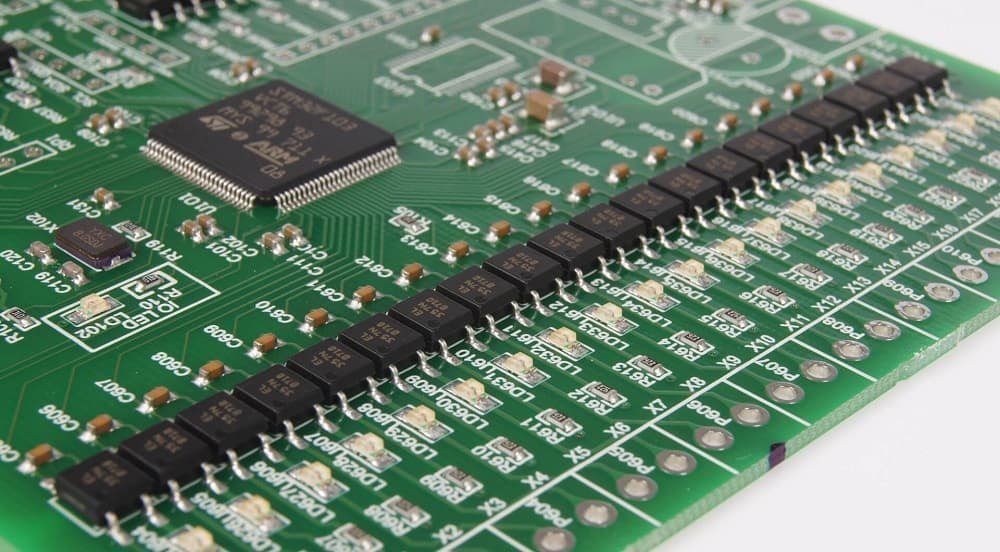
Printed circuit boards are the heart of almost all kinds of devices, whether they are cell phones, computers, factory machines, or medical devices. However, while the focus of many people lies on the copper traces and electronic parts, one should never underestimate the value of the material that supports the whole circuit board. The glass fiber has now become a vital material for the manufacture of printed circuit boards due to the properties it offers. When used with epoxy resins, glass fiber enables printed circuit boards to withstand harsh operating conditions. Therefore, knowing about the necessity of the glass fiber material helps in manufacturing robust printed circuit boards.
Exceptional Mechanical Strength and Durability
Mechanical strength is one of the main properties of glass fiber, which makes it so commonly used for producing printed circuit boards. PCBs undergo a lot of manipulations during manufacturing and operation stages, hence requiring high mechanical strength. Glass fiber makes the board stronger without adding extra weight to it. This way, fragile components of electronic devices are protected from damage due to vibrations. With further miniaturization of electronics, glass fiber allows the production of lightweight boards that would be durable throughout the product life cycle.
Superior Electrical Insulation Properties
Glass fiber serves a very important function to provide perfect electrical insulation in printed circuit boards. Being a carrier of electric signals via copper paths, there must be no undesired flow of electricity in these boards. Glass fiber itself is a non-conductive material, which makes it a perfect reinforcement for PCB laminates. Its combination with epoxy resin provides an electric insulator substrate to reduce electrical leakage and prevent short circuit problems. The dielectric strength makes this possible, resulting in high-speed data transmission and perfect electrical performance in various electronic products like consumer goods, telecommunications systems, automobiles, and industry.
Outstanding Thermal Stability for Reliable Performance
The modern electronic gadgets produce substantial heat energy while being operated, and thermal stability becomes an important consideration during PCB production. The glass fiber is highly resistant to temperature changes, but does not change its physical structure at high temperatures. Thus, the circuit board can maintain its properties under any circumstances because there will be no expansion, contraction, or bending of the product, which may ruin the electrical connections. The glass fiber reinforced laminates are stable enough to withstand the heat of the soldering process. When the industry needs highly productive electronic devices in automotive, aerospace, or other industries, the thermal resistance provided by glass fiber becomes crucial.
Dimensional Stability for Precision Manufacturing
Tolerance is one of the critical requirements in the manufacturing of printed circuit boards because small tolerance errors may influence the positioning of the parts on the board as well as its functionality. Glass fiber is able to provide tolerance stability due to the low levels of expansion and shrinkage caused by temperature and water presence. In addition, glass fiber can retain precise dimensions during the whole manufacturing process, including drilling, etching, lamination, and mounting processes. Precise dimensions help to achieve proper alignment of multilayered boards, ensure electrical connectivity, and improve manufacturing efficiency. As the components become smaller and more densely packed, the tolerance stability of glass fiber becomes especially important.
Resistance to Moisture and Environmental Factors
Electronic components usually function in an environment characterized by humidity, thermal variations, and exposure to chemicals that can affect their functionality. Glass fiber increases the environmental resistance of printed circuit boards by limiting moisture absorption and ensuring durability under such adverse conditions. Limited moisture absorption keeps electrical insulation from degradation while preventing corrosion and delamination. Additionally, glass fiber protects printed circuit boards from several chemicals encountered during the production and usage process. Such characteristics ensure the increased longevity of PCBs that are utilized in automobiles, medical devices, renewable energy generation, telecommunications, and outdoor electronic devices.
Supporting Advanced PCB Technologies and Future Innovations
To cope with increasing requirements, electronics are expected to use PCB materials that can support higher speeds and greater complexity. Glass fibers offer such aspects as mechanical strength, thermal stability, electrical insulation, and reliability. The use of glass fibers makes it possible to create multilayer PCBs, HDI boards, flexible-rigid boards, and others. With the help of advanced technologies, the use of glass fibers allows for the creation of different circuit designs for diverse applications, including electric cars, 5G communication, artificial intelligence, IoT, and others.
The Last Words
The use of glass fiber for printed circuit boards is crucial when it comes to proper, high-end manufacturing. This material can ensure the required level of strength, insulation, thermal resistance, and dimensional stability. Due to this, glass fibers are widely utilized in the manufacturing of modern electronic devices to enhance their reliability and durability. To meet new requirements, the role of glass fibers becomes even more essential.