Packaging design influences much more than how a product looks on a shelf. Every decision, from dimensions and materials to closures and finishing, affects how many resources a package consumes. When you approach design with material efficiency in mind, you reduce unnecessary waste while maintaining protection, functionality, and visual appeal.
Waste reduction starts before manufacturing. A package that uses excessive board, includes unnecessary components, or leaves large amounts of unused space already creates an efficiency problem at the design stage. Thoughtful packaging design addresses these issues before materials enter production.
For businesses developing custom packaging boxes, this approach provides an opportunity to create structures around actual product requirements rather than adding material simply for extra protection or appearance. A well-planned package uses resources with purpose.
Start With the Right Package Size
Oversized packaging often creates avoidable material use. When a product sits inside a package with excessive space, additional inserts, fillers, or protective layers may become necessary to prevent movement.
Right-sizing provides a practical solution. Start by evaluating the product’s dimensions, weight, shape, fragility, and handling requirements. Use these characteristics to determine how much structural support the package actually requires. A properly sized box may reduce the need for additional protective components while making storage and transportation more efficient.
This does not mean making every package as small as possible. A package still needs enough space to protect its contents and support a positive customer experience.
The objective is simple: use enough material to perform the required function without creating unnecessary excess.
Simplify the Packaging Structure
Complexity does not always equal better packaging. Multiple inserts, layers, wraps, sleeves, and decorative components may increase material consumption without providing meaningful functional value.
Review each component during the design process. Ask what purpose it serves and whether another structural element can perform the same job.
A simpler construction may combine several functions within a single component. For example, a properly engineered carton may provide product protection, branding space, and structural stability without requiring several additional layers.
This principle becomes particularly useful when developing custom packaging boxes. Customization allows you to adapt the structure to a product instead of relying on a standard format that may require fillers or additional protective material.
A simpler package also makes material selection and end-of-life considerations easier to manage.
Optimize the Dieline Before Production
Material efficiency depends heavily on how packaging components fit onto a production sheet. Poorly planned dielines may leave large areas of unused material between cuts.
An efficient dieline places component strategically to make better use of available board or substrate. Designers can examine cut lines, folding points, panel dimensions, and production requirements together rather than treating structural design as a purely visual exercise.
This is where packaging design and manufacturing knowledge work together.
A package may look excellent in a digital mock-up, yet its production layout may create avoidable offcuts. Reviewing the dieline early helps identify those issues before production begins.
When several products share similar structural requirements, coordinated dimensions may also support more efficient material planning. Small structural adjustments across a packaging range may create meaningful improvements in resource use.
Choose Materials According to Function
Material selection is another important part of waste reduction. The lightest or thinnest material is not automatically the most appropriate choice. A material needs to provide the required strength, protection, printability, and performance for its intended application.
Start with function rather than appearance. Consider how the package moves through manufacturing, transportation, storage, retail environments, and consumer use. From there, determine which material characteristics matter most.
Recycled-content substrates, fiber-based materials, recyclable structures, and other material options may support different sustainability objectives depending on the application and available recovery systems.
Packaging design also needs to account for material combinations. Multiple substrates, coatings, laminations, adhesives, and decorative layers may affect how easily a package enters an appropriate recovery stream.
For this reason, discussions with experienced label manufacturers should include more than artwork and printing. Label substrate, adhesive, coatings, and finishing choices form part of the overall packaging system and deserve consideration alongside the primary package.
Treat Labels as Part of the Design
Labels may represent a relatively small portion of a package, yet their design still affects total material use.
Start by identifying the label’s actual purpose. Does it communicate product information, provide regulatory details, support identification, strengthen branding, or serve a functional purpose? Once those requirements are clear, you can determine an appropriate label size and construction.
Oversized labels may use more substrate than necessary, while unnecessary finishing can add further material layers.
Working closely with label manufacturers helps you evaluate how substrate choices, adhesive systems, printing methods, and finishing treatments interact with the primary packaging.
A well-designed label communicates essential information without creating unnecessary material complexity.
Reduce Unnecessary Decorative Elements
Packaging often relies on finishes to create distinction. Foil, embossing, coatings, specialty papers, windows, and other treatments may enhance the customer experience, yet each addition deserves a clear purpose.
Material reduction does not mean removing every decorative feature. It means choosing finishes intentionally.
Instead of combining several effects, select the treatments that contribute most to the package’s visual or tactile identity. Strong typography, thoughtful structural design, high-quality printing, and carefully selected materials may create a premium appearance without excessive decoration.
For custom packaging boxes, this approach creates room for creativity without automatically increasing material consumption. A distinctive structure can become part of the visual identity, allowing design to do more work without adding multiple decorative components.
Consider the Package After Use
Material efficiency extends beyond manufacturing. Packaging design also influences what happens after consumers finish using the product.
A package may use relatively little material yet contain several components that make separation or recovery difficult. Designers therefore need to consider how materials work together and whether unnecessary combinations can be avoided.
Where practical, simpler material systems may make disposal and recovery more straightforward. Clear disposal information can also help consumers understand how to handle different components.
This approach connects material reduction with responsible end-of-life planning.
For label manufacturers, this also means considering how labels interact with the package after use. Adhesives, substrates, coatings, and label placement may influence the overall material system.
Protect the Product Without Adding Excess
Material reduction should never compromise product protection. A damaged product creates its own form of waste, which makes structural performance an essential part of sustainable packaging design. The objective is to identify where protection matters most and place material strategically around those areas.
Fragile sections may require reinforcement, while other areas may not need the same level of support. Internal structures can also be designed around the product’s shape rather than filling unused space with additional material.
This is another reason custom packaging boxes offer useful design flexibility. A package created around specific product dimensions may achieve a better balance between protection and material efficiency than a generic format.
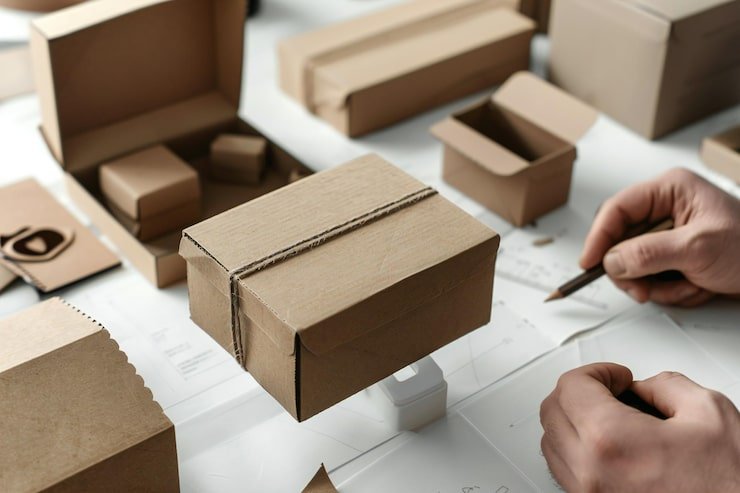
Testing plays an important role here. Prototypes help reveal whether a structure performs as intended before large-scale production begins.
Test, Refine, and Remove Excess
A packaging prototype provides an opportunity to identify waste that may not be obvious during the initial design stage.
Examine how the package folds, closes, stacks, protects the product, and behaves during handling. Look for components that serve overlapping purposes. Review areas where material appears excessive.
Ask practical questions:
- Can the structure use fewer components?
- Can space be reduced?
- Can the material thickness be optimized?
- Can the dieline reduce production offcuts?
- Can a decorative treatment be simplified?
- Does the label size match its actual purpose?
- Can different materials be consolidated?
Working through these questions creates a more disciplined packaging development process.
Make Material Efficiency a Design Principle
Reducing packaging waste works best when it becomes part of the initial design conversation rather than a correction made after the package is complete.
Begin by considering product requirements, package dimensions, structural performance, manufacturing efficiency, material selection, labeling, decoration, and end-of-life considerations together.
The strongest packaging solutions do not simply remove material. They use the right amount of the right material in the right places. That mindset allows businesses to balance product protection, brand presentation, manufacturing practicality, and responsible resource use.
Conclusion
When you work with label manufacturers, packaging designers, and production specialists early in development, you gain more opportunities to identify unnecessary materials before they become part of the final package.
Packaging design has the power to prevent waste before it exists. By right-sizing structures, simplifying components, optimizing production layouts, selecting materials carefully, and evaluating every packaging element by its purpose, you create a system that does more with less.
The most effective material reduction begins with better design, not with waste management after production.
Take a fresh look at your current packaging structure. Identify where material adds genuine value, where it serves overlapping purposes, and where smarter design could deliver the same performance with less. Those decisions create a practical path toward more efficient packaging.