A comfortable home depends on a heating and cooling system that can keep indoor temperatures steady throughout the year.
Hvac Equipment includes the machines and components that heat, cool, move, filter, and condition indoor air for better comfort.
Many homeowners see an outdoor air conditioner, furnace, or thermostat every day but may not know how these parts work together. HVAC systems are made up of several connected components, and each one has a specific job. When these components work together correctly, the system can provide reliable heating, cooling, airflow, and temperature control.
Understanding how HVAC equipment works can help homeowners recognize common problems, make better decisions when replacing equipment, and understand why regular maintenance matters. It can also make it easier to speak with an HVAC professional when a system needs service or replacement.
What Does HVAC Equipment Mean?
HVAC stands for heating, ventilation, and air conditioning. HVAC equipment refers to the individual machines and components that perform these functions inside a home or building.
Heating equipment is responsible for raising indoor temperatures during cold weather. This may include furnaces, heat pumps, or other heating systems.
Cooling equipment removes heat from indoor spaces during warm weather. Common examples include central air conditioners and heat pumps.
Ventilation equipment helps move and exchange air. It can bring fresh air into a building while helping remove stale air, odors, moisture, and airborne particles.
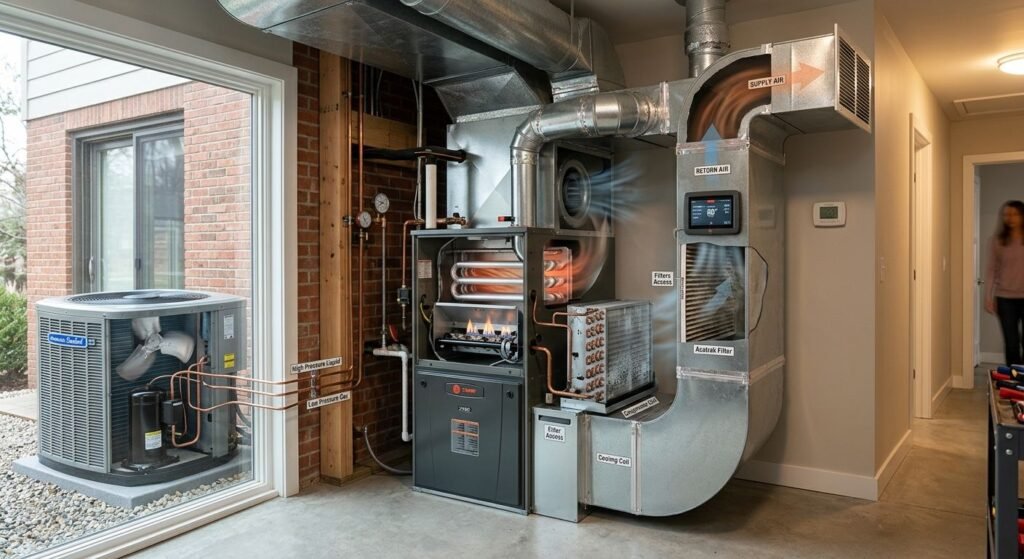
A complete HVAC system may also include a thermostat, air handler, blower motor, filters, ductwork, indoor coils, outdoor coils, compressors, and other controls.
The important point is that HVAC equipment is not usually one single machine. It is a group of components designed to work together.
How Does HVAC Equipment Work?
HVAC equipment works by controlling indoor temperature and moving air through the building. The exact process depends on the type of system, but most residential systems follow a simple control cycle.
The process usually begins with the thermostat.
The Thermostat Starts the Process
The thermostat measures the indoor temperature and compares it with the temperature selected by the homeowner.
For example, if a homeowner sets the thermostat to 72 degrees and the indoor temperature rises above that setting, the thermostat can signal the cooling system to start.
The same idea works with heating. When the indoor temperature falls below the selected temperature, the thermostat can signal the heating equipment to operate.
The thermostat acts as the control center, but it does not normally heat or cool the home by itself.
The Heating or Cooling Equipment Runs
Once the thermostat sends a signal, the required equipment begins operating.
During cooling, an air conditioner or heat pump removes heat from indoor air and transfers that heat outside.
During heating, a furnace produces heat and transfers it to the air, while a heat pump can move available heat from outside into the home.
The equipment used depends on the home’s design, climate, energy source, and heating and cooling needs.
The Blower Moves Conditioned Air
After the air is heated or cooled, a blower helps move it through the home.
In a traditional central HVAC system, the blower pushes conditioned air through supply ducts. The air then enters different rooms through vents or registers.
Indoor air eventually returns through return vents and moves back toward the HVAC system. This creates a continuous airflow cycle while the system is operating.
The System Stops When the Temperature Is Reached
When the indoor temperature reaches the thermostat’s selected setting, the thermostat signals the system to stop heating or cooling.
The system then remains off until the thermostat detects that another heating or cooling cycle is needed.
This repeated cycle helps maintain a more consistent indoor temperature.
What Are the Main Types of HVAC Equipment?
Different homes need different HVAC equipment. A system that works well for one home may not be the best option for another.
Several types are commonly used in residential applications.
Central Air Conditioners
Central air conditioners are designed primarily for cooling. They use an outdoor unit and indoor components to remove heat from the home.
The outdoor unit usually contains important components such as the compressor and condenser coil. The indoor side normally includes an evaporator coil and blower system.
Refrigerant moves between the indoor and outdoor sections. During cooling, it helps absorb heat from indoor air and release that heat outdoors.
Central air conditioning is commonly paired with a furnace or air handler.
Furnaces
A furnace is heating equipment designed to warm indoor air.
Many residential furnaces use natural gas, while electric furnaces are also available. A furnace generates heat and uses a blower to distribute the warmed air through ductwork.
A properly sized and maintained furnace can provide steady heating while helping maintain indoor comfort during cold weather.
Heat Pumps
Heat pumps can provide both heating and cooling.
During cooling mode, a heat pump works in a way similar to an air conditioner by moving heat from inside the home to the outdoors.
During heating mode, the process reverses. The heat pump extracts available heat from outdoor air and transfers it indoors.
Because heat pumps can provide both functions, they can be an efficient option for homes that need one system for year-round temperature control.
Ductless Mini-Split Systems
Ductless mini-splits are designed for homes or spaces where traditional ductwork is unavailable or difficult to install.
A typical system has an outdoor unit connected to one or more indoor units. Each indoor unit can deliver conditioned air directly into a specific room or zone.
This setup can provide more individual temperature control and can be useful for additions, garages, older homes, or rooms that need separate heating and cooling.
Air Handlers
An air handler is an indoor component that helps circulate conditioned air.
It commonly contains a blower and may also house an indoor coil. Air handlers are often paired with heat pumps or air conditioning systems.
The blower moves air through the system and into the home’s ductwork, allowing conditioned air to reach different rooms.
What Are the Key Parts of HVAC Equipment?
Knowing the main parts of HVAC equipment makes it easier to understand how a system operates.
Compressor
The compressor is an important component in many air conditioning and heat pump systems.
It helps circulate refrigerant through the system and increases its pressure so the refrigeration cycle can continue.
Because the compressor performs demanding work, problems with it can affect the entire cooling or heating system.
Condenser Coil
The condenser coil is generally located in the outdoor unit.
During cooling, refrigerant carrying heat from inside the home reaches the condenser. The heat is then released into the outdoor air.
Keeping the outdoor unit clean and free from major airflow restrictions can help the condenser perform properly.
Evaporator Coil
The evaporator coil is usually located on the indoor side of a central air conditioning or heat pump system.
During cooling, warm indoor air passes over the coil. The refrigerant inside the coil absorbs heat from that air.
The cooled air can then be distributed throughout the home.
Blower Motor
The blower motor powers the fan that moves air through the HVAC system.
It helps pull return air into the system and push conditioned air through supply ducts.
A weak or failing blower can result in poor airflow, uneven temperatures, or reduced system performance.
Air Filter
The air filter captures dust and other particles as air moves through the system.
A dirty filter can restrict airflow and make the equipment work harder. For this reason, filter inspection and replacement are important parts of basic HVAC care.
The correct filter type and replacement schedule depend on the system and household conditions.
Ductwork
Ductwork provides pathways for conditioned air to travel throughout a home.
Supply ducts deliver heated or cooled air to rooms, while return ducts carry indoor air back toward the HVAC equipment.
Leaks, damage, poor insulation, or restrictions in ductwork can affect airflow and comfort.
Why Is Proper HVAC Equipment Important?
Proper HVAC equipment can have a major effect on indoor comfort.
A correctly selected and installed system can help maintain more consistent temperatures across the home. It can also support better airflow and reduce unnecessary strain on the equipment.
The right equipment can also help with energy use. An inefficient or incorrectly sized system may run longer than necessary, which can increase energy consumption.
Proper equipment selection is therefore more than choosing the largest or most powerful unit. The system needs to match the home’s size, layout, insulation, ductwork, climate, and heating and cooling requirements.
How Does HVAC Equipment Affect Indoor Air Quality?
HVAC systems do more than control temperature.
Air filters can capture dust and other airborne particles. Ventilation can help replace stale indoor air with fresh outdoor air when the system is designed for it.
Humidity control can also affect comfort. Excessive indoor moisture can make a home feel warmer and may contribute to moisture-related problems. Very dry indoor air can also create discomfort.
Because of this, a complete HVAC evaluation should consider airflow, filtration, ventilation, and humidity along with heating and cooling.
What Are the Signs of HVAC Equipment Problems?
HVAC problems do not always begin with a complete system failure. Small changes in performance can sometimes indicate that a component needs attention.
Common warning signs include:
Uneven Temperatures
If one room is much warmer or colder than other areas, there may be an airflow, ductwork, thermostat, insulation, or equipment issue.
Weak Airflow
Weak airflow from vents may be caused by a dirty filter, blocked duct, blower problem, or another restriction in the system.
Unusual Sounds
Grinding, rattling, buzzing, or other unusual sounds should not be ignored. Different sounds can point to different mechanical or electrical problems.
Higher Energy Bills
A sudden increase in energy use may indicate that equipment is working harder than normal. Dirty components, airflow restrictions, aging equipment, or control problems can contribute to inefficient operation.
Frequent Cycling
If an HVAC system turns on and off much more frequently than expected, it may have a thermostat, airflow, sizing, or equipment problem.
How Can Homeowners Maintain HVAC Equipment?
Regular maintenance can help HVAC equipment operate more reliably and efficiently.
Replace or Check Air Filters
Filters should be checked regularly and replaced when they become dirty. Homes with pets, heavy dust, or frequent occupancy may require more frequent filter changes.
Keep Outdoor Units Clear
Leaves, grass, dirt, and other debris should be kept away from outdoor HVAC units. Clear space around the equipment helps support proper airflow.
Keep Vents Open
Supply and return vents should not be blocked by furniture, rugs, or other objects. Good airflow helps the system distribute conditioned air properly.
Schedule Professional Maintenance
Professional HVAC maintenance can identify issues that may not be visible to a homeowner.
A technician can inspect important components, check system operation, examine electrical connections, evaluate airflow, and identify developing problems.
Regular service can also help homeowners understand when repair makes sense and when replacement may be a better long-term option.
When Should HVAC Equipment Be Replaced?
HVAC equipment does not last forever. Over time, components wear down and older systems may become less efficient or more difficult to repair.
Replacement may become worth considering when a system requires frequent repairs, struggles to maintain indoor temperatures, produces inconsistent airflow, or has reached the later part of its expected service life.
However, age alone does not always mean replacement is necessary.
A professional evaluation can help determine whether repair, maintenance, or replacement is the most practical option.
When replacement is needed, proper sizing is especially important. A system that is too large or too small can create comfort and performance problems.
How Can The AC Outlet Help With HVAC Needs?
The AC Outlet can help homeowners better understand their heating and cooling options and determine what type of HVAC solution fits their property.
Whether a home needs routine maintenance, troubleshooting, repair, or new equipment, professional evaluation can help identify the right approach.
Rather than selecting equipment based only on price or size, homeowners can benefit from considering comfort requirements, system efficiency, property layout, equipment condition, and long-term operating needs.
Professional service can also help ensure that HVAC equipment is installed and maintained correctly.
Conclusion: Why Does HVAC Equipment Matter?
HVAC equipment is an important part of a comfortable and functional home. It combines heating, cooling, airflow, temperature control, and other functions to create a more comfortable indoor environment.
From thermostats and filters to furnaces, heat pumps, air conditioners, coils, blowers, and ductwork, each component has a specific role. When these parts work together correctly, the system can provide reliable comfort throughout the year.
Homeowners who understand how HVAC equipment works can make more informed decisions about maintenance, repairs, and replacement. The AC Outlet can support those decisions by helping homeowners evaluate their heating and cooling needs and choose practical solutions for their properties.
In the long term, proper equipment selection, professional installation, routine maintenance, and timely repairs can help an HVAC system perform more reliably and efficiently. For homeowners, that can mean better comfort, fewer unexpected problems, and greater confidence in their heating and cooling system.
Here, you can find more articles.