Foldable Popcorn Boxes: A Space-Saving Packaging Solution
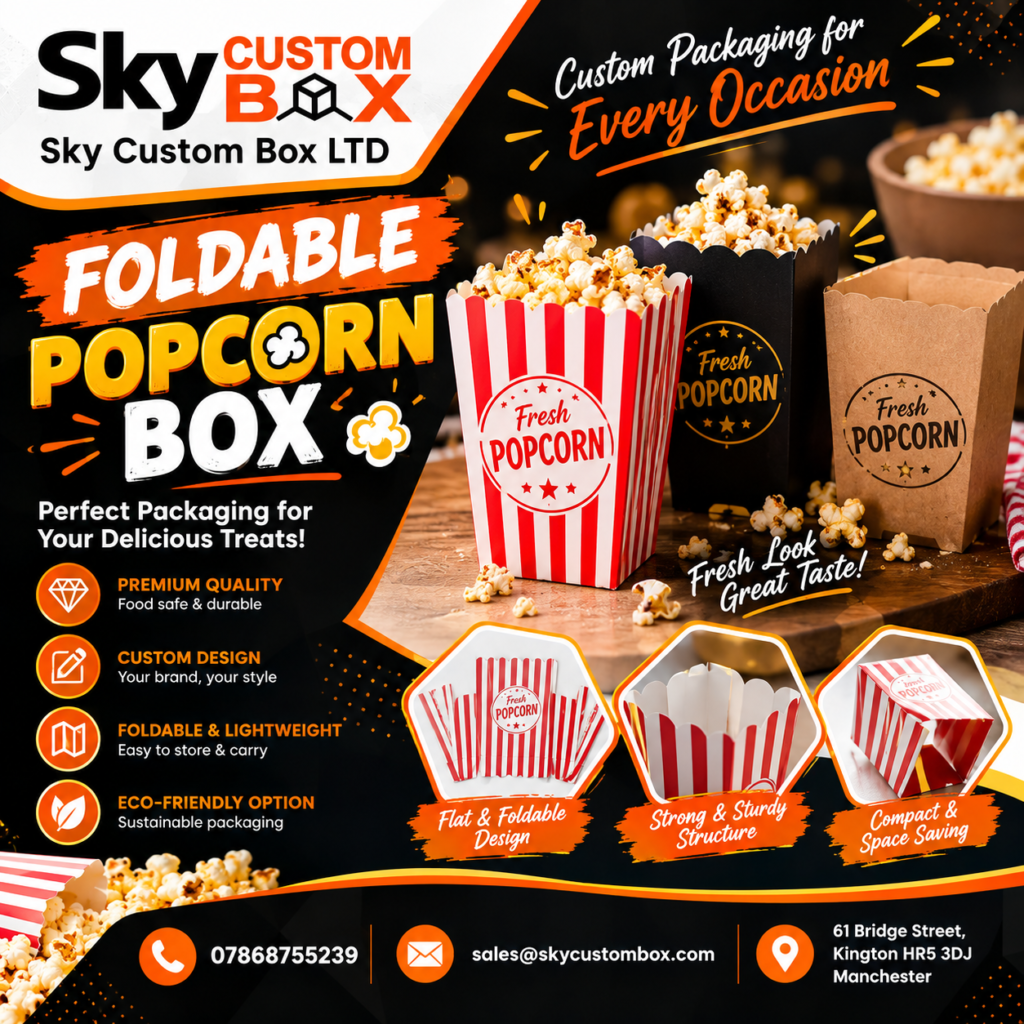
Popcorn is one of those snacks that can instantly create a sense of occasion. Whether served at cinemas, birthday parties, weddings, festivals, promotional events, or home movie nights, the presentation of popcorn can be almost as important as the snack itself. That is why well-designed Popcorn Boxes continue to be a practical packaging choice for retailers and event organizers.
However, storage can become a challenge when large quantities of empty boxes need to be kept on-site. Traditional pre-assembled containers can occupy considerable shelf and warehouse space. Foldable popcorn boxes offer a simple alternative: they can be stored flat and assembled when required, helping businesses make better use of limited storage areas.
For retailers, caterers, event planners, and food-service operators, understanding how foldable packaging works—and how to select the right size and material—can make everyday operations more efficient.
Why Foldable Popcorn Boxes Are Gaining Attention
Packaging requirements have changed as businesses look for solutions that combine convenience, presentation, and efficient logistics. Flat-packed packaging is particularly useful because it reduces the volume of unused containers during transportation and storage.
A foldable popcorn container typically arrives as a flat die-cut piece with scored folding lines. The user simply folds the panels into position to create the finished container.
This design provides several practical advantages:
- Reduced storage requirements: Flat packaging takes up substantially less space than assembled containers.
- Efficient transportation: More units can generally be packed into a smaller shipping volume.
- Quick assembly: Scored panels allow boxes to be prepared shortly before use.
- Flexible quantities: Businesses can assemble only the number of containers needed for a particular event or service period.
- Better inventory management: Flat-packed stock can be easier to organize on shelves.
These advantages are especially relevant to businesses operating from small retail premises, food stalls, mobile catering units, or event venues where storage space is limited.
Choosing the Right Popcorn Box Size
Size should be considered according to the serving format rather than simply choosing the largest available container. Different occasions require different capacities.
Mini popcorn boxes are useful for children’s parties, tasting events, wedding favors, dessert tables, and smaller snack portions. Their compact size can also help control portioning while creating an attractive presentation.
Standard-sized containers can work well for cinemas, parties, fundraisers, and casual food service. They offer enough room for a conventional serving without taking up unnecessary table space.
On the other hand, large popcorn boxes are suitable for shared servings, promotional events, outdoor festivals, and occasions where customers expect generous portions. Larger formats can also be useful when popcorn is being served as part of a buffet or snack station.
Businesses should consider:
- Expected portion size.
- Type and weight of popcorn.
- Whether customers will carry the container.
- Available display and storage space.
- The amount of packaging required per event.
The goal is to match the container capacity with the actual use case. Oversized packaging can waste material and storage space, while packaging that is too small may create handling and presentation problems.
Material and Structural Considerations
A foldable design is only effective when the material provides enough strength after assembly. Popcorn is relatively lightweight, but the container still needs to remain stable when filled and handled.
Paperboard and food-contact-compatible paper materials are commonly considered for snack packaging because they can provide a balance between rigidity and ease of folding. The choice of material should reflect the intended application, expected serving size, and printing requirements.
Another important factor is the folding mechanism. Good scoring allows panels to bend cleanly without excessive cracking or distortion. Poorly designed folds can make assembly frustrating and may cause the container to lose its shape.
For businesses sourcing packaging, it is useful to assess:
- Board thickness and rigidity
- Fold and locking mechanism
- Food-contact suitability
- Print quality
- Resistance to normal handling
- Flat-pack dimensions
- Assembly time
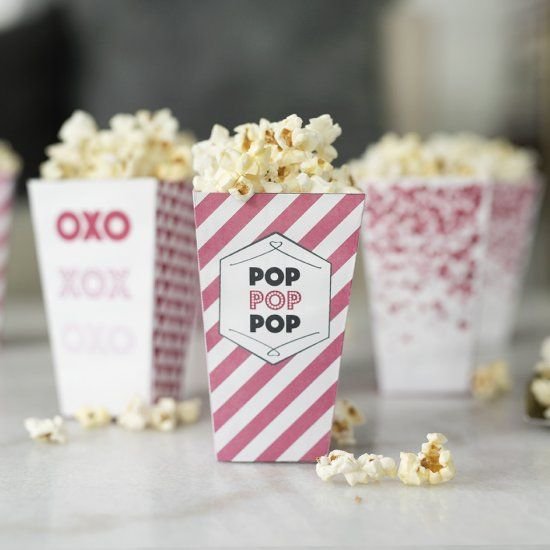
For example, large white popcorn boxes may be selected when a clean, neutral appearance is preferred. White packaging can also provide a useful surface for printed branding, event graphics, instructions, or themed artwork.
How Foldable Packaging Helps Retail and Events
The strongest advantage of foldable packaging becomes apparent when packaging needs fluctuate.
Consider an event organizer preparing for a weekend film-themed party. Instead of storing hundreds of fully assembled containers, flat-packed boxes can remain in a compact storage area until preparation begins. Staff can then assemble the required quantity in advance.
The same principle applies to retailers. A shop may sell popcorn seasonally or during special promotions, meaning packaging demand can change significantly throughout the year. Flat-packed containers make it easier to keep additional stock available without dedicating large amounts of shelf space to empty boxes.
They can also support temporary applications such as:
- School fairs
- Birthday parties
- Wedding receptions
- Corporate events
- Outdoor movie screenings
- Sporting events
- Food festivals
- Promotional campaigns
- Cinema-themed retail displays
For packaging businesses such as Sky Custom Box, foldable snack containers represent an example of how structural design can address practical problems beyond appearance.
Design Trends in Popcorn Packaging
Packaging is increasingly being treated as part of the customer experience. A visually appealing container can reinforce an event theme or make a simple snack feel more memorable.
Classic red-and-white designs remain strongly associated with popcorn, but modern packaging can incorporate virtually any color, illustration, pattern, or branding concept.
For themed events, businesses may use colors and graphics that complement the occasion. For example, children’s parties might feature playful illustrations, while weddings could use coordinated typography and subtle decorative patterns.
Customization can also be functional. Printed packaging may communicate:
- Brand identity
- Event information
- Social media handles
- Promotional messages
- Product details
- QR codes
- Seasonal campaigns
The important consideration is balance. Excessive graphics can make packaging visually crowded, while a simple design can often communicate a message more effectively.

Common Challenges and Practical Solutions
Although foldable packaging offers clear advantages, several issues should be considered before selecting a format.
1. Assembly Time
If hundreds of containers need to be prepared quickly, complicated folding mechanisms can slow down operations.
Solution: Test a sample quantity before placing a large order. Measure how long it takes an average staff member to assemble the containers.
2. Structural Stability
A container that looks attractive but does not hold its shape properly can create a poor customer experience.
Solution: Test the box when empty and filled. Check the base, side panels, and locking points during normal handling.
3. Storage Conditions
Paper-based packaging should be protected from moisture and excessive humidity, which can affect material strength and appearance.
Solution: Store flat-packed packaging in a clean, dry environment away from direct exposure to moisture.
4. Incorrect Capacity
Choosing packaging based solely on dimensions can result in an unsuitable serving size.
Solution: Fill sample boxes with the intended popcorn portion before finalizing the format.
5. Overstocking
Ordering excessive quantities can create unnecessary storage pressure, particularly for businesses with changing seasonal demand.
Solution: Review historical usage, event schedules, and projected demand before establishing inventory levels.
A Practical Approach to Selecting Popcorn Packaging
When comparing options such as mini containers, standard formats, and larger designs, businesses should evaluate the entire packaging lifecycle—not just the appearance of the finished box.
A useful checklist includes:
- Purpose: Where and how will the popcorn be served?
- Capacity: What portion size is required?
- Storage: How much room is available for unused packaging?
- Assembly: Can staff assemble the boxes efficiently?
- Material: Is the board appropriate for the application?
- Design: Does the appearance fit the brand or event?
- Transport: Can the flat-packed format simplify shipping and handling?
- Quantity: What volume is realistically needed?
This approach helps prevent common packaging mistakes and supports more efficient purchasing decisions.
Searches for products such as “popcorn boxes the range” may show a variety of ready-made styles and sizes, but businesses with specific operational requirements should look beyond appearance. Structural performance, dimensions, material, and storage efficiency are equally important.
Conclusion
Foldable popcorn packaging demonstrates how a relatively simple structural innovation can solve a practical business problem. By storing containers flat and assembling them when required, retailers, caterers, and event organizers can reduce storage demands while maintaining an attractive presentation.
The most suitable Popcorn Boxes depend on the occasion, portion size, material, assembly method, and available storage space. Mini formats can work well for individual servings and events, while large designs are better suited to generous portions and high-volume applications.
Read More: