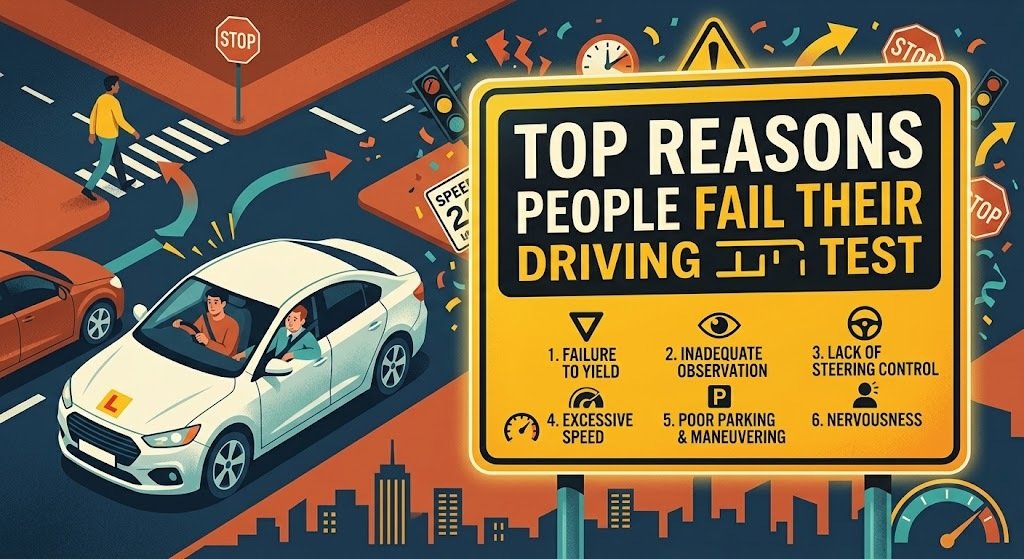
Passing your driving test is about much more than simply knowing how to operate a car. You need to demonstrate that you can drive safely, make sensible decisions, follow road rules, and stay calm when something unexpected happens. For many learners, the hardest part is not learning how to steer, brake, or change gears—it is putting everything together confidently while being assessed.
The good news is that most driving test mistakes are avoidable with the right preparation and plenty of practice. Taking professional Driving Lessons Richmond can help learners identify weak areas, develop safer driving habits, and become more comfortable making decisions independently. Understanding the common reasons people fail can also help you focus your practice on the skills that matter most on test day.
1. Failing to Check Mirrors Properly
One of the most common reasons learners lose marks is poor mirror use. Checking mirrors is not something you should only do when changing lanes. Good drivers regularly scan their mirrors to understand what is happening around their vehicle.
Examiners want to see that you are aware of your surroundings. This includes checking mirrors before:
- Changing lanes
- Turning
- Slowing down or stopping
- Moving away from the kerb
- Overtaking
- Changing your road position
- Responding to hazards
A quick glance is usually enough. However, checking mirrors too late or forgetting them completely can make your driving appear unsafe.
How to improve
Make mirror checks part of your normal driving routine rather than treating them as a test requirement. Develop a habit of checking your mirrors before you change speed, direction, or road position.
2. Poor Observation at Intersections
Intersections can be challenging because several things may need your attention at once. You might have to watch traffic, pedestrians, signs, cyclists, traffic lights, and other road users while deciding when it is safe to proceed.
Some learners focus too heavily on what is directly in front of them and fail to properly observe the sides of an intersection.
This can result in missed vehicles, pedestrians, cyclists, or important road signs.
How to improve
Approach intersections at an appropriate speed and actively scan in all relevant directions. Avoid rushing simply because the road appears clear at first glance. Give yourself enough time to identify potential hazards and make a safe decision.
3. Not Giving Way Correctly
Giving way is another major area where learners can make costly mistakes. Knowing the rules in theory is different from applying them correctly in a busy traffic situation.
Learners may misunderstand who has priority at intersections, roundabouts, pedestrian crossings, or when merging into traffic.
Even when you technically have priority, you should still remain alert. Safe driving involves anticipating what other road users might do rather than assuming everyone will behave perfectly.
How to improve
Study the give-way rules thoroughly and practise them in different traffic situations. During lessons, ask your instructor to explain why you should give way in particular situations instead of simply telling you what to do.
Understanding the reasoning behind a rule makes it much easier to remember.
4. Incorrect Speed Control
Speeding is an obvious problem, but driving too slowly can also create difficulties. The goal is not to drive as slowly as possible during your test. The goal is to choose a safe and appropriate speed for the conditions.
Your speed should take into account:
- The posted speed limit
- Traffic conditions
- Weather
- Visibility
- Road layout
- Pedestrian activity
- Sharp bends or intersections
- Temporary hazards
Some learners become nervous and drive significantly below the appropriate speed, while others accidentally exceed the limit because they are concentrating on another task.
How to improve
Practise maintaining a steady speed without constantly staring at the speedometer. Learn to recognise changes in speed through the feel of the vehicle while still checking the dashboard regularly.
5. Poor Lane Positioning
Your position within a lane matters. Driving too close to the kerb, drifting toward another lane, or failing to maintain a consistent road position can indicate a lack of control.
Lane positioning becomes particularly important when approaching turns, navigating narrow roads, passing parked vehicles, or travelling through intersections.
How to improve
Look well ahead rather than concentrating directly in front of the vehicle. Your vision should guide your steering. Keep your hands relaxed and make small, controlled adjustments instead of constantly correcting the vehicle’s position.
6. Forgetting Blind-Spot Checks
Mirrors cannot show you everything around your vehicle. There are areas that may remain hidden, which is why blind-spot checks are essential before certain manoeuvres.
A learner may check the mirrors but forget to look over their shoulder before moving into another lane or changing position.
This is particularly risky because another vehicle, cyclist, or motorcyclist could be present in the blind spot.
How to improve
Learn exactly when a blind-spot check is required and make it a natural part of your routine. The movement should be quick and purposeful—you do not need to turn your entire body away from the road for an extended period.
7. Making Unsafe Decisions Under Pressure
A driving test can feel very different from an ordinary practice session. Knowing that an examiner is watching you may cause you to overthink simple decisions.
Some learners hesitate excessively at intersections. Others rush because they are worried about appearing too cautious.
Neither extreme is ideal.
Examiners are generally looking for safe, controlled decision-making rather than perfection.
How to improve
Practise driving in situations where you have to make decisions without constant instructions from your instructor. As your test approaches, spend more time driving independently so that you become comfortable choosing when to turn, change lanes, slow down, or proceed.
8. Failing to Follow Instructions
During a driving test, the examiner will give you instructions about where to go or what manoeuvre to perform. Nervous learners sometimes misunderstand an instruction or react too quickly.
If you are unsure what the examiner said, it is better to ask for clarification when appropriate rather than guessing.
Also, do not panic if you accidentally take a wrong turn. Making a navigational mistake does not necessarily mean you have failed. The important thing is to respond safely and legally.
How to improve
Listen carefully and avoid trying to predict the examiner’s next instruction. Concentrate on the road first and the instruction second.
9. Weak Parking and Manoeuvring Skills
Parking manoeuvres can make learners particularly nervous because they often feel like a performance. However, rushing is usually what causes problems.
Common mistakes include poor observation, touching the kerb, failing to control the vehicle’s speed, or becoming so focused on positioning that the learner stops checking for pedestrians and other vehicles.
How to improve
Practise manoeuvres repeatedly in different locations rather than memorising one exact sequence. Learn how to judge distance, vehicle position, steering input, and surrounding hazards.
The goal is to understand the manoeuvre—not simply remember a formula.
10. Not Being Prepared for Hazards
A good driver does not just react to hazards after they appear. They anticipate potential problems.
For example, if you see a parked vehicle near a pedestrian area, you should consider whether someone could step out. If you approach a cyclist on a narrow road, think ahead about how you can pass safely.
Hazard awareness demonstrates that you are thinking beyond the immediate movement of the vehicle.
How to improve
During everyday driving practice, make a habit of asking yourself: “What could happen next?”
This simple question encourages you to scan further ahead and prepare for potential risks.
11. Nervousness Taking Over
Nerves are completely normal before a driving test. Unfortunately, excessive anxiety can affect concentration, decision-making, and vehicle control.
A learner who normally drives well may suddenly forget mirror checks, stall the car, hesitate unnecessarily, or make basic errors simply because they are under pressure.
How to improve
Do not expect yourself to feel completely calm. Instead, learn to drive effectively despite feeling nervous.
Take a few slow breaths before starting, avoid last-minute cramming, arrive with plenty of time, and focus on one driving task at a time. Remember that the examiner is assessing your ability to drive safely—not whether you look completely relaxed.
12. Taking the Test Before You Are Ready
Sometimes the biggest reason people fail is simply taking the test too soon.
A learner may be able to drive around familiar streets reasonably well but struggle when faced with unfamiliar roads, heavier traffic, complex intersections, or unexpected situations.
Being test-ready means you can demonstrate your skills consistently—not just when conditions are easy.
Signs You May Be Ready
You should feel increasingly comfortable:
- Driving without constant instructor prompts
- Checking mirrors and blind spots automatically
- Maintaining appropriate speed
- Handling intersections confidently
- Responding safely to hazards
- Performing required manoeuvres
- Following road rules consistently
- Driving on unfamiliar roads
How to Turn Mistakes Into Better Driving
Failing a driving test can be disappointing, but it does not mean you are a bad driver. In many cases, a failed test simply highlights specific skills that need more attention.
After a test or practice session, avoid focusing only on what went wrong. Identify why the mistake happened.
For example, if you missed a mirror check, ask whether you forgot the routine or became distracted. If you approached an intersection too quickly, consider whether you misjudged the situation or lacked confidence.
Once you understand the cause, you can practise the skill deliberately.
Final Thoughts
A successful driving test is the result of consistent practice, strong observation, sound decision-making, and confidence behind the wheel. Most failures do not happen because learners cannot drive at all; they happen because small mistakes become significant when safety, awareness, and road rules are involved. The best preparation is to build good habits long before test day, practise in a variety of real-world conditions, and work on the areas where you are least confident. With patient preparation and guidance from Benche Driving School, learners can approach their driving test with greater confidence and a clearer understanding of what safe, responsible driving really involves.