Imagine hopping on a customer support call, speaking naturally in your native accent, and having the person on the other end hear your voice smoothly translated not just into their language, but into their local accent as well—all in real time.
Science fiction? Not anymore.
Thanks to rapid advancements in artificial intelligence, communicating across cultural and geographical boundaries is getting a massive upgrade. At the heart of this revolution is AI voice harmonizer software. Whether you are a multinational corporation looking to localize customer service or a global content creator wanting to resonate with diverse audiences, this technology is changing the way the world talks and listens.
In this post, we’ll explore how accent adaptation software works, why real-time accent conversion is becoming a game-changer, and how innovative tools like Omind are leading the charge in creating seamless global communication.
What is AI Voice Harmonizer Software?
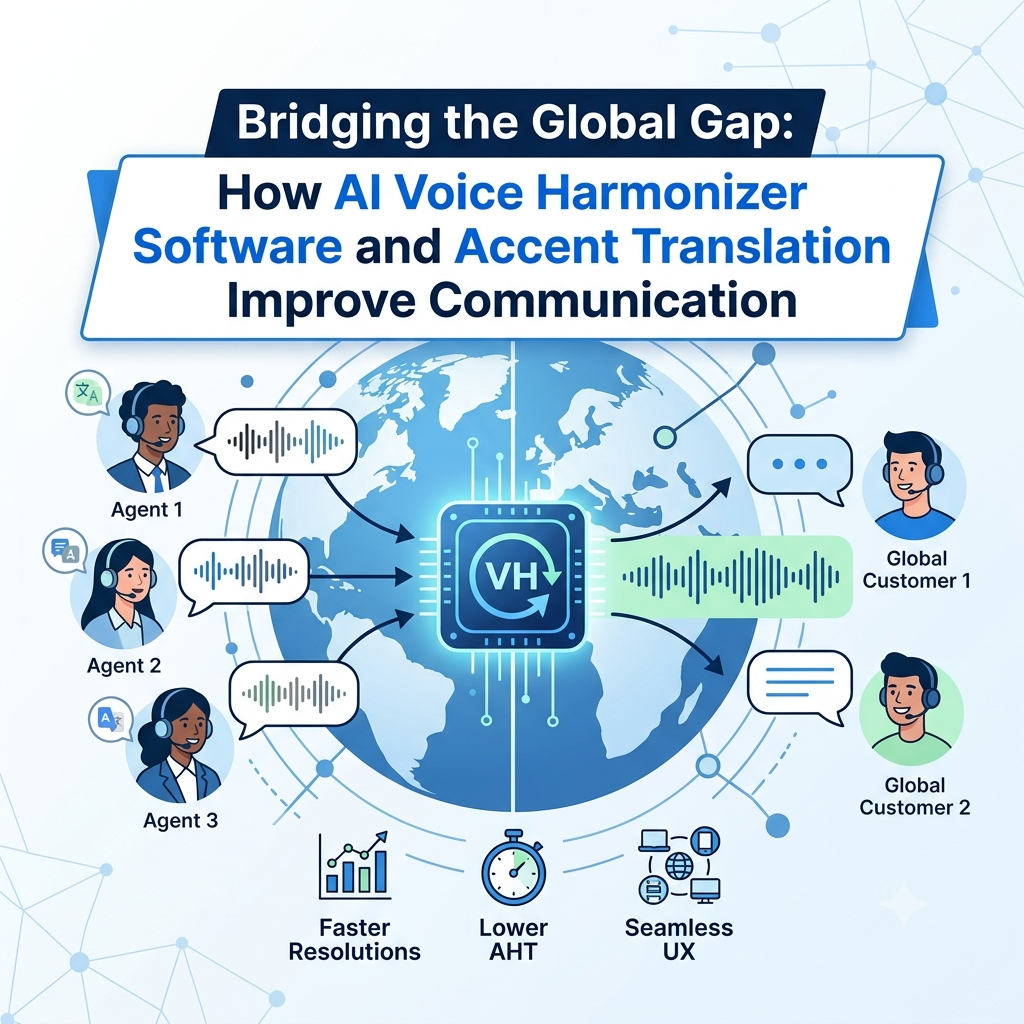
At its core, AI voice harmonizer software is a sophisticated tool that processes spoken audio and modifies it—not just by changing the pitch or tone, but by deeply understanding the phonetic structure of speech.
Traditional text-to-speech or basic voice changers often sound robotic and unnatural. They simply alter frequencies. In contrast, advanced AI voice harmonizers use deep learning models trained on thousands of hours of diverse speech patterns. They analyze the speaker’s intent, emotion, pacing, and timbre, and then reconstruct the voice in a new accent while preserving the original speaker’s unique identity.
When you speak into an AI-powered harmonizer, the software doesn’t just change what you sound like; it respects who you are while making your message instantly understandable and relatable to your listener.
The Magic Behind Real-Time Accent Conversion
For years, localization meant translating text, dubbing videos weeks after production, or hiring multilingual staff for every target market. Today, real-time accent conversion is turning reactive translation into an active, live experience.
Here is how the technology pulls off this modern miracle:
- Speech Recognition (STT): The software listens to the audio stream and converts the spoken words into text, capturing nuances like pauses, emphasis, and emotion.
- Phonetic Mapping: The AI analyzes the phonetic makeup of the speaker’s accent and maps it against the target accent (e.g., converting a British English accent into an American, Australian, or Indian English accent).
- Voice Synthesis and Harmonization: Using generative AI, the software synthesizes a new audio stream. It applies the target accent’s rhythm, intonation, and pronunciation rules while maintaining the original speaker’s vocal fingerprint.
- Zero Latency Delivery: All of this happens in milliseconds, allowing for fluid, natural conversations without awkward delays.
Why Accent Adaptation Software Matters
Why is there such a massive surge in demand for accent adaptation tools? The benefits stretch far across industries:
1. Elevating Customer Support Experiences
In global call centers, communication barriers can lead to frustration on both sides. When agents use accent adaptation software, they can converse with customers more comfortably. Customers hear an accent that is familiar to them, which instantly builds trust, reduces cognitive fatigue, and dramatically improves First Call Resolution (FCR) rates.
2. Empowering Remote and Global Teams
Global enterprises rely heavily on remote collaboration. AI voice harmonizers help bridge the gap in international meetings, ensuring that heavy regional accents or language barriers never hinder the flow of brilliant ideas.
3. Transforming Content Creation and Media
Content creators, podcasters, and filmmakers no longer need to spend a fortune on re-recording or dubbing. With advanced voice harmonization, they can effortlessly adapt their content into multiple regional accents, expanding their reach and connecting authentically with local audiences.
How Omind is Shaping the Future of Voice AI
As the demand for hyper-personalized, borderless communication grows, platforms are racing to deliver the best solutions. This is where forward-thinking innovators like Omind step in.
Omind is redefining how businesses interact by integrating cutting-edge AI technologies into everyday communication workflows. By harnessing the power of intelligent voice solutions, Omind helps organizations break down communication silos, ensuring that every customer interaction feels local, personal, and empathetic—no matter where in the world it originates.
With platforms like Omind championing user-centric AI, businesses can deploy accent adaptation tools seamlessly, ensuring high fidelity, data privacy, and a human-centric approach to global connectivity.
The Road Ahead: A Borderless Voice Ecosystem
We are moving toward a world where your physical location no longer dictates the clarity or reception of your voice. Accent adaptation software isn’t about erasing cultural identity or making everyone sound the same; it’s about building bridges. It’s about ensuring that the message is heard, understood, and appreciated without the friction of pronunciation barriers.
As real time accent harmonizers continue to evolve—becoming faster, more emotionally intelligent, and even more natural—tools from pioneers like Omind will ensure that the future of communication is truly global, inclusive, and seamless.
Ready to see how AI can transform your voice strategy? The future is speaking—and it sounds like everyone, everywhere.