Trailer axle maintenance is one of those jobs that’s easy to ignore until you hear an odd grinding sound or notice a wheel getting hotter than the others. Greasing the bearings regularly helps reduce friction and keeps the trailer rolling smoothly. If you’ve ever wondered How to Grease a Trailer Axle, the job is fairly straightforward once you know what you’re looking at. You’ll need the right grease, a few basic tools, and a little patience.
Why Trailer Axle Greasing Matters
Your trailer wheel bearings carry a lot of weight. Every mile puts pressure and heat on them, especially if you regularly haul equipment, vehicles, landscaping materials, or other heavy loads.
Without enough grease, the metal surfaces inside the hub can rub together. Heat builds up. Wear follows. In a bad case, a bearing can fail while you’re on the road.
Nobody wants to deal with that on the side of a highway.
Regular trailer bearing maintenance can help:
- Reduce friction inside the hub
- Protect wheel bearings from excessive heat
- Reduce premature bearing wear
- Keep wheels turning smoothly
- Lower the chance of a bearing-related breakdown
- Extend the service life of trailer axle components
How often should you grease trailer bearings? It depends on the trailer, mileage, load, bearing type, and manufacturer recommendations. Many trailer owners inspect and service them around once a year, while trailers used frequently or under heavy loads may need attention more often.
What You Need Before Greasing a Trailer Axle
You don’t need a garage full of tools for this job. A basic setup usually includes:
- Trailer wheel bearing grease
- Grease gun, if your axle has grease fittings
- Jack and jack stands rated for the trailer
- Lug wrench
- Pliers
- Clean rags or shop towels
- Brake cleaner or another suitable cleaning product
- New cotter pins if required
- Replacement grease seals if the old ones are damaged
Use grease made for trailer wheel bearings. Don’t grab whatever grease happens to be sitting on the shelf. Different greases can have different properties, and mixing incompatible products isn’t a great idea.
Check the axle or trailer manufacturer’s recommendation before buying grease.
How to Grease a Trailer Axle Step by Step
The exact process depends on the axle design. Some axles have grease fittings or EZ-Lube-style systems, while others require the hub to be removed so the bearings can be cleaned and packed by hand.
1. Park the Trailer on Level Ground
Start somewhere flat and stable. Put the tow vehicle in park, set the parking brake, and use wheel chocks where appropriate.
If you’re working on one side at a time, the trailer should be supported securely with jack stands. Never rely only on a hydraulic jack while you’re underneath or beside a raised trailer.
Safety first. This is one job where rushing isn’t worth it.
2. Remove the Wheel
Loosen the lug nuts slightly before raising the trailer.
Lift the trailer at the proper jacking point, place it securely on jack stands, and remove the wheel. Keep the lug nuts somewhere clean so they don’t pick up dirt.
Now you should have clear access to the trailer hub.
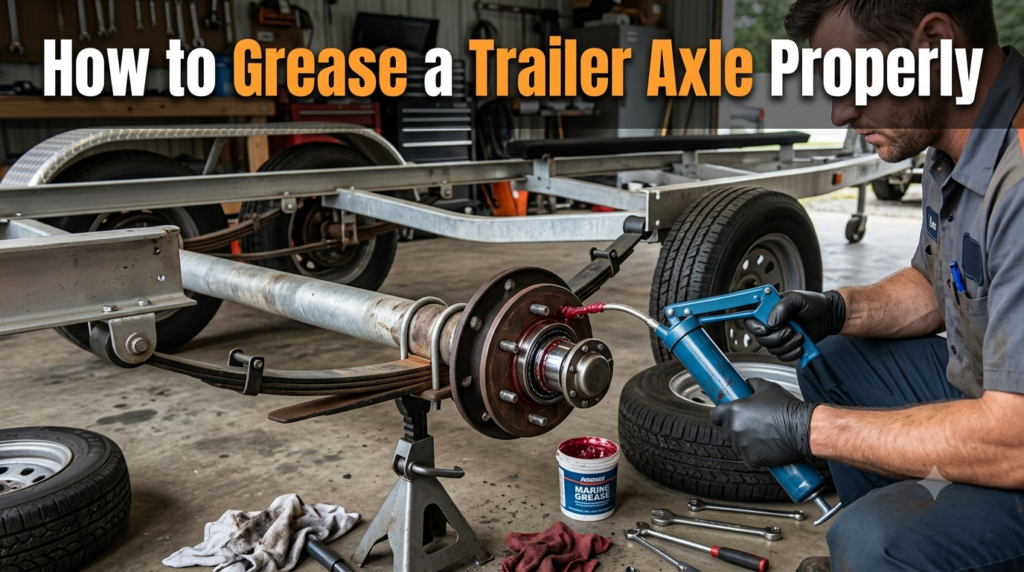
3. Locate the Grease Fitting
Look at the center of the hub. If your axle uses a grease fitting, you’ll usually see a small fitting or grease port.
Attach the grease gun firmly.
Give the hub a few slow pumps rather than squeezing the handle as hard as possible. Some systems allow old grease to move through the bearing and out around the relief area.
Watch what happens. If fresh grease starts appearing and the system is designed to purge old grease, wipe away the excess.
Don’t keep pumping grease just because the gun still has plenty left.
4. Rotate the Wheel Slowly
If the manufacturer’s system calls for rotating the wheel while adding grease, turn the wheel slowly by hand as you pump.
This helps distribute grease around the bearing.
Don’t spin the wheel rapidly while pumping. Slow and steady is the safer approach, and it gives you a better feel for how the grease is moving.
5. Check for Leaks or Damaged Seals
Take a quick look around the hub.
Grease leaking onto the brake components is a serious problem. If your trailer has electric brakes, grease contamination can affect braking performance. A damaged grease seal should be replaced rather than covered up with more grease.
Also inspect the spindle and visible hub components for signs of scoring, rust, discoloration, or unusual wear.
Packing Trailer Wheel Bearings by Hand
Not every trailer axle has a grease fitting. With a traditional hub, you may need to remove the bearings and pack them manually.
First, remove the hub and take out the bearings. Clean the old grease from the bearings and inspect each one carefully.
Hold a small amount of fresh wheel bearing grease in your palm and press the bearing edge into the grease repeatedly, working grease between the rollers and cage. Rotate the bearing as you go.
It’s messy. Very messy, sometimes.
But you want grease worked into the bearing rather than just smeared around the outside.
Clean the hub, inspect the grease seal, and reinstall the bearing and hub according to the trailer manufacturer’s instructions. Use a new cotter pin if the design requires one.
How Much Grease Does a Trailer Bearing Need?
More grease isn’t automatically better.
Overfilling a hub can create pressure and heat, and excess grease may escape through the seal. That can create a much bigger problem if grease reaches the brakes.
The correct amount depends on the hub and bearing system. Follow the axle or hub manufacturer’s instructions rather than guessing.
If your trailer uses a specific lubrication system, follow its procedure closely.
Signs Your Trailer Bearings Need Attention
Greasing is only part of trailer axle maintenance. Pay attention to symptoms between service intervals.
Watch for:
- Grinding or humming noises
- Excessive wheel play
- A hot hub after a short trip
- Grease leaking from the hub
- Uneven tire wear
- Vibration while towing
- Rough wheel rotation
- Visible rust or damaged bearings
A hub that feels noticeably hotter than the others deserves attention. Don’t just add grease and hope the problem disappears. A worn or damaged bearing may need replacement.
A Few Trailer Axle Maintenance Tips
Make bearing checks part of your normal trailer routine, especially before a long trip.
Take a quick look at the tires, lug nuts, hubs, suspension, lights, and safety chains. If the trailer has been sitting for months, inspect it before putting it back to work.
Also, don’t forget that water can cause trouble. Boat trailers and trailers exposed to wet conditions deserve extra attention because moisture can work its way into hubs and contribute to corrosion.
And if you hear something strange, investigate it early.
A little grease and a 20-minute inspection can be a lot cheaper than replacing a damaged hub on a Saturday afternoon.
Final Thoughts
Learning How to Grease a Trailer Axle isn’t difficult, but the small details matter. Use the correct grease, don’t overfill the hub, inspect the bearings and seals, and follow the lubrication method designed for your axle.
If you’re unsure which system your trailer uses, check the axle manufacturer’s instructions before taking the hub apart. There’s no prize for guessing wrong here.
Regular checks, clean grease, and a little attention can keep your trailer ready for the next load and help prevent an annoying bearing failure miles from home.