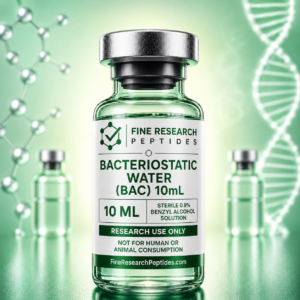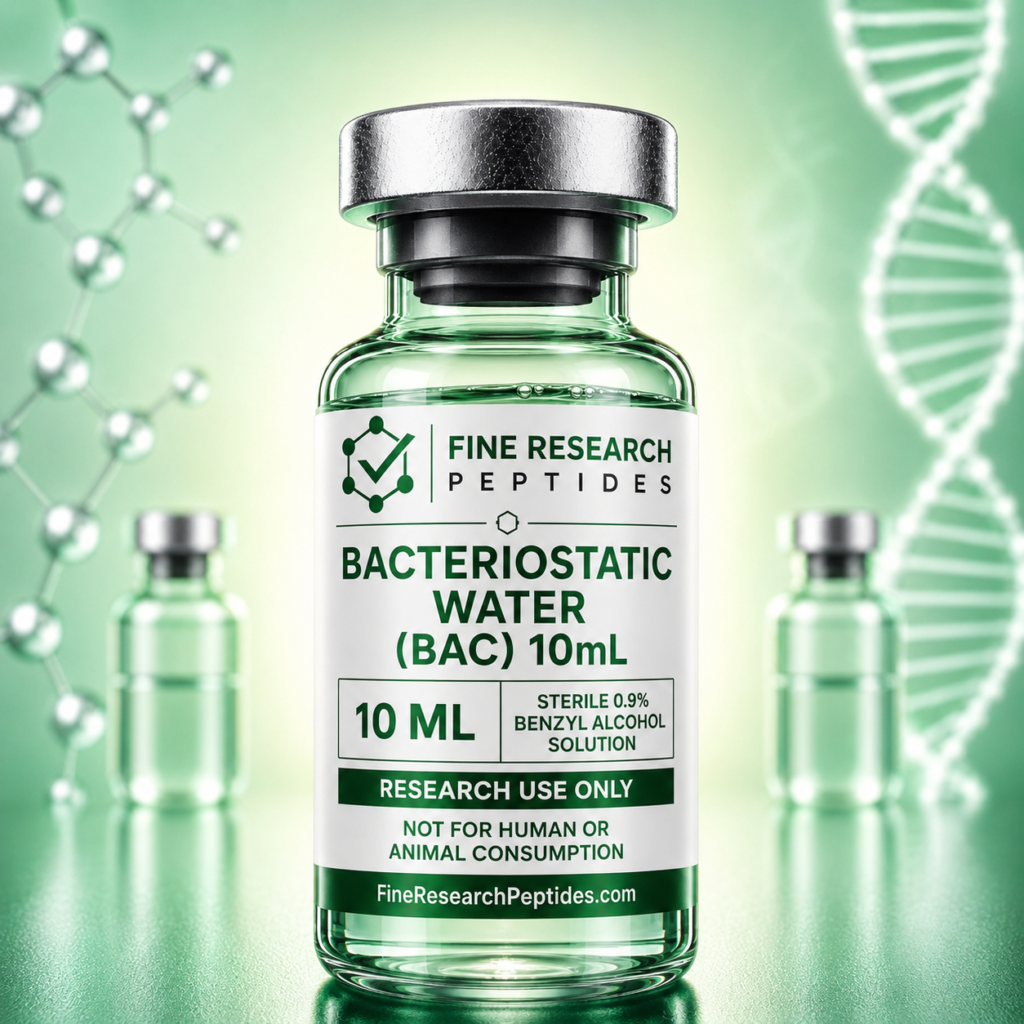
bacteriostatic water for injection
Bacteriostatic water for injection is a sterile preparation designed to act as a diluent for certain medications that require reconstitution before administration. Unlike ordinary water, it is manufactured under pharmaceutical standards and may contain a preservative such as benzyl alcohol. Its purpose is not to provide a therapeutic effect but to help prepare specific compatible medications according to their approved instructions. Because formulations differ, bacteriostatic water should never be assumed to be suitable for every injectable medicine or research compound.
Understanding the purpose of this product is important because bacteriostatic water is not simply interchangeable with sterile water for injection. The two products can have different formulations, preservatives, and approved uses. Some medications require a specific diluent supplied with the product, while others may require preservative-free sterile water. The appropriate choice depends on the medication’s official instructions, formulation, and clinical or laboratory requirements.
Common Uses and Important Considerations
Bacteriostatic water is primarily used as a diluent when the instructions for a compatible medication specifically allow or require it. Healthcare professionals may use appropriate diluents when preparing certain injectable medicines, while pharmacies and clinical facilities follow established procedures for reconstitution and handling. The exact requirements can vary significantly between medications. Therefore, general online advice should never replace the preparation instructions provided with a specific prescription product.
The presence of a preservative is one of the defining characteristics of many bacteriostatic water for injection. Benzyl alcohol can help inhibit microbial growth in properly manufactured and handled multi-dose containers, but its presence also means the product is not appropriate for every situation. Certain populations, particularly newborns, require special consideration because benzyl alcohol-containing preparations can present serious risks. Product labeling and professional guidance should always determine whether a particular formulation is appropriate.
Bacteriostatic Water vs. Sterile Water
Although the names sound similar, bacteriostatic water and sterile water are not identical products. Bacteriostatic water generally contains a preservative, whereas sterile water for injection is typically preservative-free. This difference can affect compatibility and suitability for specific medications. Choosing one based only on availability or a similar appearance can create avoidable problems, particularly when preparing injectable medicines.
The correct diluent should always be determined by the medication’s approved information or a qualified healthcare professional. Some medicines may be specifically labeled for use with bacteriostatic water, while others may require a different diluent. Researchers also need to follow their validated laboratory protocols when working with research materials. Using an alternative product without confirming compatibility can affect stability, concentration, sterility, or other important characteristics.
Storage and Product Quality
Proper storage is essential for maintaining the quality of bacteriostatic water for injection. Users should follow the storage conditions stated on the specific product label because requirements can vary between manufacturers. Containers should generally be protected from inappropriate environmental conditions and kept in their original packaging when appropriate. A product should not be used simply because the liquid appears clear if it has been improperly stored or its packaging has been compromised.
Expiration information should also be checked before use. A vial that has passed its labeled expiration date should not be treated as reliable simply because there are no visible changes. Similarly, damaged seals, cracked containers, missing labels, unexpected particles, or unusual discoloration should be treated as reasons to seek professional advice. Pharmaceutical quality depends on controlled manufacturing, storage, packaging, and handling rather than appearance alone.
Safety and Handling Precautions
Sterility is an important consideration whenever a product is intended for injection or pharmaceutical preparation. Although bacteriostatic water is manufactured as a sterile product, inappropriate handling can introduce contamination. Healthcare professionals and trained personnel should follow established procedures for accessing and handling multi-dose containers. Individuals should not improvise techniques or reuse products in ways that conflict with the manufacturer’s instructions or professional guidance.
Another important consideration is compatibility. Bacteriostatic water should not be mixed with an injectable medication simply because both products are marketed for medical use. Some medications can be incompatible with particular diluents, and the appropriate preparation may depend on concentration, formulation, stability, and route of administration. If compatibility is unclear, the correct response is to consult the medication’s instructions or a pharmacist rather than experimenting with different combinations.
Understanding PT-141 and Online Product Claims
People searching for information about bacteriostatic water may also encounter online listings related to peptides such as PT-141. PT-141 is another name associated with bremelanotide, and consumers may encounter websites using phrases such as best place to buy pt-141 when searching for peptide products. It is important to distinguish an approved prescription medicine from products marketed online as research compounds. A research-use label does not establish that a product is approved, sterile, clinically appropriate, or safe for personal administration.
When evaluating online claims involving PT-141 or other peptide products, buyers should be cautious about websites that provide personal-use dosing instructions, guarantee specific results, or sell injectable materials without appropriate medical oversight. Online popularity is not evidence of pharmaceutical quality. Researchers should evaluate research materials according to legitimate laboratory requirements, while patients should obtain prescription medicines through appropriate healthcare and pharmacy channels.
Choosing a Reliable Source
Quality and traceability should be major considerations when obtaining bacteriostatic water for injection. Buyers should look for clearly identified pharmaceutical products with appropriate labeling, manufacturer information, lot identification, expiration information, and storage instructions. A legitimate source should make it possible to determine what product is being supplied and how it is intended to be used. Unclear labeling or missing product information should be treated as a reason to investigate further before purchasing.
Consumers should also be cautious about websites that combine bacteriostatic water with research peptides and suggest that the products are automatically intended to be used together. The fact that two products are advertised on the same website does not establish compatibility. Research chemicals and prescription medicines have different regulatory requirements and quality considerations. Responsible purchasing means selecting each product according to its documented purpose rather than relying on an online seller’s bundled recommendations.
Final Thoughts on Safe and Responsible Use
Bacteriostatic water for injection is a specialized pharmaceutical preparation with an important role as a diluent for compatible medications. Its preservative content, sterility, storage requirements, and compatibility considerations distinguish it from ordinary water and from preservative-free sterile water. Users should always follow the instructions associated with the specific medication and product. When there is uncertainty about compatibility or handling, a pharmacist or qualified healthcare professional is the appropriate source of guidance.
The same careful approach should be applied when encountering online searches for the best place to buy pt-141. Buyers should distinguish approved prescription products from research-labeled materials and avoid assuming that technical terminology or attractive packaging proves quality. Researchers should follow institutional procedures and documented laboratory protocols, while patients should rely on legitimate medical care and pharmacy services. This separation helps protect both research integrity and individual safety.
Ultimately, understanding bacteriostatic water is about more than knowing what the product contains. Responsible use requires attention to its intended purpose, compatibility, storage, sterility, labeling, and source. Buyers should avoid questionable products and unsupported online claims, particularly when injectable materials are involved. By prioritizing verified pharmaceutical information and qualified professional guidance, users can make more informed decisions and reduce unnecessary risks associated with improperly sourced or incorrectly used injectable products.