Moving a commercial truck across the United States involves more than arranging a pickup and drop-off. Truck size, weight, condition, route, equipment, and delivery deadlines can all influence how the shipment should be handled. Whether you’re relocating a work truck, purchasing equipment from another state, or managing a fleet, selecting an appropriate transportation method can make the process easier to coordinate.
A professional commercial truck delivery service can provide transportation without requiring a driver to spend days traveling between states. Rapid Auto Shipping helps customers arrange vehicle transportation throughout the USA based on individual truck and route requirements.
Start With the Truck, Not the Carrier
Every commercial truck has different transportation requirements. A compact work truck may be relatively straightforward to move, while a heavy-duty vehicle, box truck, utility truck, or specialized commercial vehicle can require different equipment.
Before selecting a transport method, gather important details such as:
- Year, make, and model
- Overall dimensions
- Approximate weight
- Operating condition
- Tire and wheel specifications
- Added equipment or modifications
- Pickup and delivery locations
- Preferred transportation timeframe
Providing accurate information allows the shipping provider to determine which equipment and handling arrangements may be appropriate.
Four Transportation Approaches to Consider
There isn’t one universal method for transporting every commercial truck. The right option depends on the vehicle and circumstances.
- Open Carrier Transport
Open carriers are widely used in the vehicle transportation industry. Trucks are secured on an open trailer and transported alongside other vehicles when the equipment and dimensions are compatible.
For commercial vehicles that fit standard carrier specifications, open transport can be a practical option. Because the vehicle travels outdoors, however, it remains exposed to normal road and weather conditions.
- Enclosed Transportation
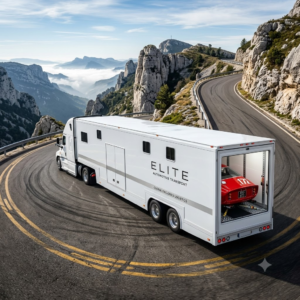
Enclosed transport places the vehicle inside a covered trailer or otherwise provides greater enclosure during transit. This approach may be considered when additional protection is important, particularly for specialty, high-value, restored, or customized commercial vehicles.
Availability can depend on truck dimensions and carrier capacity, so customers should provide complete specifications before requesting this type of service.
- Flatbed Shipping
Flatbed trailers can provide flexibility for vehicles that don’t fit conventional enclosed or multi-vehicle carrier configurations. Depending on the truck’s dimensions and weight, a flatbed may accommodate certain commercial vehicles more effectively.
This option can be particularly relevant when specialized equipment, unusual dimensions, or loading requirements make standard transport unsuitable.
- Specialized Heavy-Haul Equipment
Some commercial trucks exceed the dimensions or weight limits appropriate for ordinary vehicle carriers. In those situations, specialized transportation equipment may be required.
Heavy-haul arrangements can involve additional planning, route considerations, permits, escorts, and loading procedures depending on the vehicle and jurisdiction. The transportation provider should evaluate these requirements before the shipment is scheduled.
What Can Change Your Shipping Price?
Commercial truck transportation costs aren’t based solely on mileage. Several variables can affect the quote.
- Vehicle dimensions: Larger and heavier trucks generally require more carrier capacity and specialized handling.
- Distance: Cross-country transportation involves different logistics from regional shipments.
- Truck condition: A non-running truck may require winches, ramps, forklifts, or other loading equipment.
- Carrier type: Open, enclosed, flatbed, and specialized transportation can have different pricing structures.
- Route accessibility: Narrow roads, restricted access, construction, or difficult pickup locations can affect planning.
- Timing: Expedited transportation may involve different arrangements from standard scheduling.
- Seasonal demand: Transportation demand can fluctuate throughout the year, affecting carrier availability and pricing.
For an accurate estimate, provide detailed vehicle and route information rather than relying on a generic shipping calculator.
Preparing a Commercial Truck Before Pickup
Preparation begins well before the carrier arrives.
Remove personal belongings and unnecessary equipment from the truck. Secure loose exterior components and make sure the transporter knows about modifications or accessories that could affect loading.
Check tire pressure, battery condition, fluid levels, and other basic mechanical items according to the carrier’s instructions. If the truck cannot operate, clearly disclose that information.
Photograph the truck from several angles before pickup. Close-up images of existing scratches, dents, or other damage can provide a useful record of its pre-transport condition.
Keep important documents and personal valuables with you unless the transportation provider specifically gives different instructions.
Delivery Planning Matters Too
Pickup is only one part of commercial truck delivery. The destination should be evaluated before transportation begins.
Confirm whether a large carrier can safely access the delivery address. A commercial facility, dealership, construction site, warehouse, or business property may offer better access than a residential street.
If direct delivery isn’t practical, the shipping provider may coordinate an alternative nearby location. Discuss this before the truck is dispatched so there are fewer surprises at the end of the journey.
How Rapid Auto Shipping Can Help
Rapid Auto Shipping assists customers with vehicle transportation throughout the USA. Commercial truck shipments can involve different requirements from ordinary passenger-car transportation, so the company can review information such as truck dimensions, operating condition, route, and desired delivery timeframe.
Whether you’re moving a work vehicle, purchasing a truck from another state, relocating commercial equipment, or coordinating transportation for a business, communicating the details upfront helps establish a suitable shipping plan.
A Simple Way to Compare Transport Options
When evaluating transportation methods, consider these questions:
| Consideration | Why It Matters |
| Truck size | Determines compatible equipment |
| Weight | Can affect carrier and route requirements |
| Condition | May determine loading equipment |
| Distance | Influences transportation logistics |
| Protection needs | Helps identify open or enclosed options |
| Delivery location | Determines accessibility |
| Schedule | Affects carrier availability |
Instead of choosing a method based on one factor, look at the entire shipment. The most convenient equipment depends on the truck and transportation circumstances.
Moving Your Truck With a Clear Transportation Plan
A successful commercial truck delivery starts with matching the vehicle to the appropriate transportation method. Truck specifications, condition, route, protection requirements, and delivery access all deserve consideration before booking.
With accurate information and proper preparation, businesses and truck owners can better coordinate long-distance transportation. Rapid Auto Shipping provides vehicle shipping assistance across the USA, helping customers explore transportation arrangements suited to their commercial truck and delivery needs.
FAQs
- Can I ship a commercial truck across state lines?
Yes. Commercial trucks can be transported between states, but equipment selection and route requirements depend on the truck’s dimensions, weight, condition, and destination.
- How much does commercial truck delivery cost?
Pricing varies according to distance, truck specifications, condition, carrier type, route accessibility, timing, and other shipment details. A personalized quote is more useful than assuming a fixed nationwide price.
- Can a non-running commercial truck be transported?
Yes, in many cases. However, the carrier may need specialized loading equipment. Always disclose the truck’s operating condition when requesting transportation.
- Is enclosed transport necessary for a commercial truck?
Not necessarily. The appropriate method depends on the truck, its value, condition, dimensions, and protection requirements. Open, enclosed, flatbed, or specialized equipment may each be suitable in different circumstances.
- How far in advance should I arrange truck transportation?
Planning ahead gives the transportation provider more time to identify suitable equipment and coordinate pickup and delivery. Larger or specialized trucks may benefit from additional scheduling time.