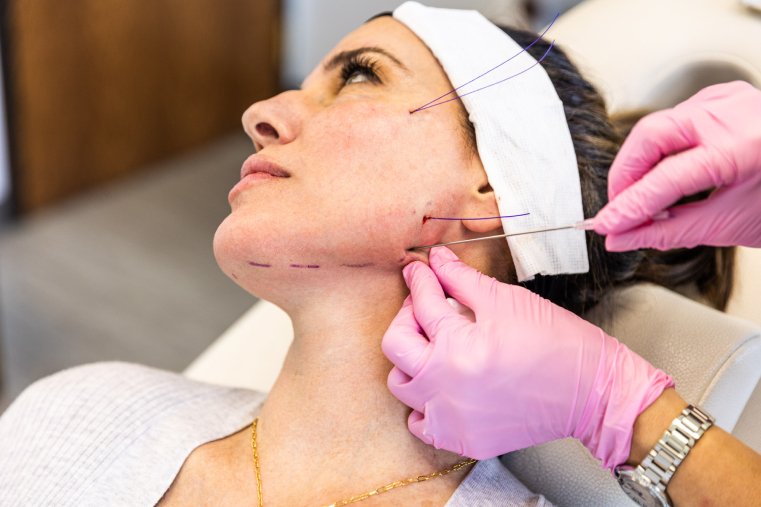
Facial proportions play an important role in how the face looks at rest and during natural expressions. The relationship between the forehead, cheeks, nose, lips, chin, and jawline contributes to the overall balance of facial features. When changes in skin firmness or facial definition become noticeable, understanding these proportions can help guide a more personalised approach to aesthetic treatment.
A thread lift is designed to provide a lifting and contouring effect by placing specialised threads beneath the skin. However, treatment planning is not simply about deciding where threads should be placed. The individual’s facial structure, skin laxity, tissue distribution, existing contours, and aesthetic goals can all influence the approach.
During a consultation for a Thread Lift in London, these factors can be assessed together to develop a treatment plan that works with the patient’s natural facial characteristics. At a specialist Thread Lift Clinic in London, the assessment can focus on how different facial areas relate to one another and how the proposed treatment may complement the existing proportions.
Why Facial Proportions Matter in Thread Lift Planning
Every face has its own combination of proportions and contours. Even when two people have similar concerns, the underlying structure may be quite different.
For example, one person may naturally have prominent cheekbones and a narrow lower face, while another may have a broader jawline and softer cheek contours. The same thread lift strategy may therefore not be appropriate for both individuals.
Facial proportions provide a framework for understanding these differences. Rather than assessing one isolated area, the practitioner can consider how the cheeks, jawline, chin, and other features interact.
This broader assessment can help establish which areas may be suitable for treatment and how the treatment plan can be tailored to the individual’s anatomy.
Assessing the Upper, Middle and Lower Face
The face can broadly be considered in three areas: the upper, middle, and lower thirds. Each section contributes to overall facial balance.
The upper face includes features such as the forehead and brow area. The middle face includes the cheeks, nose, and areas around the eyes. The lower face includes the lips, chin, jawline, and surrounding tissues.
During a consultation for Thread Lift in London, the practitioner may assess these areas together rather than focusing exclusively on the region where the patient has noticed changes.
This approach can provide a more complete understanding of facial proportions and help determine how treatment in one area may relate to surrounding features.
How Cheek Proportions Influence Treatment Planning
The cheeks are particularly important when considering facial balance. Their appearance is influenced by the cheekbones, soft tissue distribution, skin quality, and natural facial contours.
Changes in skin firmness around the cheeks can alter how the middle and lower face appear. A practitioner may therefore assess the cheek area from different angles to understand its existing structure.
For patients considering a PDO Thread Lift London, the assessment can help determine whether the cheek region should be included in the treatment plan and how it relates to the jawline and lower facial contours.
The objective is to create a plan that complements the patient’s existing facial structure rather than treating the cheeks as an isolated feature.
Considering Jawline Definition
The jawline contributes significantly to the shape of the lower face. Its appearance is influenced by the underlying jawbone, soft tissue distribution, skin laxity, and the transition between the lower face and neck.
During consultation, the practitioner may assess the jawline from the front and side to understand its natural definition.
If the patient is concerned about changes in lower facial contour, the practitioner can consider how the jawline relates to the cheeks and chin when developing the treatment plan.
This helps ensure that the proposed approach takes the broader lower-face structure into account.
The Role of the Chin in Facial Balance
The chin is an important reference point when assessing facial proportions. Its projection, width, and position can influence how the jawline and lower face are perceived.
A chin that is naturally more projected may create a different facial balance from one that has a softer or less prominent contour.
For this reason, the chin may be assessed as part of a broader thread lift consultation. Understanding its relationship with the cheeks and jawline can help the practitioner determine which areas should receive attention.
The goal is to develop a treatment plan that respects the patient’s natural proportions.
Evaluating Skin Laxity Across Different Areas
Skin laxity does not necessarily occur evenly across the face. Some individuals may notice changes primarily around the lower cheeks, while others may see more noticeable changes along the jawline.
The practitioner can assess the location and degree of laxity during consultation.
This assessment is important because treatment planning can be adjusted according to where the skin and underlying tissues have changed.
Rather than applying the same approach across every facial area, the practitioner can consider where lifting may be most relevant to the patient’s concerns and overall facial structure.
Considering Natural Facial Asymmetry
Facial symmetry is another factor that can influence treatment planning. Most people have subtle differences between the two sides of their face.
The position of the cheeks, jawline, eyebrows, or other features may vary slightly from one side to the other.
During an assessment for a PDO Thread Lift London, recognising these natural differences can help the practitioner understand the patient’s baseline facial structure.
This information may be considered when planning treatment so that the approach reflects the individual’s existing anatomy.
Understanding the Relationship Between Facial Features
Facial features do not exist independently. A change in the appearance of one area can influence the perceived balance of surrounding areas.
For instance, the relationship between the cheek and jawline can affect how defined the lower face appears. Similarly, the chin can influence the perceived shape of the jawline.
A detailed consultation allows these relationships to be considered before treatment.
At a Thread Lift Clinic in London, facial assessment can therefore involve looking at the entire facial structure rather than simply identifying one area of skin laxity.
Assessing Facial Contours From Different Angles
Facial proportions can appear different depending on the viewing angle. The front view may highlight symmetry and width, while the side profile can provide more information about the relationship between the nose, lips, chin, and jawline.
A practitioner may assess the face from multiple perspectives during consultation.
This can help identify how the patient’s facial contours work together and whether particular areas should be incorporated into the treatment plan.
Considering multiple angles is particularly useful when the patient’s main concern involves facial definition or changes in the lower face.
How Skin Quality Can Influence the Approach
Although facial proportions are important, skin characteristics are also considered during treatment planning.
Skin thickness, elasticity, texture, and overall condition can differ from one individual to another. These characteristics can affect how the skin sits over the underlying tissues.
During consultation, the practitioner can evaluate these factors alongside facial proportions.
This creates a more complete picture of the patient’s facial structure and helps guide the development of an individualised treatment approach.
Taking Facial Movement Into Account
The face is constantly moving during everyday activities such as talking, smiling, and expressing emotions. Facial movement can affect how contours and skin appear.
A practitioner may therefore assess facial features both at rest and during natural movement.
This provides additional information about the way different areas of the face interact.
For patients considering a Thread Lift in London, taking facial movement into consideration can support treatment planning that is aligned with the patient’s natural facial characteristics.
Understanding the Patient’s Aesthetic Goals
Facial assessment provides the anatomical foundation for treatment planning, but the patient’s personal goals are equally important.
Some patients may want to focus on lower-face definition, while others may be more concerned about the appearance of the cheeks or changes in overall facial contour.
A consultation gives patients the opportunity to explain what they would like to address.
The practitioner can then consider these preferences alongside facial proportions and skin characteristics when developing the proposed treatment plan.
Creating a Tailored Treatment Strategy
Once facial proportions, skin quality, tissue distribution, and personal goals have been assessed, the practitioner can develop an individualised strategy.
The treatment may focus on one particular area or involve several connected facial regions, depending on the patient’s concerns.
A tailored approach means that the treatment plan is based on the patient’s actual facial characteristics rather than following a fixed pattern.
This can be particularly important when considering a PDO Thread Lift London, as facial structure can vary significantly between individuals.
Why Consultation Is Central to Treatment Planning
A detailed consultation provides an opportunity to assess the face carefully before deciding how treatment should be approached.
The practitioner can discuss the patient’s concerns, review facial proportions, assess skin laxity, and consider the relationship between different features.
Patients can also ask questions and discuss their desired aesthetic direction.
At a specialist Thread Lift Clinic in London, this consultation can form the basis of a personalised plan that takes both anatomical characteristics and individual preferences into consideration.
How Facial Proportions Support a Balanced Approach
Aesthetic treatment planning often involves considering how individual features contribute to the overall appearance of the face.
Facial proportions can help the practitioner understand whether a concern is concentrated in one area or connected to changes across several regions.
For example, lower-face laxity may be assessed alongside the cheeks and chin to understand the overall contour. Similarly, changes around the cheeks may be considered in relation to the jawline.
This balanced approach allows the treatment plan to be developed around the patient’s complete facial structure.
What Patients Can Discuss During a Thread Lift Consultation
Patients preparing for a Thread Lift in London consultation can discuss the areas they would like to address and describe what changes they have noticed in their facial contours.
The practitioner can then assess the relevant facial structures and explain how proportions may influence treatment planning.
Topics that may be discussed include facial balance, skin laxity, cheek definition, jawline appearance, chin proportions, symmetry, and overall treatment objectives.
Having an open discussion helps ensure that the proposed approach reflects the patient’s individual priorities.
Conclusion
Facial proportions can play an important role in planning a thread lift because every person’s facial structure is different. The relationship between the cheeks, jawline, chin, skin, and underlying tissues can influence how changes in facial definition appear and which areas may be considered for treatment.
During a consultation for a Thread Lift in London, the practitioner can assess facial proportions, skin laxity, symmetry, tissue distribution, facial movement, and individual aesthetic goals. These factors can then be brought together to create a personalised treatment strategy.
For individuals considering a PDO Thread Lift London, choosing a specialist Thread Lift Clinic in London provides an opportunity to discuss their concerns and understand how their unique facial proportions may guide treatment planning.
FAQs
What is a thread lift?
A thread lift is a minimally invasive aesthetic treatment that uses specialised threads placed beneath the skin to provide a lifting and contouring effect.
Why are facial proportions considered before a thread lift?
Facial proportions help the practitioner understand how different features relate to each other. This can help guide which areas may be considered and how treatment can be personalised.
Can facial proportions vary between individuals?
Yes. Facial structure naturally differs from person to person. Differences can occur in cheek shape, jawline width, chin projection, facial symmetry, and soft tissue distribution.
How do cheekbones influence thread lift planning?
Cheekbone structure contributes to the shape and projection of the middle face. The practitioner may consider this structure when assessing the cheeks and surrounding areas.
Does the jawline affect thread lift planning?
Yes. The shape of the jawbone, soft tissue distribution, and skin laxity can all influence the appearance of the jawline and may be considered during treatment planning.
Is the chin assessed during a thread lift consultation?
The chin may be assessed because it contributes to the proportions of the lower face and its relationship with the jawline.
Can a thread lift treatment plan focus on specific facial areas?
Yes. Treatment planning can be tailored according to the patient’s individual concerns, facial structure, skin characteristics, and treatment objectives.
Does facial symmetry matter when planning a thread lift?
Natural facial asymmetry can be considered during assessment. Understanding the patient’s existing facial characteristics can help the practitioner develop an individualised plan.
Is skin quality considered alongside facial proportions?
Yes. Skin thickness, elasticity, texture, and overall condition can be assessed alongside facial proportions to provide a more complete understanding of the treatment area.
Can facial movement influence treatment planning?
Facial movement may be assessed because the appearance of the skin and contours can change during expressions such as smiling or speaking.
What is a PDO thread lift?
A PDO thread lift uses threads made from polydioxanone, a material used in certain minimally invasive aesthetic procedures. Treatment planning depends on the individual’s facial characteristics and goals.
How does the side profile help with treatment planning?
The side profile can provide information about the relationship between the nose, lips, chin, and jawline. This can complement the assessment made from the front.
What happens during a thread lift consultation?
The practitioner discusses the patient’s concerns and goals before assessing relevant facial features, proportions, skin laxity, and tissue characteristics. The proposed treatment approach can then be discussed.
Can treatment planning consider the whole face?
Yes. A practitioner may consider the relationship between different facial areas rather than assessing only the region where the patient has noticed changes.
Why is personalised treatment planning important?
Facial anatomy differs considerably between individuals. Personalised planning allows the practitioner to consider these differences when determining which areas may be addressed and how treatment can be approached.
Where can I discuss a thread lift in London?
Patients interested in a Thread Lift in London can arrange a consultation at a specialist Thread Lift Clinic in London to discuss their facial proportions, treatment goals, and suitable treatment areas.