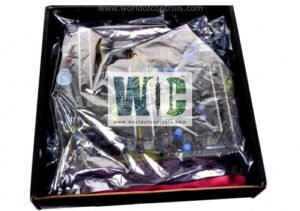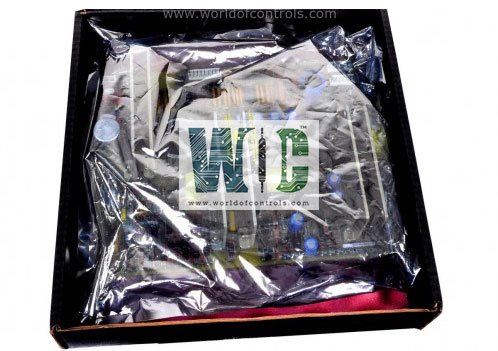
Industrial control systems often monitor critical equipment where accurate status information and dependable signal processing are essential. Turbines, generators, compressors, and other industrial machinery may rely on contact inputs to determine whether equipment is operating, stopped, active, or in a particular operating state. When these signals are used within critical control and protection functions, reliability becomes an important consideration.
A TMR contact input assembly uses a triple modular redundant architecture to support dependable signal handling. The IS230TDBTH4A TMR Contact Input Assembly is an example of specialized GE control hardware associated with this type of application. Understanding how TMR input architecture works can help maintenance teams better manage critical industrial control systems.
What Is a TMR Contact Input Assembly?
TMR stands for Triple Modular Redundancy. In a TMR control architecture, three independent channels can process related input information. The system can compare the results from these channels and use redundancy to maintain dependable operation when an individual channel experiences a problem.
A contact input assembly provides an interface between external contact devices and the control system. These contacts may represent equipment status, switch positions, alarms, or other discrete conditions.
Combining contact input functionality with TMR architecture provides a redundant approach to receiving important field information. The exact implementation depends on the control-system design and associated hardware.
How Does TMR Improve Contact Input Reliability?
A conventional single input path can be affected by a hardware fault that interrupts the associated signal. TMR architecture introduces additional channels, allowing the system to compare input information from multiple paths.
This redundancy can help the control system identify discrepancies between channels and maintain appropriate operation according to its configured logic.
For critical industrial applications, redundancy can be particularly valuable because an individual hardware fault does not necessarily need to result in an immediate loss of the overall input function.
The purpose is not simply to add more hardware. TMR architecture is designed to provide a structured method of handling potential faults while maintaining dependable control and protection functions.
Why Are Contact Inputs Important in Industrial Automation?
Contact inputs provide discrete status information from field equipment. A control system may use these signals to determine whether a device is running, stopped, open, closed, active, or in an alarm condition.
These signals can become part of automated control sequences and protection logic. For example, a controller may use equipment status information to determine whether the next step in an operating sequence can proceed.
If a critical contact signal is unavailable or incorrect, the control system may not have an accurate representation of field conditions. Reliable input hardware is therefore an important part of the overall control architecture.
Key Benefits of a TMR Contact Input Assembly
A TMR contact input assembly can support several important control-system objectives:
- Redundant processing of critical contact signals
- Improved fault tolerance
- Better continuity of input monitoring
- Support for critical control and protection applications
- Easier identification of certain channel discrepancies
- Greater resilience against individual channel failures
These benefits depend on the complete TMR system architecture, including controllers, wiring, field devices, and associated diagnostic functions.
Maintaining TMR Contact Input Hardware
Regular maintenance is important for redundant control systems. Although redundancy can improve fault tolerance, it does not eliminate the need for inspection and testing.
Maintenance personnel can inspect the assembly, connectors, wiring, and associated terminals for physical deterioration. Heat, dust, moisture, vibration, and electrical stress can affect industrial electronic equipment over time.
System diagnostics should also be reviewed for channel discrepancies, communication problems, or other indications of abnormal operation.
When an input signal appears incorrect, technicians should evaluate the complete signal path. The field contact, wiring, termination, input assembly, associated controller, and system configuration can all contribute to an apparent input problem.
What Should Be Considered When Replacing the Assembly?
Exact component identification is particularly important for redundant control architectures. A replacement component must be compatible with the specific system configuration and intended application.
For the IS230TDBTH4A, maintenance teams should verify the complete part number and consult applicable system documentation before installation.
Factors such as channel configuration, associated control hardware, connections, mounting requirements, and system architecture should be considered.
A component that appears similar but is designed for a different configuration may not provide the required functionality. Careful verification can reduce the risk of compatibility problems during maintenance.
Why Are Spare TMR Components Important?
Critical control systems often require rapid maintenance response. If a redundant input component develops a fault, the system may continue operating depending on its architecture, but the fault should still be investigated and addressed.
Maintaining suitable spare components can help maintenance teams restore the affected hardware without waiting for extended sourcing cycles.
This can be particularly useful for legacy GE control systems where specialized components may become difficult to obtain. Unused and professionally rebuilt industrial control components can be potential sourcing options, subject to proper inspection and compatibility verification.
Troubleshooting TMR Contact Input Problems
Troubleshooting should begin by identifying the specific input and determining whether the issue affects one channel or multiple channels.
Technicians can review system diagnostics, inspect field wiring, check contact devices, and examine connections to the input assembly. Differences between redundant channels can provide useful information during fault isolation.
An unexpected input indication does not necessarily mean that the TMR assembly has failed. A defective field contact, damaged cable, loose connection, or configuration issue can produce similar symptoms.
A structured troubleshooting process can help identify the actual source of the problem while avoiding unnecessary component replacement.
Conclusion
A TMR Contact Input Assembly provides a redundant approach to receiving and processing critical contact signals in compatible industrial control systems. By using triple modular redundancy, the architecture can improve fault tolerance and support reliable monitoring of important field conditions.
The IS230TDBTH4A TMR Contact Input Assembly represents specialized GE control hardware intended for applications where dependable contact input handling is important. Maintaining the assembly, associated wiring, field devices, and redundant control infrastructure can help preserve system reliability.
Accurate part identification, regular inspection, systematic troubleshooting, and appropriate spare-parts planning are important when maintaining TMR-based control systems. Together, these practices can help industrial facilities maintain dependable control and protection functions over the operating life of their equipment.
Read Also – IS210JPDDG2A DC Power Distribution Assembly Module