As modern communication systems move toward greater bandwidth and higher port densities, network infrastructure must become more efficient without sacrificing reliability. Multi-fiber connectivity has emerged as an important part of this evolution, particularly in data centers, structured cabling environments, and high-capacity optical networks. An MPO Connector provides a practical method of terminating multiple optical fibers through a single interface, helping infrastructure designers simplify complex fiber connections. FSG Network supports this growing area of optical connectivity with fiber components intended for demanding networking environments.
What Makes MPO Connectivity Different?
Traditional fiber connections often use individual connectors for individual fibers. That approach can work effectively in smaller installations, but the physical requirements increase as the number of optical links grows.
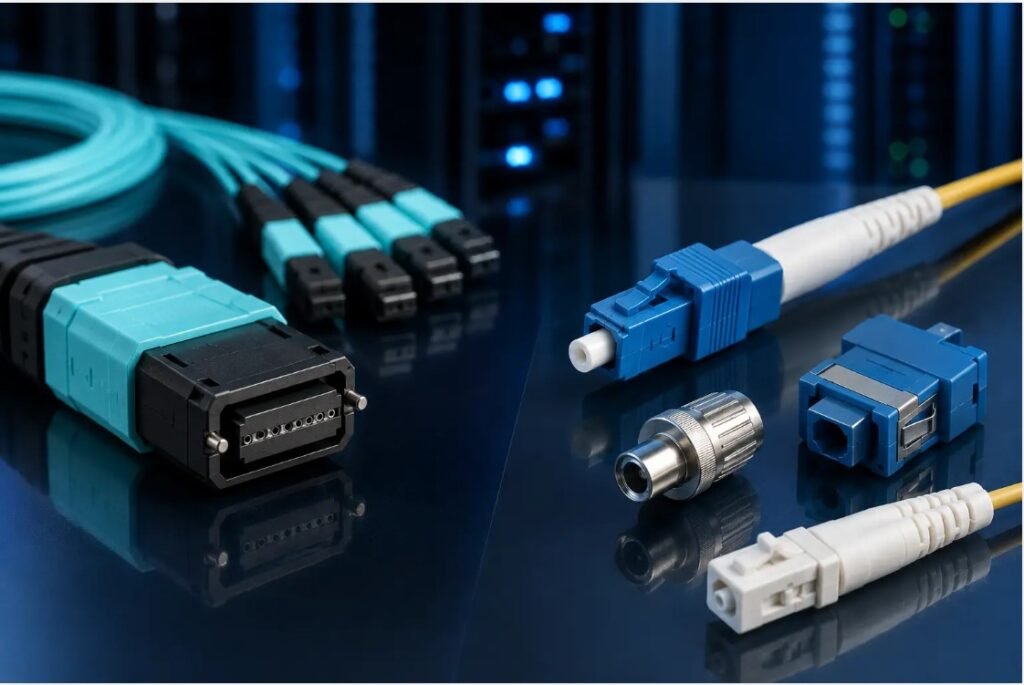
An MPO Connector takes a different approach by bringing multiple fibers together within one connector body. Instead of managing every fiber as a separate connection, technicians can work with a multi-fiber interface designed for high-density deployments.
This architecture can be particularly useful when many optical channels need to be connected between network equipment, patching systems, or distribution points. The result is a connectivity method that can help reduce physical complexity and support more structured installations.
The Role of MPO in Data Center Design
Data centers contain a dense concentration of switches, servers, storage equipment, and optical transceivers. As equipment density increases, the number of connections required between different areas of the facility can grow rapidly.
An MPO Connector can help address this challenge by supporting multiple fiber connections through a compact interface. This can make it easier to establish backbone and interconnection links while keeping rack layouts more manageable.
However, the connector should be considered as one part of a complete system. Cable assemblies, adapters, patch panels, transceivers, polarity, fiber count, and equipment interfaces must all work together for the intended network architecture.
FSG Network provides fiber connectivity products that can support projects where compact multi-fiber connectivity is an important requirement.
Understanding Fiber Count
One of the first considerations when selecting an MPO-based system is fiber count. Different applications can require different numbers of fibers, and the connector configuration should correspond to the requirements of the network.
For example, a deployment may be designed around a particular multi-fiber trunk or breakout arrangement. Choosing a connector without considering the complete connection path can result in compatibility issues during installation.
Network designers should therefore identify the required fiber count before ordering components. This simple planning step can help ensure that cables, connectors, adapters, and equipment are appropriately matched.
MPO Trunks and Structured Connections
MPO trunk assemblies are frequently used where multiple fibers must be transported between two locations. Instead of installing numerous individual fiber cables, a trunk can consolidate multiple optical paths into a structured assembly.
When paired with an appropriate MPO Connector, these assemblies can provide an organized method for connecting distribution areas, racks, and network equipment. This approach can also simplify large-scale installations by reducing the number of individual connection points that technicians must manage.
FSG Network’s range of fiber optic products is relevant to structured environments where multi-fiber connectivity and efficient cable organization are priorities.
Polarity: A Critical Technical Consideration
Fiber polarity is one of the most important details in multi-fiber connectivity. Optical signals need to travel from the correct transmitting position to the corresponding receiving position. In a multi-fiber system, maintaining this relationship across multiple components requires careful planning.
An MPO Connector installation should therefore be designed with the appropriate polarity method in mind. Connector key orientation, cable assemblies, adapters, and transceiver interfaces can all influence how the optical paths are arranged.
Technicians should verify the manufacturer’s specifications and the network design before installation. Proper polarity planning can prevent connectivity problems that may otherwise be difficult to diagnose after a system has been deployed.
Connector Quality and Optical Performance
Physical compatibility alone does not guarantee a successful fiber connection. Optical performance also depends on factors such as insertion loss, return loss, end-face condition, alignment, and component quality.
Clean connector interfaces are particularly important. Dust and other contamination can interfere with optical transmission and potentially affect network performance. Proper inspection and cleaning procedures should therefore form part of professional fiber installation and maintenance.
FSG Network can be considered when sourcing components for optical infrastructure where consistent connectivity and appropriate component matching are essential.
Space Efficiency in High-Density Environments
Physical space becomes increasingly valuable as network equipment is concentrated into smaller areas. Conventional individual-fiber connections can create large cable bundles and make rack management more difficult.
Using an MPO Connector can provide a more compact connection approach by consolidating multiple fibers into a single interface. This can help network designers create cleaner pathways and make more efficient use of available panel and rack space.
The practical benefit depends on the overall design. A connector alone cannot solve poor cable routing or inadequate planning, but multi-fiber connectivity can be an important component of a well-structured high-density system.
Breakout Applications
Not every piece of equipment uses a multi-fiber interface. In some network architectures, a multi-fiber trunk may need to transition into individual duplex connections.
Breakout assemblies can address this requirement by separating multiple fibers from a consolidated connection into individual connector interfaces. This provides flexibility when connecting different types of equipment within the same infrastructure.
A properly specified MPO Connector system can therefore support both consolidated backbone connections and equipment-level connectivity when the appropriate breakout components are incorporated into the design.
Planning an MPO-Based Network
Before implementing an MPO system, infrastructure professionals should document the complete connection path. This includes identifying the equipment interfaces, fiber type, required fiber count, connector gender where applicable, polarity method, trunk configuration, and patching requirements.
It is also important to consider future expansion. A network designed only around current connections may require significant modification as additional equipment is introduced. Allowing sufficient capacity and maintaining organized documentation can make future changes considerably easier.
FSG Network can support this type of planning by providing fiber connectivity components suitable for different sections of an optical infrastructure.
Maintenance and Deployment Practices
Professional installation practices remain essential regardless of the connector technology being used. Multi-fiber connectors should be protected from contamination and physical damage during transportation, installation, and maintenance.
Technicians should avoid unnecessary handling of connector end faces and use appropriate inspection and cleaning procedures. Cables should also be routed according to specified bend limitations and protected from excessive pulling or mechanical stress.
Clear labeling is another practical consideration. In a dense environment, properly identified multi-fiber assemblies can save considerable time when technicians need to trace or modify connections.
Why MPO Technology Continues to Matter
The growth of high-bandwidth networking has increased the importance of efficient optical connectivity. Data centers and communication facilities need infrastructure capable of supporting substantial numbers of optical channels without creating unmanageable physical complexity.
An MPO Connector offers a compact multi-fiber approach that can fit naturally into these environments. Its usefulness is not simply about having more fibers in one connector; it is about creating a structured connectivity architecture in which multiple components work together.
For organizations evaluating multi-fiber infrastructure, FSG Network provides access to fiber connectivity products that can be incorporated into carefully engineered networking systems.
Conclusion
Modern optical networks require more than high transmission capacity. They also need practical methods for managing large numbers of fiber connections within increasingly dense physical environments. An MPO Connector addresses this requirement by consolidating multiple optical fibers into a compact connection interface.
Successful deployment depends on careful attention to fiber count, polarity, cable configuration, connector compatibility, optical performance, cleaning, and installation practices. When these factors are planned as part of a complete system, MPO connectivity can help create organized and scalable fiber infrastructure.
FSG Network offers fiber connectivity components for professional applications where efficient multi-fiber networking is required. By selecting the right combination of connectors, trunks, breakout assemblies, and supporting components, network professionals can develop optical systems that are structured for current connectivity demands while remaining adaptable to future expansion.