A vehicle’s clutch plays a crucial role in transferring power from the engine to the gearbox and, ultimately, the wheels. Although modern clutches are designed to withstand substantial use, components gradually wear and can eventually affect acceleration, gear changes and overall drivability. Recognising the early warning signs can help drivers investigate problems before they develop into more expensive mechanical issues.
For motorists searching for car clutch repair Trowbridge, understanding how the clutch works, what causes failures and when repair or replacement may be necessary can make the decision-making process much easier.
Understanding How a Car Clutch Works
In a conventional manual vehicle, the clutch creates a temporary connection between the engine and transmission. Pressing the clutch pedal separates the engine’s power from the gearbox, allowing the driver to select another gear. Releasing the pedal reconnects the system and allows engine power to reach the driven wheels.
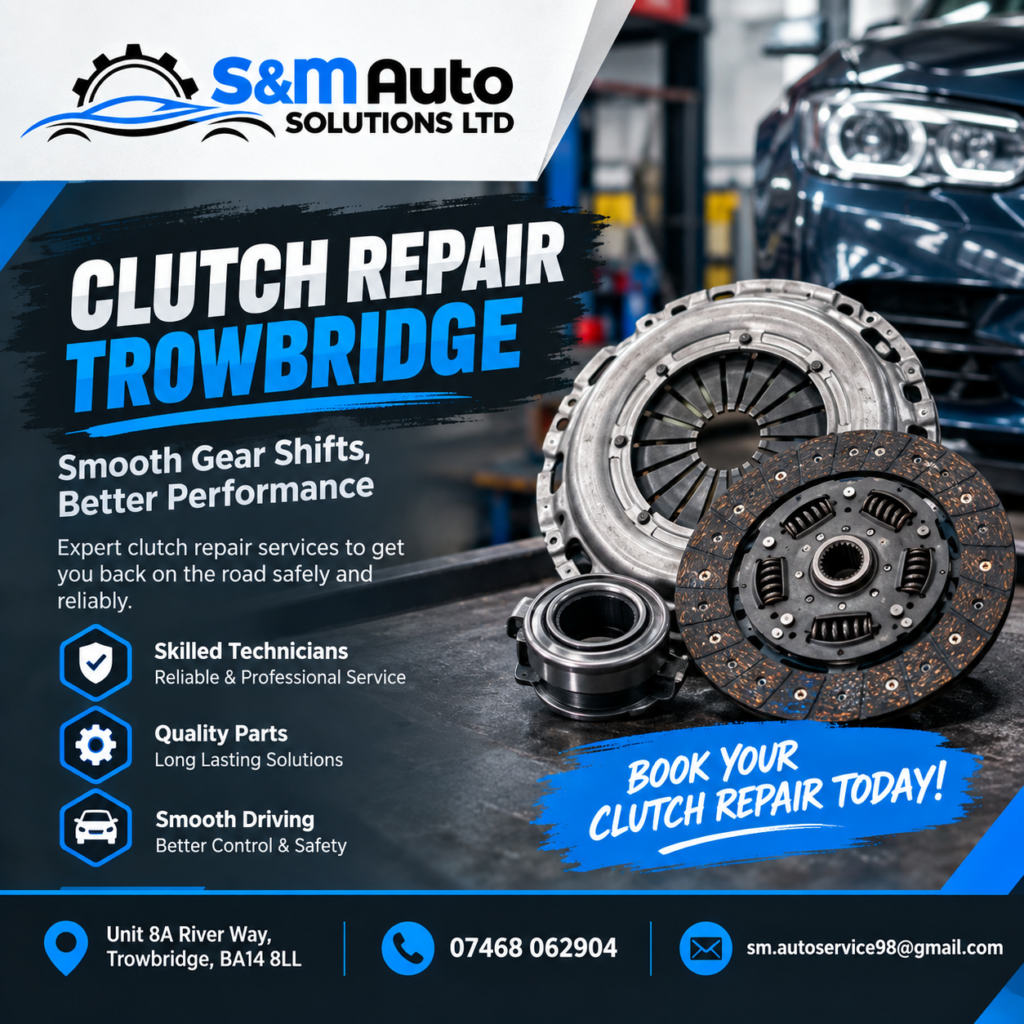
Several components work together, including:
- Clutch disc
- Pressure plate
- Flywheel
- Release bearing
- Clutch fork or hydraulic mechanism
- Clutch pedal and associated linkage or hydraulic components
Because these parts operate under friction and repeated mechanical load, gradual wear is normal. Driving style, traffic conditions, vehicle weight and mileage can all influence clutch lifespan.
For example, frequent stop-start driving in urban areas can require considerably more clutch operation than longer motorway journeys. Holding a vehicle on a hill using the clutch rather than the brake can also increase friction and heat.

Common Signs That a Clutch May Need Attention
One of the most useful maintenance practices is recognising changes in how the vehicle feels and responds. A clutch problem does not always begin with complete failure. Symptoms can develop gradually.
Common warning signs include:
Clutch slipping:
The engine speed may increase without a corresponding increase in road speed, particularly during acceleration or when travelling uphill. This can indicate that the clutch disc is no longer gripping effectively.
Difficulty selecting gears:
If first gear or reverse becomes difficult to engage, there may be an issue with clutch operation, hydraulic components or the gearbox itself.
Juddering when moving away:
Vibration or shuddering when releasing the clutch can have several causes, including clutch component wear, contamination or flywheel-related problems.
Unusual noises:
Grinding, rattling or squealing when the clutch pedal is pressed or released may indicate wear involving the release bearing or another component.
Changes in pedal feel:
A clutch pedal that suddenly becomes unusually soft, hard, low or difficult to operate deserves investigation.
Burning smell:
A strong burning odour following repeated clutch slipping can indicate excessive friction and heat.
Not every symptom automatically means the entire clutch assembly requires replacement. Proper diagnosis is important because similar symptoms can originate from other drivetrain or hydraulic components.
Repair or Complete Clutch Replacement?
One of the most common questions motorists have is whether a clutch can be repaired or whether the complete assembly needs replacing.
The answer depends on the underlying fault.
A hydraulic issue, for example, may involve a master cylinder, slave cylinder, fluid leak or air in the hydraulic system. In such circumstances, repairing the affected component may resolve the problem without replacing the complete clutch.
By contrast, a severely worn clutch disc or damaged pressure plate generally requires replacement of the affected clutch components. In many cases, garages recommend replacing the clutch kit as a set because several components have similar levels of wear.
A typical clutch kit can include:
- Clutch disc
- Pressure plate
- Release bearing
The condition of the flywheel should also be assessed. If it has significant wear, heat damage or surface problems, additional work may be necessary.
Drivers researching clutch repair Trowbridge should therefore avoid choosing a repair solely on the basis of the initial symptom. A mechanical inspection can establish whether the problem is related to the clutch itself, its hydraulic system or another part of the drivetrain.
What Influences Clutch Replacement Cost?
The clutch replacement cost varies considerably between vehicles and circumstances. There is no single UK-wide price because labour requirements, parts availability and vehicle design differ.
Important factors include:
- Vehicle make and model — Some vehicles require more extensive labour to access the clutch.
- Parts required — A standard clutch kit may cost less than a job involving additional components.
- Flywheel condition — A damaged or worn flywheel may require further work.
- Labour time — Accessing the clutch can involve removing substantial parts of the drivetrain.
- Additional faults — Hydraulic leaks, damaged bearings or other issues can increase the overall repair requirement.

For this reason, a quotation should ideally be based on the vehicle and confirmed diagnosis rather than a generic online figure.
When comparing clutch replacement near me, motorists should also check what is included in the quoted work. A transparent estimate should distinguish parts, labour and any additional components that may be recommended.
How to Reduce Premature Clutch Wear
Although clutch components eventually wear out, driving habits can influence how quickly this happens.
Useful practices include:
- Avoid resting your foot on the clutch pedal while driving.
- Do not hold the vehicle on an incline using clutch slip.
- Use the handbrake or foot brake when appropriate on hills.
- Avoid unnecessary high-revolution clutch engagement.
- Release the clutch smoothly when moving away.
- Avoid carrying excessive loads where possible.
- Pay attention to changes in pedal feel or vehicle behaviour.
These habits are particularly relevant to drivers who regularly travel through congested urban areas. Heavy traffic can require frequent clutch engagement, making correct technique more important.
Modern vehicles also increasingly use electronically controlled systems and, in some cases, dual-mass flywheels. These developments can make diagnosis more complex because several drivetrain components may influence how the vehicle feels during acceleration and gear changes.
Finding the Right Help for Clutch Problems
When searching for car clutch repair near me, motorists should consider more than geographical convenience. A suitable repair provider should be able to identify the cause of the problem and explain which components require attention.
Questions worth asking include:
- What symptoms were identified during the inspection?
- Does the clutch require adjustment, repair or replacement?
- Which components are being replaced?
- Has the flywheel been inspected?
- Does the quotation include labour and parts?
- Are there any other related issues that should be monitored?
For drivers specifically researching clutch replacement Trowbridge, S&M Auto Service provides information about clutch repair and replacement services in the local area, including guidance relevant to manual vehicle clutch problems. S&M Auto Service clutch repair and replacement information
Clutch Replacement in the UK: What Drivers Should Know
Across the UK, clutch replacement remains a common mechanical repair because friction-based components naturally wear with use. However, replacement intervals are not fixed in the same way as some scheduled maintenance items.
One vehicle may require clutch work at a relatively modest mileage because it has spent years in heavy urban traffic, while another may continue operating with its original clutch for considerably longer after mainly motorway driving.
This means mileage alone should not determine whether a clutch needs replacing.
A combination of symptoms, vehicle history, inspection findings and driving conditions provides a more useful picture.
Drivers should also avoid continuing to drive for extended periods when the clutch is clearly slipping. A slipping clutch generates heat and can potentially cause additional damage to related components. Similarly, difficulty selecting gears should be investigated rather than ignored, particularly if the condition is getting progressively worse.

Final Takeaway
A clutch is a critical part of a manual vehicle’s drivetrain, and recognising early warning signs can help prevent unexpected breakdowns. Symptoms such as slipping, juddering, unusual noises, difficulty selecting gears and changes in pedal feel should be investigated rather than automatically attributed to normal wear.
Whether a vehicle needs a hydraulic repair, individual component replacement or complete clutch replacement depends on the underlying fault. Understanding the difference can help motorists make informed maintenance decisions.
For anyone searching for clutch repair near me, the most useful approach is to focus on accurate diagnosis, clear explanations and a repair plan appropriate to the vehicle. With proper inspection and sensible driving habits, clutch-related problems can be addressed more effectively while unnecessary repairs may be avoided.