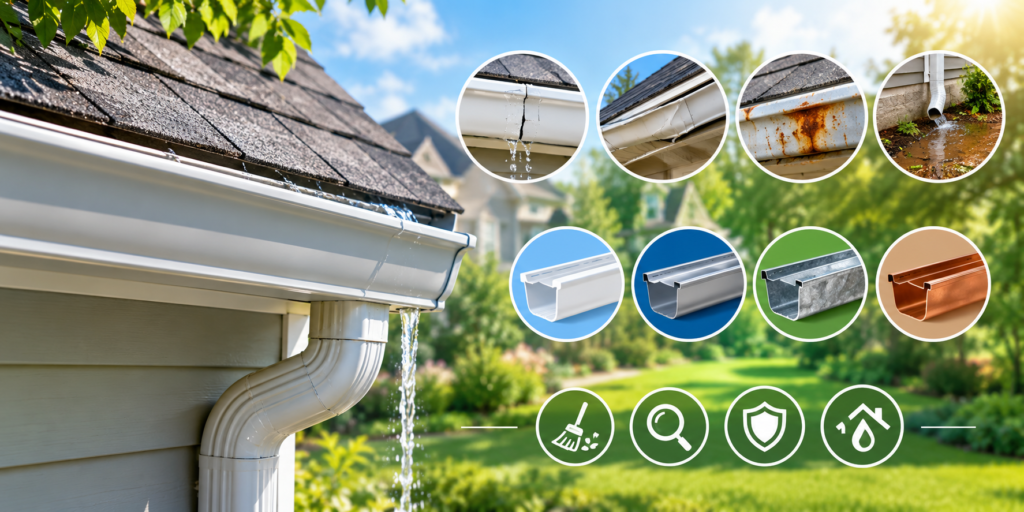
Gutters
Gutters do an important job that is easy to overlook. They collect rainwater from the roof and guide it away from siding, landscaping, and the foundation. When gutters become worn out, water can spill over the edges, leak through joints, or pool close to the house. That can turn a small maintenance issue into costly home repairs.
So, how often should gutters be replaced? There is no single date for every home. Material, installation quality, climate, maintenance, and storm exposure all affect the answer. A practical approach is to inspect the system regularly and replace it when age is combined with clear signs of failure.
Understanding Gutter Lifespan
The gutter lifespan depends heavily on the material. Vinyl generally has a shorter service life, while aluminum and galvanized steel can serve a home for around two decades. Copper can last for several decades and may remain functional for 50 years or more with proper care.
Typical Lifespans by Material
| Gutter material | Typical service life |
| Vinyl | 10 to 20 years |
| Aluminum | About 20 years |
| Galvanized steel | About 20 years |
| Copper | 50 years or more |
Source: This Old House
Current home improvement guidance places common residential gutters around the 10 to 20 year range, while copper can last much longer.
Maintenance Can Extend Service Life
Regular cleaning and inspection can help keep gutters functioning properly and reduce the buildup that contributes to damage. Leaves, twigs, dirt, and other debris can restrict water flow through the channels and downspouts, allowing water to collect or overflow. Keeping the system clear helps rainwater move away from the roof and foundation efficiently. The EPA includes cleaning and repairing roof gutters among practices that support moisture control around the home, helping maintain proper drainage and protect surrounding areas.
When Should Gutters Be Replaced?
Knowing when to replace gutters becomes easier when several warning signs appear together. A few isolated issues may be repairable, but widespread deterioration usually points toward replacement.
· Persistent Leaks and Cracks
A small leak at one joint does not automatically mean the entire system has failed. However, repeated leaks across multiple sections can indicate that the material, seams, or sealants are reaching the end of their useful life. Cracks and splits can also allow water to escape.
· Sagging or Pulling Away
Gutters should maintain a consistent slope so water can move toward downspouts. Sections that sag, bow, or pull away from the fascia can collect standing water and place extra stress on fasteners. If several sections are affected, replacing the system may make more sense than repeated adjustments.
· Rust and Visible Deterioration
Rust spots on steel gutters can progress into holes. Aluminum can dent or bend, while vinyl can become brittle and crack. Widespread corrosion or material breakdown is a strong reason to consider replacement.
· Water Damage Around the Home
Overflowing gutters can send roof runoff down exterior walls or toward the foundation. The gutters and downspouts help direct roof water away from the building and reduce soil saturation around the foundation.
Stained siding, eroded soil, puddling, or damp areas near the foundation may indicate that drainage is no longer handling runoff properly.
How Long Do Gutters Typically Last Before They Need Replacing?
For many homeowners, the practical answer is around 20 years for common aluminum or steel systems, although some systems fail sooner and premium materials can last much longer. Most gutter systems last about 15 to 20 years, while material and maintenance can change the expected service period.
What Affects Gutter Replacement Frequency?
Several conditions can change the gutter replacement frequency from one property to another.
· Climate and Weather
Heavy rain puts greater demands on drainage systems. Snow, ice, hail, strong winds, and temperature swings can damage gutters. Coastal environments can accelerate corrosion in susceptible metals because of salt exposure.
· Trees and Debris
Homes surrounded by mature trees often need more frequent cleaning because leaves and twigs collect inside the channels. Regular debris removal helps maintain water flow and reduce strain on the system. EPA guidance emphasizes maintaining drainage components and addressing standing water.
A system that repeatedly overflows during ordinary rainfall deserves attention, even if it looks intact. Performance matters because hidden drainage failures can cause damage before visible deterioration becomes obvious outside.
· Installation Quality
A gutter system can look new and still perform poorly if installed with inadequate slope, weak fastening, or poorly positioned downspouts. Correct sizing and placement matter because the system must handle roof runoff.
For homeowners weighing repair or replacement, Impact Exteriors can provide guidance from experienced roofers in Alexandria, VA, to help identify drainage issues linked to the roof edge, fascia, or flashing.
Should Old Gutters Always Be Replaced?
Not necessarily. Replacement becomes more compelling when repairs are frequent, multiple sections are failing, or the system can no longer direct water properly. A contractor can inspect channels, seams, fasteners, downspouts, fascia, and surrounding areas before recommending a solution.
Repair can make sense for isolated leaks, loose hangers, or a damaged downspout. Replacement is generally more practical when deterioration is widespread, or the system has reached the end of its expected service life.
A Smart Approach to Gutter Replacement
Regular inspections make gutter decisions easier and help identify signs of wear before they become more serious. Look for leaks, rust, cracks, sagging sections, separated joints, damaged fasteners, and water collecting where it should not. Pay attention to areas where gutters pull away from the roofline or fail to direct water properly. After major storms, a visual check can reveal new damage, loose components, or blockages, helping you address issues before the next rainfall creates a larger problem.
FAQS
How often should residential gutters be replaced?
Most common aluminum and steel gutters last around 20 years, while vinyl lasts 10 to 20 years and copper lasts longer.
What signs indicate gutters need replacement?
Persistent leaks, cracks, rust, sagging sections, separated joints, and water pooling around your foundation can indicate replacement is necessary.
Can regular gutter maintenance extend their lifespan?
Yes, regular cleaning, inspections, and prompt repairs can help maintain proper drainage, reduce damage, and extend gutter service life significantly.
Conclusion
Gutters do not have a universal expiration date. Common aluminum and steel systems often reach the 20-year range, while vinyl may require replacement sooner and copper can last decades longer. The best time to replace gutters is when age is accompanied by persistent leaks, widespread corrosion, sagging, cracking, or poor water control.
A professional inspection can identify repairable issues, recognize broader deterioration, and help plan a replacement that supports proper roof drainage. For homeowners seeking dependable guidance from a qualified roofing contractor in Herndon, VA, Impact Exteriors provides a practical path toward a safer, better-performing exterior drainage system.