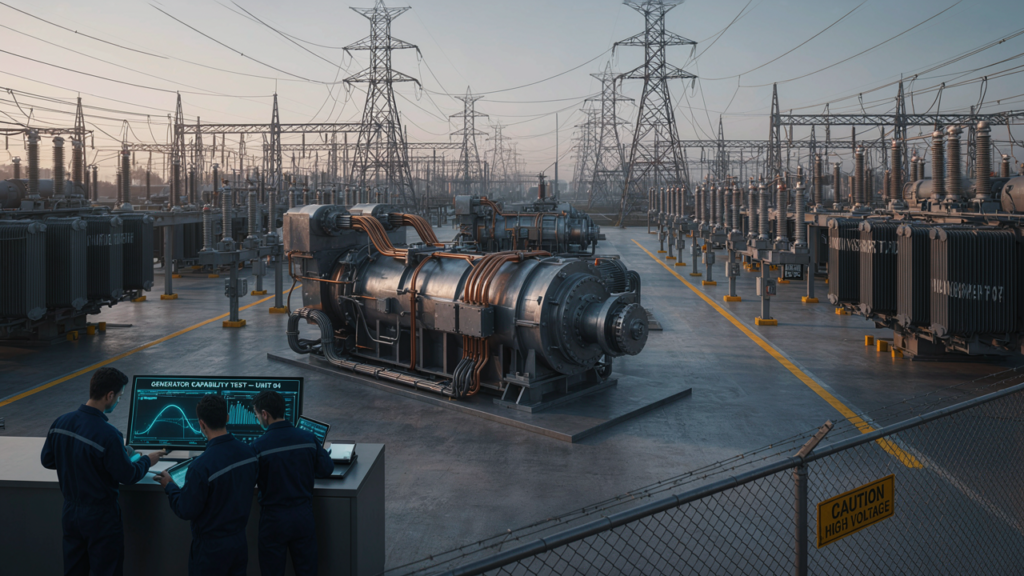
1. Understanding Generator Capability Testing
Power grids depend on generators to produce electricity within specific operating limits. A generator may be capable of supplying different amounts of real and reactive power depending on voltage, temperature, cooling conditions, excitation-system performance, and other operating factors. Verifying these capabilities is essential for maintaining a reliable and predictable power system.
Generator capability testing provides a structured way to confirm how a generating unit performs across its permitted operating range. Rather than relying entirely on design information or historical assumptions, engineers can use test results to understand the generator’s actual operating characteristics.
This information becomes particularly valuable as power systems become more complex. Growing renewable generation, changing load patterns, inverter-based resources, and increasingly interconnected transmission networks all require generation assets to perform predictably under different operating conditions.
2. Why Generator Capability Affects Grid Reliability
A generator does more than simply produce megawatts. Its ability to provide or absorb reactive power can have a significant effect on transmission voltage and overall system stability. If the actual capability of a generating unit differs from the values assumed by system planners, power-flow and stability studies may not accurately represent real operating conditions.
For example, an assumed generator capability curve may indicate that a unit can provide a particular level of reactive power at a given real-power output. If testing later demonstrates a smaller capability range, system operators and planners may need to reconsider voltage-support assumptions.
Reliable generator data therefore contributes to better planning decisions. Accurate capability information can help engineers evaluate voltage performance, reactive-power requirements, contingency conditions, and transmission-system behavior with greater confidence.
3. The Role of NERC Generator Capability Testing
For organizations operating within the North American bulk power system, compliance requirements can make generator testing especially important. NERC generator capability testing supports the verification of generating-unit characteristics used for planning and operational purposes.
The North American Electric Reliability Corporation (NERC) establishes reliability standards that apply to various aspects of bulk power-system operation and planning. Depending on the generating facility, interconnection requirements, and applicable standards, owners and operators may need to demonstrate that generator data is accurate and supported by appropriate testing or engineering documentation.
A well-organized NERC generator testing program can help organizations maintain reliable technical records while identifying discrepancies between assumed and demonstrated generator performance.
The exact testing requirements depend on the applicable reliability standards, generator characteristics, registration status, and regional requirements. For this reason, testing programs should be developed around the specific requirements applicable to the facility rather than using a one-size-fits-all approach.
4. What Generator Capability Testing Can Reveal
A properly planned test can provide valuable information about generator operating characteristics. Engineers may evaluate parameters associated with real-power output, reactive-power capability, terminal voltage, excitation behavior, and operating limitations.
The resulting information can then be compared with existing models and planning data. This comparison is important because power-system studies are only as reliable as the data and models behind them.
Testing may identify situations such as:
- Differences between documented and demonstrated generator capability
- Reactive-power limitations that were not reflected in existing models
- Operating restrictions under particular conditions
- Inconsistencies between generator data and planning assumptions
- Changes in performance following equipment modifications or upgrades
- Data that requires validation before being used in system studies
Identifying these issues early gives engineering teams an opportunity to update models and documentation before inaccurate information affects larger planning or operational decisions.
5. How Testing Supports Power-System Studies
Generator capability data feeds into many engineering activities. Power-flow studies, voltage assessments, contingency analysis, dynamic simulations, and other grid studies depend on representative generator characteristics.
When generator information is accurate, engineers can build more realistic models of how generating units interact with the transmission network. This is particularly important during high-load conditions, transmission outages, voltage disturbances, and other stressed system scenarios.
For example, reactive-power capability can influence voltage profiles and the availability of voltage support. Similarly, generator operating limits can affect how much generation can remain online or how system operators respond to changing network conditions.
For renewable and hybrid facilities, accurate generator and plant-level information is also increasingly important as inverter-based resources become a larger part of the generation mix. Validated data helps engineers distinguish between theoretical operating characteristics and performance that can actually be delivered by the facility.
6. Building a Reliable Testing and Compliance Strategy
Generator capability testing should be treated as part of an ongoing engineering and asset-management process rather than an isolated compliance exercise. A strong program connects testing, documentation, modeling, analysis, and regulatory requirements.
A practical approach typically begins with reviewing the generator’s existing technical data, applicable requirements, previous test results, and current planning models. Engineers can then identify the parameters that require verification and establish an appropriate testing methodology.
After testing, the results should be carefully reviewed and compared with the values currently used in planning and operational models. Any significant differences should be investigated, documented, and addressed through appropriate model or record updates.
For generator owners and operators, this process can provide benefits beyond compliance. Better data can improve engineering decisions, strengthen planning studies, support more accurate system assessments, and provide greater confidence in generator performance.
Conclusion
Reliable electric grids depend on accurate information about the assets connected to them. Generator capability testing provides an important link between a generating unit’s documented characteristics and its demonstrated operating performance.
By validating generator capability, identifying discrepancies, and maintaining accurate engineering models, organizations can improve the quality of power-system studies and support more dependable grid planning. NERC generator capability testing and related NERC generator testing activities can also help generator owners maintain appropriate technical documentation and address applicable reliability requirements.
As generation portfolios and transmission networks continue to evolve, accurate generator data will remain an essential foundation for safe, reliable, and efficient power-system engineering.