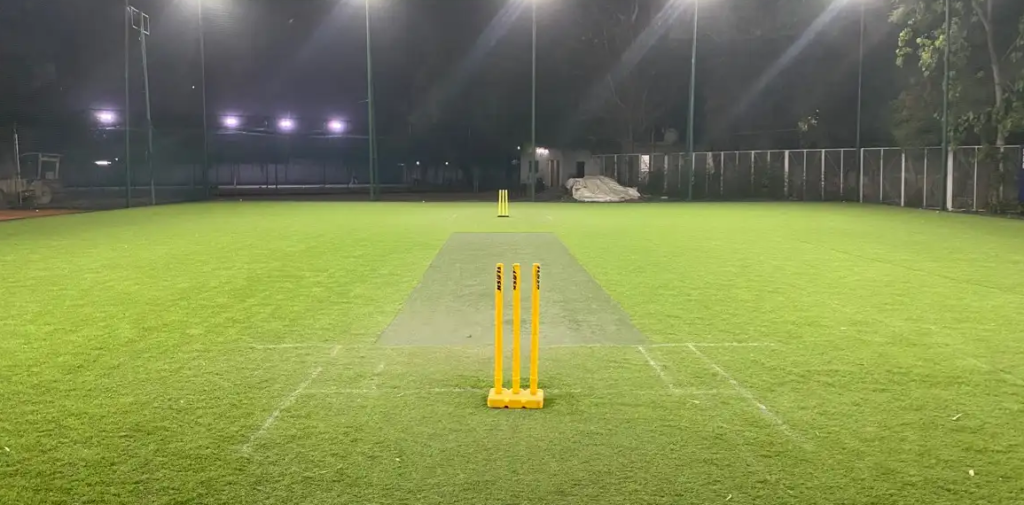
Before you book a box cricket turf, check five things: the quality of the grass surface, the netting and structure, the lighting and drainage, the safety setup, and the booking terms. Get these right, and your game stays safe and fun. Miss them and you may end up with sore knees, lost balls, or a cancelled evening slot.
Not every box cricket turf is built the same. Two grounds can look alike in photos, but play very differently. Here’s what to look for, and why each point matters once you’re actually on the pitch.
1. Check the Turf Surface First
The surface decides how the ball bounces, how fast you can run, and how your body feels after a two-hour match.
Look for synthetic grass with a shock-absorbing layer underneath. This is a padded base under the turf. It softens every dive and sprint. Without it, even a short game can leave your knees and ankles aching the next day.
Here’s how common surfaces compare:
- Bare cement or concrete: The ball bounces high and fast. Falls cause scrapes and bruises. Cheap to build, but hard on the body.
- Thin carpet-style turf on concrete: Looks green, but gives almost no cushion. Players slip and skin their elbows.
- Quality synthetic turf with infill and a padded base: Steady bounce, good grip, and a softer landing. This is what you want.
- Natural grass: Great feel, but rare for box formats. It also needs heavy upkeep and gets patchy fast with daily use.
A quick test: Walk across the turf and press your shoe into it. The grass blades should spring back. If they look flat, worn, or bald in patches, the turf is old or poorly maintained.
Also ask about the grass height. Shorter fibres give a faster ball. Taller ones slow it down. Neither is wrong, but you should know which one suits your group.
2. Look at the Netting and Structure
A box cricket turf is a closed cage. That means the walls and roof matter as much as the floor.
Check these points:
- Net strength: The netting should be tight, with no sagging or holes. A loose net makes the ball drop dead instead of rebounding properly.
- Frame quality: Look for a solid steel frame. Check for rust, wobbly poles, or sharp metal edges.
- Height of the enclosure: Low roofs ruin lofted shots. Higher nets let batters play naturally.
- Corners and gaps: Balls escape through small gaps, and a lost ball can end a match early.
This is where the builder behind the ground really shows. If you’re planning your own setup, look for a company that does proper box cricket construction in Delhi and understands local weather. Delhi has hot summers, heavy monsoon rain, and dusty winds. A frame that isn’t treated for rust, or netting that isn’t UV-resistant, won’t last a season.
3. Check the Lighting and Drainage
Most box cricket games happen after work, between 7 pm and midnight. So lighting isn’t a bonus. It’s half the experience.
Good lighting means:
- Lights spread evenly across the turf, with no dark corners
- No harsh glare directly in the batter’s eyes
- Lights placed high enough that the ball doesn’t hit them
Visit once in the evening if you can. A turf that looks great at noon can be a nightmare at 9 pm.
Drainage is just as important. Delhi’s monsoon can turn a poorly built turf into a pond. Ask what happens after heavy rain. A well-built ground drains water quickly and is usually playable again within hours. A badly built one stays soggy for days, and you’ll lose booked slots.
Also look at the edges of the turf. Puddles, mud, or a damp smell usually mean water is getting trapped underneath.
4. Look at the Safety Setup
Box cricket is fast. Players are close together, the space is small, and the ball is usually hard or semi-hard. A few small safety details make a big difference.
Check for:
- Padded poles and corners: Players dive and run into walls. Padding prevents bad bruises.
- Smooth, non-slip edges: The area where turf meets the wall should be clean and flat, not lifted or torn.
- A first-aid kit and clear access to an exit
- Clean surroundings: Loose stones, broken glass, or stray tools near the turf are red flags.
- Footwear rules: Good grounds ask you to wear flat-soled shoes or turf shoes. Spikes tear synthetic grass and cause injuries.
A well-run ground cares about these things without being asked. If the staff seems unbothered when you raise them, think twice before booking.
5. Read the Booking Terms Carefully
This is the point most people skip, and it’s where most arguments start.
Before you pay, get clear answers to these:
- Slot length: Is one hour really 60 minutes, or does setup time eat into it?
- Pricing: Does the price change on weekends, evenings, or holidays?
- Group size: How many players are allowed per team?
- Cancellation and rain policy: Will you get a refund or a free reschedule if rain stops play?
- Equipment: Are bats, balls, and stumps included, or do you bring your own?
- Extras: Is there parking, drinking water, a washroom, and a place to sit?
Ask for the rules in writing or on a message. A simple “yes, you can reschedule for free” over WhatsApp can save you a lot of trouble later.
A Real-Use Scenario
Picture a group of ten friends booking a Saturday night match. The turf looks perfect online. But when they arrive, one corner light is dead, the net has a gap near the roof, and the floor is a thin carpet over concrete. Within 20 minutes, two players have scraped elbows and the ball keeps flying out.
Now picture the same group at a ground with padded edges, even lighting, a tight net, and cushioned turf. Same price. A totally different night. That gap comes from the five checks above.
What About Building Your Own Turf?
If you own a plot, a society ground, or a sports business, you might be thinking about building a turf rather than just booking one. In that case, choosing the right cricket turf manufacturer matters even more. Ask them:
- Where does the grass come from, and how long is it expected to last?
- Do they install the shock pad and drainage layer, or only the top turf?
- Can they handle the netting, frame, and lighting together?
- Do they offer after-sales support and repairs?
A single supplier who handles the whole build usually gives better results than mixing different vendors.
Final Thoughts
A good box cricket turf isn’t about fancy photos. It’s about the surface under your feet, the net around you, the lights above you, and clear rules before you pay. Check these five things once, and every match after that is simpler and safer.
If you’re looking for a well-built option, or planning to set up your own ground, you can explore the options at OSMS Turf’s box cricket turf page and see what a properly built setup looks like.