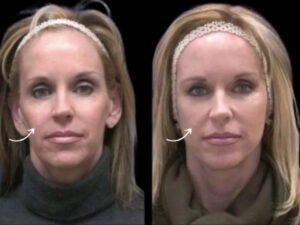
Skin Tightening in Dubai is sold as a single treatment that solves a single problem, and the problem it solves is a specific one: skin that has lost its tension and hangs. That is a real problem with effective answers. It is also not the problem most people in front of a mirror are describing, because what most of them have is volume loss, and volume loss and laxity respond to entirely different treatments. Patients routinely spend a substantial sum tightening skin that needed support underneath it, and then conclude that tightening does not work.
The distinction is not subtle once it is known, and it can be established in a consultation without any equipment. Loose skin is something you can lift and that springs back when released. Lost volume is a hollow that appears when the fat beneath has moved away from the surface, and it is often most visible as a change in the lower cheek rather than as a line. A face can have either, or both, and the order in which they are addressed determines whether the result looks natural or looks like something has been done to it.
What follows describes the difference properly, why the two are routinely confused, what each treatment can and cannot achieve, why the order of addressing them is the single most consequential decision in this field, what a sensible assessment contains, and what to ask before committing to anything. The order point is where most of the value is, and it is the one most often decided by whichever device the clinic owns.
Why the Wrong Problem Gets Treated
Product, Time, and the Ten Minutes Nobody Prices
The reason the wrong problem gets treated so consistently is that both problems arrive in the same patient and are described in the same language. Somebody who has lost cheek volume sees a change in their outline and calls it loose, and somebody who has genuinely lax skin sees a change in their outline and calls it loose too. The two complaints are verbally identical and mechanically opposite, and separating them is the entire diagnostic task in this field. Clinics that skip that task are not being careless; they are answering the question that was asked rather than the one that mattered.
There is a second reason, and it is the one the clinics themselves benefit from. Tension is treated with devices, and devices are capital. Volume is treated with syringes, and syringes are consumables with a clear unit cost and a clear repeat revenue. A clinic equipped for tightening has an interest in patients believing they have a tension problem, in the same way that a clinic with only filler has an interest in patients believing they have a volume problem. Nobody has to be dishonest for this to happen, and the consequence is that patients are commonly recommended a treatment their face does not need and then told it underperformed.
What makes the diagnosis cheap is that it barely requires equipment. Lift the skin at the jawline and let go: it springs back, and the problem is tension. Press the hollow of the cheek and compare it with the other side, and there is a visible difference, and the problem is volume. Do both, on a good photograph in neutral light, and the diagnosis takes a few minutes. A patient who has done that before a consultation will get a different conversation out of it, because the clinician has been shown rather than told, and most of these consultations are otherwise conducted entirely by the clinician’s own examination.
That is the practical advice worth taking from all of this. Take three photographs in neutral light, one at rest, one while lifting the skin at the jawline with two fingers, and one in the same position with the cheek gently pressed inward. Show them to whoever is recommending a treatment, and ask which of the two changes is the one being addressed. A clinician who has seen the lifting photograph will know within seconds whether the complaint is tension or support, and the answer determines everything that follows. It costs nothing and it resolves the confusion in a single appointment.
Loose Skin and Lost Volume Are Different Problems
Product, Time, and the Ten Minutes Nobody Prices
Skin that has lost its tension behaves differently from skin that has lost its support, and the difference is mechanical. Tension is a property of the skin itself and of the layer immediately beneath it. Support is largely provided by the fat compartments of the face, and those compartments move downward over time, which is why the lower cheek is where volume loss announces itself first. A treatment that contracts the skin will do nothing about a hollow. A treatment that restores the hollow will do nothing about genuine laxity.
This is why some patients look tighter and somehow older afterwards, and why others look softer without looking any different in expression. Filling a depleted face makes a lax skin drape over a fuller structure, which reads as heaviness rather than rejuvenation. Tightening genuinely lax skin without restoring the volume leaves the loss visible, because the loss was never caused by the laxity in the first place. Neither is a bad treatment. Both are the wrong one for a particular face.
There is a further practical consequence, which is that the two are frequently treated in the wrong order by clinics offering only one of them. A clinic with a tightening device will tighten, and a patient who then visits a filler clinic will be filled, and neither of them has asked whether the sequence was right. It is a structural gap rather than a clinical error, and a patient who understands the mechanism is better placed to coordinate their own treatment than one who simply follows whichever recommendation arrives first.
Why the Two Are Routinely Confused
Per-Unit Pricing and What It Rewards
The confusion is commercially convenient in a way that is worth naming. Volume restoration is measured in syringes and sold in amounts. Tightening is measured in sessions and sold in packages. A clinic with a device can only tighten, so it will describe the problem in terms it can address, and patients arrive having self-diagnosed laxity because that is the language the marketing used. The correction requires a clinician willing to say that the face does not need tightening, which is a sale declined and is consequently uncommon.
There is also a genuine ambiguity in the language patients use. Nearly everyone describes early volume loss as loose skin, because what they see is a change in the outline and that reads as sagging. In practice the first thing to change on a face as it ages is usually the fat beneath the cheek, and the skin follows it. Treating the skin at that stage is treating the consequence and leaving the cause in place, which is why the result looks disappointing rather than wrong.
The corrective move is to describe the problem anatomically rather than by its appearance. Where the outline has changed, in which direction, and whether the skin under it is loose or supported. That is a question a patient can partly answer themselves by pressing and lifting, and it is the single most useful thing to establish before any device is discussed. Everything downstream in this field depends on it.
Skin Tightening Treatment In Dubai and What Each Approach Can Achieve
Skin Tightening Treatment In Dubai ranges from energy-based devices to injections to filler-supported approaches, and the differences between them matter less than the question of whether the face needs tightening at all. In moderate cases the realistic target is a slight improvement in definition, particularly in the jawline and the neck, measured over months and photographed under consistent lighting. Substantial lifting of loose skin is not something the non-surgical options deliver, and any clinic implying otherwise is describing a surgical result at a non-surgical price.
The mild cases are worth naming as well, because there are many and they are the ones most likely to be treated unnecessarily. Slight laxity in a patient in their thirties, where the jawline has softened but the skin still springs back, is not a condition that requires intervention, and the honest advice in that situation is to do nothing and reassess in a year. Clinics that treat it are not harming anyone, since the treatment is low-risk, but they are converting a normal appearance into a treated one, and that is a different thing from treating a problem.
There is also a group for whom the non-surgical options are genuinely effective, and it is larger than the pessimistic view suggests. Skin with early loss of elasticity, particularly on the neck and the upper arms, can respond well to energy-based treatment, and the improvement is real even if it is modest. The determining factor is skin quality and the presence of existing damage rather than the patient’s age, which is why a four-year assessment is worth more than a number.
The First Visit and the Second Visit
What Should Be Included at Each
A first visit should establish whether the concern is laxity or volume, whether the skin springs back, what has been tried, what the patient wants to avoid, and whether the patient is having a procedure for an event, because the timing changes the answer. Photographs should be taken in consistent lighting with the face at rest and with the expression the patient is actually making, since a face photographed smiling does not show the change that concerns them.
A review at three months rather than at three weeks is the appropriate interval for most of these treatments, because collagen remodelling is slow and anything earlier measures swelling. Three months is also the point at which the result can be judged properly, and a clinic that reviews at six weeks is reviewing something that has not finished happening. The exception is a patient treating for an event, where the clinician should be more cautious rather than faster.
The third appointment is the one where the order decision gets made properly, if it has not been already. By then the response to the first treatment is known and the remaining deficit can be assessed against what actually changed rather than against what was predicted. Plenty of patients need the opposite of the treatment they came for, and discovering that at month three rather than at month three of a second course is the practical value of reviewing properly.
When a Lower Price Is Simply a Lower Price
Not every price difference in this market is a quality signal, and it is worth saying so, because the suspicion runs the other way. A clinic that buys in volume, rents a room cheaply, charges a consultation fee separately and reuses a well-run template can produce results indistinguishable from a clinic charging four times as much. What a low price reliably predicts is less time, and less time costs quality at the margin rather than in the middle, so a mid-priced result is usually good and a lowest-priced result is usually adequate for a single concern and unreliable for a face with both laxity and volume loss.
The other legitimate reason two clinics differ is geography and overhead. A clinic in a serviced building with a receptionist and a proper sterilisation room has a different cost base from a clinic working from a shared treatment space, and neither is cheating. The patient who wants to know which they are paying for should ask what is included, how long the appointment is, and whether there is a review, and the answers to those three questions separate a pricing difference from a care difference faster than the numbers do.
Skin Tightening Treatment Clinic in Dubai and the Order Problem
Skin Tightening Treatment Clinic in Dubai is worth thinking of as two decisions rather than one, and the sequencing is where the money is. If a face has both volume loss and mild laxity, restoring the volume first generally produces a better outcome than tightening first, because the filled face then has skin sitting over a fuller structure and the laxity may be less apparent. If the laxity is pronounced and the volume is intact, the order reverses. There is no rule, and there is a real judgement involved, which is exactly why it should be discussed rather than assumed.
The reason sequencing matters so much is that treatments cannot be undone easily. Volume that has been added stays for months, and if it was added to a face that should have been tightened instead, the correction is another appointment and another decision made under worse conditions. Tightening produces collagen over months, which is also difficult to reverse. Both are commitments, and a plan that establishes the order before either begins is worth a great deal more than a plan that treats whatever is available in the week the patient happens to book.
There is a practical version of this that costs nothing. A patient who is uncertain can reasonably ask a clinic to plan the treatment in stages with a review between them, rather than as a single course covering both concerns. That is a reasonable request, it is usually granted by a clinic that is confident in its assessment, and it is refused fairly often by a clinic that has already decided what it is selling. Perla Dermatology Clinic establishes whether the concern is laxity or volume before recommending a device, photographs every patient in consistent lighting, and reviews at three months when the result can actually be judged.
The same question applies to how long the first appointment lasts. A consultation for a tightening treatment that takes fifteen minutes has not established whether the problem is tension or volume, because that diagnosis requires lifting the skin and pressing the cheek and comparing both sides, and it requires looking at photographs the patient has not seen. Thirty minutes is not an extravagance in this field; it is the minimum for the assessment to be worth anything, and the Led by Dr. Inas Musa clinics that charge the most are frequently not the ones spending the longest time.
Frequently Asked Questions
Is loose skin the same as lost volume?
No, and they respond to different treatments. Loose skin is a change in tension that can be lifted and springs back. Lost volume is a hollow where the fat beneath has moved away, often most visible in the lower cheek. Tightening will not fill a hollow and filling will not tighten genuinely loose skin, which is why the assessment has to establish which one is present.
At what age should I start?
There is no useful number, and age is a poor guide because skin quality and genetics vary enormously within any age band. What is worth acting on is a specific change a patient has noticed and can describe, together with the observation that it has stopped improving on its own. Treating an appearance that is entirely normal for someone’s age tends to produce a treated look rather than a better one.
How long until I see results?
Nothing meaningful for four to six weeks, a modest change by three months, and the settled result by six. Energy-based treatments work by stimulating collagen, and collagen remodelling takes months, so a review at three weeks is measuring swelling rather than effect. Any clinic offering a visible change in a fortnight for a tightening treatment is describing something other than what it does.
Can skin tightening be combined with filler?
Yes, and in some faces it needs to be. The question is the order, and whether the patient needs each of them at all. Combining them on the same day is sometimes done and sometimes is not, because the assessment of the fill is more difficult when the face is already swollen from another treatment. A clinic that asks the sequencing question before booking is one that has thought about it.
Does it hurt?
Energy-based tightening is uncomfortable and varies a great deal with the device and the settings, and it is often described as a hot rubber-band flick. Most clinics use numbing cream or cooling, and most patients tolerate it. What is more common than pain is a couple of days of redness and swelling, which should be explained in advance because it is visible and it is normal.
Why does my neck look worse after treatment?
The neck has thinner skin, less supporting fat and more sun damage than the face, and it is the area most often neglected and most often treated last. Treated without an assessment, it can respond less well than expected while the face improves, which makes the neck look worse by comparison. This is a sequencing and communication problem rather than a treatment failure, and it is avoidable.
Conclusion
Loose skin and lost volume are different problems with different answers. Establish which one is present before any device is discussed, because the treatment follows the diagnosis and not the reverse. Decide the order before either treatment begins. Volume that was added to a face that needed tightening stays for months, and tightening collagen cannot be undone either.
Review at three months, not three weeks, and expect the result to be a modest improvement in definition rather than a lifting of loose skin. Modest and real is a good outcome here; substantial lifting is a surgical result.
Some early laxity needs nothing at all, and a clinic that will say so is more reliable than one that will not. Perla Dermatology Clinic assesses laxity and volume separately, photographs in consistent lighting, and reviews at three months when the outcome can be judged rather than at three weeks when it cannot. The same patience applies to the assessment itself. There is a temptation to treat on the first visit, particularly when a patient has travelled and is ready, and it is a temptation that is not always resisted. A face that needs two problems addressed in a particular order is a face that can be harmed by addressing them in the wrong one, and the cost of a two-week wait for a considered opinion is very small compared with the cost of a treatment that has to be redone. Clinics that will not treat on the first visit are not being cautious for its own sake; they are declining to guess, and that is the behaviour worth looking for.