Starting and operating an industrial facility involves more than installing machinery and beginning production. Businesses must also satisfy various statutory, safety, operational, and regulatory requirements before and during their operations. Depending on the nature of the facility, workforce, manufacturing activity, and materials handled, different licenses may be applicable.
This is where a professional Statutory Licensing Consultant can help industrial businesses understand their requirements, prepare documentation, coordinate applications, and manage licensing timelines effectively.
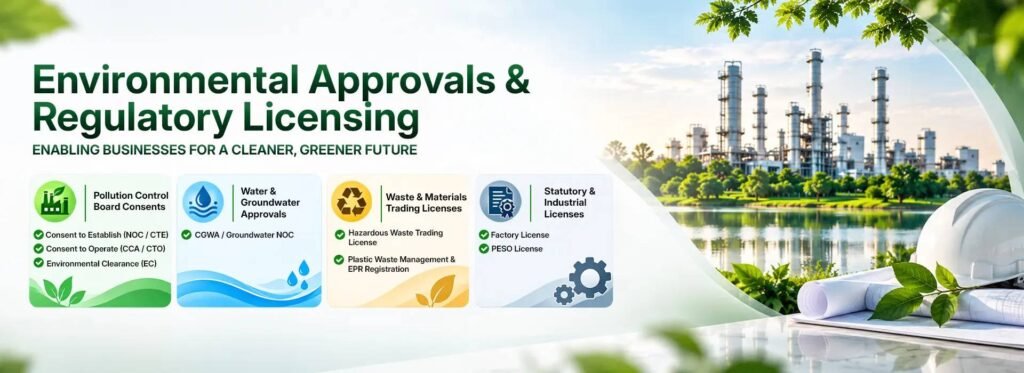
For many manufacturing units, statutory licensing can include Factory License requirements and, where applicable, licensing related to petroleum products, LPG, compressed gases, or explosives through the Petroleum and Explosives Safety Organisation (PESO). These requirements are distinct from environmental consents, although they often form part of the overall regulatory approval plan for an industrial facility.
What Is Statutory Industrial Licensing?
Statutory industrial licensing refers to regulatory permissions and registrations required for certain industrial premises and activities to operate legally and safely.
The exact requirements depend on the project’s characteristics. A manufacturing facility may need to consider Factory License requirements under the applicable factory legislation and state rules. If the facility stores or handles materials falling under PESO jurisdiction, additional licensing requirements may apply.
Therefore, businesses should not assume that every factory needs exactly the same licenses. An applicability assessment based on the facility, workforce, processes, and materials is an important starting point.
Factory License for Industrial Establishments
A Factory License is associated with occupational safety, working conditions, and the legal status of premises that meet the applicable definition of a factory. The requirements can depend on factors such as worker numbers, use of power, and the relevant state rules.
For businesses establishing a new manufacturing unit, understanding Factory License applicability at an early stage can help ensure that statutory requirements are incorporated into project planning.
Documentation may include information about the premises, layout plans, safety arrangements, machinery, and other details required by the relevant authority.
A professional consultant can help businesses organize the required information and coordinate the application process according to the applicable requirements.
Understanding PESO Licensing
PESO licensing is another important consideration for certain industrial facilities. The Petroleum and Explosives Safety Organisation regulates safety-related aspects associated with specified petroleum products, compressed gases, explosives, and other materials falling under its jurisdiction.
However, not every industrial unit requires a PESO License. Applicability depends on the materials stored or handled and the relevant thresholds and regulations.
Businesses should therefore evaluate their material storage and handling activities before assuming whether a PESO approval is necessary.
This is one area where a knowledgeable Statutory Licensing Consultant can add value by helping project teams identify potentially applicable requirements before investing significant time in documentation and applications.
Why an Applicability Assessment Matters
One of the most important stages of statutory licensing is determining exactly which permissions a facility requires.
A professional assessment can consider:
- Nature of the manufacturing activity
- Number of workers
- Use of power and machinery
- Facility layout
- Materials stored on-site
- Petroleum or LPG storage
- Compressed gas storage
- Applicable state requirements
- Existing regulatory approvals
- Proposed expansion or modification
This assessment helps businesses avoid both under-compliance and unnecessary applications.
Environ’s statutory licensing process begins with an applicability assessment, followed by documentation preparation, authority filing, inspection coordination, and license grant and renewal tracking.
Documentation Is a Critical Part of Licensing
Incorrect or incomplete documentation can create unnecessary delays during regulatory processing. Industrial businesses should therefore maintain accurate technical and statutory information before submitting an application.
Depending on the license, documentation may involve layout plans, safety information, undertakings, premises details, material information, and other supporting records.
A consultant can help review the available documents, identify missing information, organize the application package, and coordinate the submission with the appropriate authority.
This structured approach can make the licensing process easier for businesses that do not have dedicated regulatory personnel.
Coordination With Other Industrial Approvals
Statutory licenses should not always be managed as isolated activities. An industrial facility may simultaneously be working on environmental permissions, water-related approvals, factory requirements, and other regulatory obligations.
For example, a new manufacturing facility may need to coordinate statutory licensing with Pollution Control Board Approvals, depending on its activities and applicable requirements.
Similarly, businesses requiring groundwater extraction may need to evaluate CGWA / Groundwater NOC requirements.
Managing these regulatory activities through a coordinated timeline can help reduce the risk of one approval being overlooked while another is being processed.
Site Inspection and Authority Coordination
Some licensing processes can involve inspection or verification by the concerned authority. Businesses need to ensure that the facility and supporting documentation are appropriately prepared for such interactions.
Professional consultancy can assist with inspection coordination and help the business understand what information or documentation may be required during the process.
Environ specifically describes inspection coordination as part of its statutory and industrial licensing workflow.
Renewal Tracking Is Equally Important
Obtaining a license is not necessarily the end of the compliance responsibility. Businesses should monitor license validity, renewal dates, conditions, and any applicable changes in their operational circumstances.
Missing a renewal deadline can create avoidable compliance challenges. Maintaining a centralized regulatory calendar can help organizations track important dates and assign responsibility for upcoming actions.
A professional Statutory Licensing Consultant can support businesses by incorporating renewal tracking into the broader regulatory management process.
Choosing the Right Statutory Licensing Consultant
When selecting a consultant, businesses should look beyond simple application filing. A reliable consultant should understand the regulatory context of the industrial facility and be able to assist with applicability assessment, documentation, authority coordination, inspections, and renewals.
Technical understanding is particularly valuable when a facility handles regulated materials or operates complex manufacturing processes.
Environ Project & Consultancy Pvt. Ltd. supports industrial businesses with Factory License and PESO License consultancy, including registration and renewal support. Its process covers applicability assessment, documentation preparation, authority filing, inspection coordination, and renewal tracking.
Build a Stronger Industrial Compliance Framework
Statutory licensing is an important component of responsible industrial operations. Whether a business is establishing a new factory, expanding an existing facility, or reviewing its current regulatory status, understanding applicable licenses early can help create a more organized compliance strategy.
Instead of treating licensing as a last-minute administrative task, businesses can integrate it into their overall project and regulatory planning.
If you need professional assistance with Factory License, PESO License, or related statutory requirements, connect with Environ Project & Consultancy Pvt. Ltd.
Explore the Statutory & Industrial Licence service page to understand the available support and discuss your project’s specific licensing requirements.