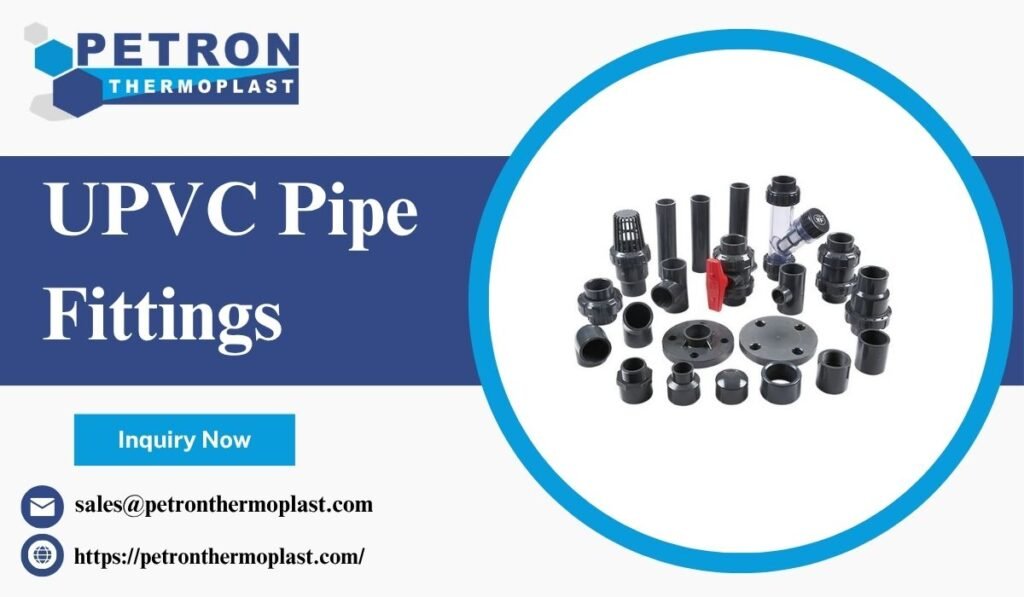
Industrial piping systems require reliable fittings to connect pipelines, control fluid movement, and support efficient operations. In industries such as water treatment, chemical processing, manufacturing, and wastewater management, selecting the right piping components is essential for long-term performance. Custom UPVC pipe fittings offer a practical solution for projects that require specific dimensions, connection types, and installation configurations.
Petron Thermoplast provides industrial thermoplastic piping products for different project requirements. Businesses looking for bulk quantities of UPVC pipe fittings can explore suitable configurations based on their pipeline design, operating conditions, and application needs. In this blog, we will discuss the types, features, applications, advantages, customization options, and important selection factors for custom UPVC pipe fittings.
What Are UPVC Pipe Fittings?
UPVC stands for unplasticized polyvinyl chloride. It is a rigid thermoplastic material used in various piping systems because of its corrosion resistance, dimensional stability, and relatively low weight.
UPVC pipe fittings connect different sections of a pipeline and help change its direction, branch the flow, reduce or increase pipe diameter, or connect pipes to equipment. Common fittings include elbows, tees, reducers, couplings, end caps, flanges, and threaded adapters.
Custom UPVC pipe fittings are selected or manufactured to meet specific project requirements. Customization may involve dimensions, fitting configurations, connection types, and other technical details, depending on product availability and manufacturing feasibility. For bulk industrial requirements, choosing compatible fittings helps maintain consistency across the piping network and simplifies procurement for large installations.
Types of UPVC Pipe Fittings for Industrial Applications
Different piping layouts require different fitting designs. The right selection depends on the pipeline route, flow requirements, connection method, and available installation space.
- UPVC Elbow
UPVC elbows change the direction of a pipeline. Common configurations include 45-degree and 90-degree elbows. They are used in water distribution, industrial utilities, and compatible chemical transfer systems.
- UPVC Tee
A UPVC tee creates a branch connection from a main pipeline. Equal tees have matching main and branch diameters, while reducing tees connect pipes of different sizes.
- UPVC Reducer
Reducers connect pipelines with different diameters. They are available in configurations such as concentric and eccentric reducers, depending on the piping layout and engineering requirements.
- UPVC Coupling
Couplings connect two compatible pipe sections. They are useful for pipeline extensions, repairs, and installations requiring straightforward connections.
- UPVC Flange
Flanges provide detachable connections between compatible piping components, valves, pumps, and equipment. They can simplify inspection and maintenance when designed with suitable gaskets and bolting arrangements.
- UPVC End Cap
End caps close the end of a pipeline. They are used for terminating lines, isolating unused connections, or supporting selected maintenance arrangements.
- UPVC Threaded Adapters
Threaded adapters connect compatible threaded components to a UPVC piping system. The connection must be designed carefully to avoid excessive tightening, leakage, or mechanical stress.
Key Features of Custom UPVC Pipe Fittings
UPVC fittings offer several useful characteristics for suitable industrial applications.
Corrosion Resistance
UPVC does not rust like conventional steel. This makes it useful in many environments where corrosion resistance is important. However, chemical compatibility must be checked for the specific fluid, concentration, temperature, and operating conditions.
Lightweight Construction
UPVC fittings are relatively lightweight compared with many metal alternatives. This can simplify handling, transportation, and installation, particularly when procuring large quantities for industrial projects.
Dimensional Stability
Properly manufactured UPVC fittings maintain their shape under specified operating conditions. Correct sizing and compatible connections are important for dependable pipeline performance.
Low Maintenance Requirements
In suitable applications, UPVC can reduce maintenance associated with metallic corrosion. Routine inspection, correct installation, and operation within specified limits remain necessary.
Multiple Connection Options
Depending on the product design, UPVC fittings may be available with solvent-cement socket, threaded, flanged, or other compatible connections. The connection must match the pipe system and applicable installation standards.
Applications of UPVC Pipe Fittings
Custom UPVC pipe fittings are used across several industrial sectors.
Water Treatment Plants
Water treatment facilities use pipe fittings to connect filtration equipment, tanks, pumps, and distribution lines. UPVC may be suitable for compatible water treatment applications when the pressure and temperature requirements are met.
Chemical Processing Industries
Many chemical plants use corrosion-resistant piping for transferring process liquids. UPVC can be suitable for selected chemicals, but the material must be verified against the chemical concentration, operating temperature, and pressure.
Pharmaceutical and Manufacturing Facilities
Manufacturing facilities require piping networks for selected utility and process applications. The fitting material and connection design should match the fluid-handling and cleanliness requirements of the installation.
Wastewater Management
UPVC fittings can be used in compatible wastewater collection and treatment systems. The selection should consider the liquid composition, suspended solids, temperature, and operating conditions.
Agriculture and Irrigation
Irrigation networks use elbows, tees, reducers, and couplings to distribute water across different sections. UPVC fittings can support suitable water distribution systems.
Industrial Utility Lines
Factories often require piping for service water and other compatible fluids. Bulk procurement of standardized UPVC fittings can help simplify inventory planning and installation schedules.
Advantages of Buying Custom UPVC Pipe Fittings in Bulk
Bulk purchasing can offer practical advantages for industrial buyers, contractors, and project procurement teams.
Consistent Procurement
Ordering the required fittings together helps project teams coordinate quantities, sizes, and delivery schedules. This can simplify purchasing for large pipeline installations.
Better Project Planning
A consolidated order can help reduce procurement delays when the complete fitting schedule is prepared in advance. Availability and manufacturing lead times should be confirmed before finalizing the project schedule.
Customized Configurations
Some industrial projects require non-standard dimensions or specific connection arrangements. Custom solutions can help address these needs, subject to technical feasibility.
Simplified Inventory Management
Buying according to an approved bill of materials makes it easier to track fitting quantities and maintain suitable stock for installation and future maintenance.
Potential Cost Efficiencies
Bulk orders may qualify for project-based pricing depending on quantity, product type, material requirements, and delivery arrangements. Buyers should request a quotation to compare the total cost, including packaging and transportation.
Customization Options for Industrial Projects
Industrial piping projects may require more than standard fittings. Depending on technical feasibility and available manufacturing processes, customization may include:
- Specific fitting dimensions and configurations.
- Different pipe diameters and reducing arrangements.
- Compatible connection styles.
- Special flange drilling or connection details.
- Project-based product identification and packaging.
- Quantities organized according to installation schedules.
Quality and Installation Considerations
The performance of UPVC pipe fittings depends on product quality, compatibility, and correct installation.
Before ordering, review the dimensions, material documentation, applicable standards, and any required inspection or testing records. For pressure systems, confirm that the complete assembly is suitable for the intended operating conditions.
During installation, use the specified joining method, compatible materials, and appropriate tools. For solvent-cement connections, follow the manufacturer’s instructions for surface preparation, application, curing time, and pressure testing. Avoid excessive mechanical loads and ensure the piping is adequately supported. Proper installation helps reduce the risk of leakage, joint damage, and unnecessary maintenance.
Why Choose Petron Thermoplast for UPVC Pipe Fittings?
Petron Thermoplast serves industrial thermoplastic product requirements across different applications. For businesses sourcing UPVC pipe fittings in bulk, the procurement process should begin with a clear list of required sizes, types, quantities, and technical specifications.
Sharing complete project information helps the team assess suitable products and confirm availability, customization possibilities, pricing, and delivery arrangements. For large orders, buyers should verify the approved product specifications, material compatibility, delivery schedule, and applicable quality documentation before placing the order.
Bulk Supply and Worldwide Delivery Support
Industrial projects may require piping components for installations at different locations. Delivery planning is therefore an important part of bulk procurement.
When requesting a quotation from Petron Thermoplast, provide the destination, quantities, required delivery date, and packaging preferences. For international shipments, confirm export documentation, transportation arrangements, estimated transit time, and any applicable import requirements.
Delivery availability and lead times depend on the products ordered, quantities, destination, and agreed commercial terms. Early planning helps buyers coordinate supply with their installation schedules.
Conclusion
Custom UPVC pipe fittings are a useful option for industrial piping projects that require reliable connections, corrosion resistance, and specific installation configurations. Available fitting types include elbows, tees, reducers, couplings, flanges, end caps, and threaded adapters.
For bulk industrial requirements, selecting compatible products and confirming technical specifications can help simplify procurement and installation planning. Buyers should carefully evaluate pressure ratings, operating temperatures, chemical compatibility, connection types, and applicable standards before ordering. Petron Thermoplast supports industrial thermoplastic product enquiries for a range of piping applications.
Contact the team through the official website to discuss your UPVC pipe fitting requirements, request a bulk quotation, and confirm available customization and delivery options.