Ventilation-related heat loss can raise the energy required to maintain a comfortable home, especially during colder months. Residential heat recovery systems help limit this loss by transferring thermal energy from outgoing indoor air to fresh air supplied from outside. As both air streams move through a heat exchanger, the recovered warmth raises the temperature of incoming air without allowing the two streams to mix directly. This process maintains a supply of fresh air while potentially reducing the need for additional heating. By recovering some of the thermal energy that would otherwise escape, these systems help households manage ventilation, maintain indoor comfort, and improve energy efficiency.
Preparing the Property for Residential Heat Recovery Installation
Setting up a house heat recovery system starts with assessing the property’s ventilation needs and current heating configuration. Key factors include the home’s size, internal layout, number of occupants, and usual airflow requirements. Choosing equipment with appropriate capacity helps ensure that ventilation performance aligns with the household’s daily needs.
Duct routes should be designed to maintain balanced airflow and distribute recovered heat effectively across the property. The proposed arrangement should accommodate practical connections while limiting disruption to occupied areas. Insulating ductwork and associated components can further reduce unwanted heat loss and support efficient operation.
Electrical wiring and control systems need to be installed correctly to provide safe operation and convenient adjustments. Once the work is complete, performance testing can assess airflow balance, component operation, and heat recovery effectiveness.
How Domestic Heat Recovery Ventilation Circulates Air
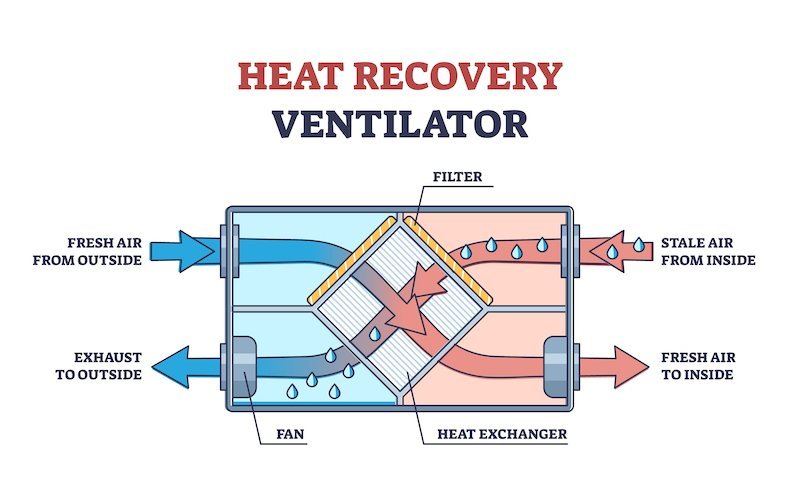
Domestic heat recovery ventilation maintains indoor air exchange through separate pathways that remove stale air and supply fresh air from outdoors. As heated indoor air is extracted, it passes through a heat exchanger, where some of its thermal energy transfers to the incoming air without the two streams mixing directly. This helps conserve warmth while providing a consistent supply of fresh air. Depending on the system design, filters may also remove airborne particles before the incoming air enters living areas.
Reusing thermal energy during air exchange can reduce reliance on additional heating and help control household energy use. Through coordinated airflow, heat transfer, and filtration where included, these systems promote fresher indoor air while reducing the loss of valuable warmth.
Essential Components Found in Residential Heat-Recovery Systems
Residential heat-recovery systems combine several components to circulate air and transfer thermal energy efficiently. At the centre is the heat exchanger, which allows warmth to move between outgoing and incoming air while keeping the separate streams apart. Ductwork connects the ventilation unit with different parts of the home, creating pathways for stale air removal and fresh air delivery.
Filters help trap dust, allergens, and other airborne particles before the incoming air reaches indoor spaces. Fans drive air through the network and maintain the required ventilation rates, while control units provide options for monitoring operation and adjusting settings to household requirements.
When properly chosen and regularly serviced, these elements work together to maintain consistent airflow, recover useful heat, and support comfortable indoor conditions throughout the system’s working life.
Creating Healthier Indoor Air with House Heat Recovery
House heat recovery equipment supports better indoor air circulation by replacing stale air with fresh outdoor air, with many systems also offering filtration. Suitable filters can trap particles such as dust and allergens, helping reduce their spread throughout the home. Regular extraction can also help regulate indoor humidity and reduce excessive moisture that may contribute to mould development.
Ongoing ventilation assists in removing accumulated indoor pollutants, including carbon dioxide and certain volatile organic compounds. This function can be especially beneficial in well-sealed properties, where restricted natural airflow may allow airborne contaminants to accumulate.
A balanced exchange of indoor and outdoor air helps create a fresher living environment, while heat recovery retains some of the home’s existing warmth. Together, these features help households improve air quality without overlooking indoor comfort and energy efficiency.
Measuring the Lasting Benefits of Home Heat Recovery Ventilation
Home heat recovery ventilation can help lower heating costs by reclaiming thermal energy from indoor air that would otherwise be released outdoors. Transferring this warmth to incoming fresh air may reduce the workload placed on conventional heating equipment and limit energy consumption over time. The level of savings varies according to factors such as energy tariffs, household habits, insulation standards, property design, and system efficiency.
Efficient ventilation can also improve overall home performance by providing controlled air exchange while helping maintain comfortable indoor temperatures. Although the equipment and installation require an initial investment, possible energy savings, improved air circulation, and ongoing comfort may offer long-term advantages. Assessing upfront expenditure alongside expected running costs helps homeowners determine whether the system meets their property’s needs and financial plans.
Reducing Environmental Impact through Heat Recovery
Heat recuperation units can help reduce household energy consumption by limiting thermal losses associated with ventilation. Transferring heat from outgoing indoor air to incoming fresh air helps maintain stable indoor temperatures while reducing reliance on supplementary heating equipment. More efficient energy use can contribute to lower utility expenses while also helping reduce greenhouse gas emissions and promote responsible resource consumption.
Reducing the carbon impact associated with residential heating can support broader sustainability objectives. Incorporating heat recovery technology into modern homes reflects increasing interest in environmentally responsible solutions that combine comfortable indoor conditions with improved energy efficiency and resource management.
Comparing Heat Recuperation Units with Conventional Ventilation
Heat recuperation units offer a notable advantage over conventional ventilation by combining fresh-air circulation with thermal energy recovery. Traditional ventilation systems can allow valuable indoor heat to escape during air exchange, whereas heat recuperation units use heat exchangers to capture warmth from outgoing air and transfer it to incoming fresh air. This process can help reduce energy consumption while maintaining more stable indoor temperatures.
Conventional ventilation can provide effective air exchange but typically does not recover thermal energy that has been lost, which may increase heating requirements. By combining filtration with heat recovery, heat recuperation units offer a more energy-efficient and environmentally responsible alternative to traditional ventilation approaches.
Essential Parts behind Mechanical Heat Recovery Performance
A mechanical heat recovery system uses several interconnected components to deliver continuous air exchange and reclaim thermal energy. Fans extract stale indoor air and draw fresh outdoor air into the property, guiding both streams through a heat exchanger. This component transfers warmth between the separate airflows without allowing them to mix, helping moderate incoming air temperatures and potentially reduce additional heating needs. Depending on the model, filters may also remove dust, allergens, and other airborne particles before fresh air reaches indoor spaces.
Combining managed airflow with heat transfer allows these systems to maintain comfortable indoor conditions while limiting unnecessary thermal losses. This integrated approach promotes reliable ventilation and more responsible household energy consumption.
Designing the Layout for Effective Heat Recovery
Careful system planning influences the efficiency and overall performance of a heat recovery installation. The heat exchanger should be located where thermal transfer can occur effectively and maintenance remains accessible. Ductwork must deliver air evenly between rooms, while appropriate insulation and duct materials help reduce heat loss and support dependable operation.
The property’s size, insulation quality, and prevailing climate should guide important design choices. Existing heating and ventilation arrangements may also influence component selection and installation methods. Assessing these requirements beforehand helps establish a layout that balances airflow, assists with indoor temperature regulation, and makes effective use of energy.
Emerging Innovations in Home Heat Recovery Ventilation System Design
Technological advances are improving the adaptability and energy performance of the home heat recovery ventilation system. Automated controls can respond to variations in indoor conditions by adjusting ventilation rates, helping maintain appropriate airflow and limit unnecessary operation. Connecting suitable equipment with renewable energy sources, such as solar power, may offer further opportunities to reduce dependence on conventional electricity. Developments in heat exchanger design and filtration technology can also enhance operating efficiency and component longevity.
Smaller ventilation units and flexible system configurations can accommodate a wider range of home layouts and installation conditions. These improvements demonstrate an ongoing emphasis on effective air exchange, accessible controls, and energy-efficient performance in residential settings.
Preserving Heat Recuperation System Efficiency through Maintenance
Scheduled upkeep helps maintain the effectiveness and reliability of a heat recuperation system. Filters should be inspected in line with manufacturer recommendations and cleaned or replaced as necessary to preserve airflow and filtration performance. Checking the heat exchanger for accumulated dust or debris can help prevent restrictions that reduce thermal transfer. Ductwork also needs examination for air leaks, obstructions, or damage that may affect ventilation throughout the property.
Fans and other mechanical parts should be assessed periodically for wear, unusual sounds, and declining performance. Regular servicing helps detect potential faults before they substantially reduce airflow or energy efficiency. Looking after these components encourages dependable operation, effective heat recovery, and a longer useful life for the residential ventilation system.
Conclusion
Residential heat recovery systems combine ongoing fresh-air exchange with the reuse of thermal energy from extracted indoor air. This process can reduce the workload on heating and cooling equipment while helping keep indoor temperatures consistent. Air filtration can assist in removing airborne contaminants, and regulated airflow helps manage excess moisture. Careful equipment selection, correct installation, and routine servicing are important for maintaining dependable operation, comfortable indoor environments, and effective household energy management.
FAQs
What advantages can heat recovery systems offer contemporary homes?
Heat recovery systems can limit energy loss by transferring thermal energy from outgoing indoor air to incoming fresh air. They also remove stale air and excess moisture, while suitable filtration helps capture airborne particles. These combined functions can support indoor comfort, fresher air, and reduced demands on household heating and cooling equipment.
What is the operating process of a residential heat recovery unit?
A residential heat recovery unit directs outgoing indoor air and incoming outdoor air through separate channels within a heat exchanger. Heat passes between the air streams without directly combining them. As a result, incoming air can receive recovered thermal energy before entering the home, supporting ventilation with less additional heating or cooling.
How often should a heat recovery unit be serviced?
Servicing intervals for a heat recovery unit depend on manufacturer recommendations, usage, and environmental conditions, with professional inspections often scheduled every six to twelve months. Filters should be checked and cleaned or replaced when necessary. Technicians may also inspect the exchanger, fans, and ductwork and remove obstructions that could affect airflow.
In what ways can heat recovery ventilation support indoor air quality?
Heat recovery ventilation replaces stale indoor air with filtered outdoor air on an ongoing basis. Appropriate filters can help remove dust and pollen, while extraction assists in removing moisture that may contribute to condensation. This regular air exchange can promote fresher indoor conditions and help maintain more balanced humidity levels.
| Related Business Listings |
| Contact Directory |
| Local Business Profiles |