A homeowner pulls up worn carpet and finds plywood subfloor, a few stubborn staples, and a decision to make. Should the new floor be solid oak, engineered wood, or something else? For many families, hardwood flooring installation in Alpharetta GA starts with exactly this moment.
Hardwood remains one of the most popular flooring choices in North Georgia. It adds warmth, holds its value, and can last for generations with proper care. But the results depend heavily on how the floor is installed, not just on the boards themselves.
This guide explains what goes into a quality installation and why local conditions matter. It also covers how homeowners can make smarter choices before the first plank goes down.
Why Installation Matters as Much as the Wood
Plenty of people spend weeks comparing wood species and stain colors. Far fewer think about what happens beneath the surface. Yet most hardwood problems, like gapping, cupping, and squeaks, trace back to installation rather than the product.
A beautiful white oak plank can fail if the subfloor is uneven or damp. A modest red oak floor, on the other hand, can look great for decades when it’s laid on a solid, dry, level base.
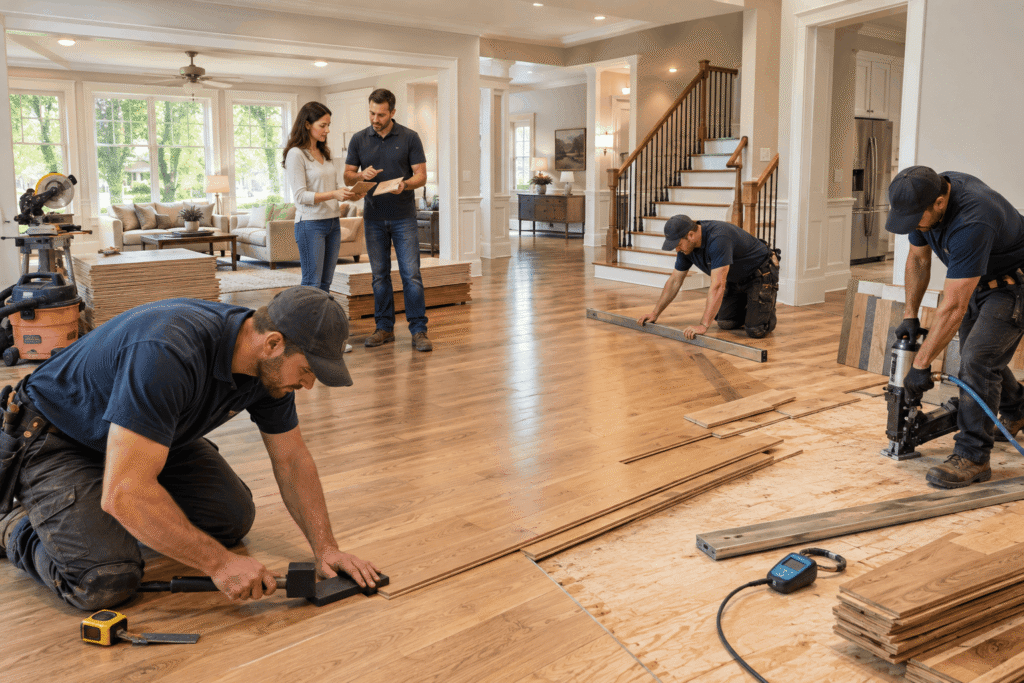
That’s why experienced installers spend so much time on prep work. They check subfloor flatness, test moisture levels, and plan board layout before any nailing begins.
How the North Georgia Climate Affects Hardwood
Georgia’s humid summers and cooler, drier winters create real challenges for wood floors. Wood is a natural material. It absorbs moisture from the air and swells, then releases moisture and shrinks.
Homes around Alpharetta often see big swings in indoor humidity between July and January. Without the right approach, that movement can cause boards to cup in summer or show gaps in winter.
Acclimation is one way installers manage this. The flooring typically sits inside the home for several days so it can adjust to the indoor environment. Moisture meters then confirm that the wood and subfloor are within an acceptable range of each other.
Foundation type also plays a role. Many older homes in the area sit over crawlspaces, which can trap moisture if they aren’t properly vented or sealed. Newer builds may sit on concrete slabs, which often call for engineered wood and a moisture barrier rather than solid planks.
Solid vs. Engineered Hardwood
Solid hardwood is milled from a single piece of wood. It can be sanded and refinished many times, which is why it’s common in older homes that still have their original floors.
Engineered hardwood has a real wood top layer bonded over a stable core of plywood or composite. It handles humidity changes better and works well over concrete. Quality engineered floors can also be refinished, though fewer times depending on the wear layer.
Neither option is automatically better. The right choice depends on the room, the subfloor, the budget, and how long the owner plans to stay in the home.
Common Installation Methods
Installers generally use one of three methods. Nail-down installation is traditional for solid hardwood over wood subfloors. It creates a firm, quiet floor that feels solid underfoot.
Glue-down installation is often used for engineered wood over concrete slabs. It requires careful moisture testing and the right adhesive for the job.
Floating installation means the boards click or glue together but aren’t fastened to the subfloor. It’s faster and works well in some situations, though it can feel slightly hollow compared to a nailed floor.
There’s also the question of site-finished versus prefinished wood. Site-finished floors are sanded and stained after installation, creating a smooth, seamless surface. Prefinished boards arrive ready to go, which shortens the project and cuts down on dust and fumes.
The Benefits Homeowners Notice Most
The appeal of hardwood goes beyond looks. Many buyers in the Atlanta suburbs actively search for homes with wood floors, and real estate agents often highlight them in listings.
Hardwood is also easier to keep clean than carpet. It doesn’t trap pet dander, pollen, or dust the same way. That matters in a region known for heavy spring pollen.
Durability is another big factor. When scratches and dull spots build up over the years, a solid floor can be sanded and refinished instead of replaced. Few other flooring types offer that kind of long-term flexibility.
Finally, wood simply feels good. It’s warmer underfoot than tile and has a natural character that doesn’t look dated as trends change.
Real-World Scenarios
Consider a family in a 1990s home near downtown Alpharetta. They want to replace carpet in the living room and dining room to match the existing hardwood in the foyer. The challenge here is blending new boards with old ones, often by weaving them in and refinishing everything together for a uniform look.
Another homeowner might be finishing a basement on a concrete slab. Solid hardwood isn’t ideal below grade, so engineered wood with a proper moisture barrier becomes the practical option.
Then there are households with large dogs and small kids. Some choose harder species like hickory or white oak with a matte finish that hides scratches. Others decide hardwood isn’t right for every room.
That last group often looks at alternatives. Across Georgia, many homeowners compare wood with vinyl options before committing. For example, families researching Luxury Vinyl Plank Flooring in Watkinsville GA are often weighing water resistance against the long-term value of real wood. It’s a common comparison, especially for kitchens, laundry rooms, and mudrooms.
Choosing Between Hardwood and Vinyl
Luxury vinyl plank has improved a lot in recent years. It’s waterproof, budget-friendly, and can mimic the look of wood surprisingly well. For high-moisture spaces, it’s often the more practical pick.
Still, vinyl can’t be refinished. Once it’s worn or damaged, planks need to be replaced. Hardwood, by contrast, can be renewed again and again.
Many homes end up with a mix. Real wood goes in the main living areas and bedrooms, while vinyl handles bathrooms and laundry spaces. Homeowners who’ve looked into Luxury Vinyl Plank Flooring in Watkinsville GA or similar options in other towns often find that combining materials gives them the best of both.
What to Look for in an Installer
A good installer asks questions before quoting a price. They’ll want to know about the foundation, the age of the home, how the space is used, and whether there are pets or kids.
They should also be willing to explain their process, including how they handle moisture testing, acclimation, transitions between rooms, and baseboard work. Clear written estimates help avoid surprises later.
Local experience matters too. Flooring specialists who regularly work in the area, such as Lica Hardwood Floors LLC, tend to understand how regional humidity and common home construction styles affect wood floors over time.
Checking reviews, asking to see past projects, and confirming licensing and insurance are all smart moves before signing anything.
Final Thoughts
A hardwood floor is a long-term investment, and the installation shapes how well it performs for years to come. Taking time to understand the materials, the methods, and the local climate helps homeowners avoid costly mistakes.
Whether someone is updating a single room or an entire house, a little research up front goes a long way. The goal is simple: a floor that looks great on day one and still looks great decades later.
Frequently Asked Questions
How much does hardwood flooring installation in Alpharetta GA typically cost?
Costs vary based on wood species, solid versus engineered material, subfloor condition, and finish type. Labor and materials together often fall into a wide range per square foot, so getting a few detailed quotes is the best way to compare.
How long does a hardwood floor installation take?
Most average-sized rooms take a few days, not counting acclimation time. Site-finished floors take longer because sanding, staining, and drying add extra days to the project.
Can hardwood be installed over concrete?
Solid hardwood generally isn’t recommended directly over concrete slabs. Engineered hardwood is usually the better choice, installed with a moisture barrier and either glued down or floated.
Is hardwood or luxury vinyl plank better for homes with pets?
Luxury vinyl plank resists scratches and water better, making it practical for heavy pet traffic. Harder wood species with matte finishes can also hold up well, and they can be refinished when wear eventually shows.