In competitive retail markets, product presentation plays an important role in shaping customer perceptions. From clothing boutiques to premium gift shops, businesses use packaging details to communicate quality, style, and brand identity. While labels and packaging provide essential product information, small finishing touches can make a product stand out. Foil detailing is one such option, offering a refined appearance without requiring complicated packaging designs.
Foiled swing tags combine practical labelling with decorative finishes, helping retailers present product details in a visually appealing way. When carefully designed, these tags can support brand consistency, improve shelf presentation, and create a more memorable unboxing experience. Understanding their materials, applications, and design considerations helps businesses make informed packaging decisions.
Understanding Foil-Finished Swing Tags
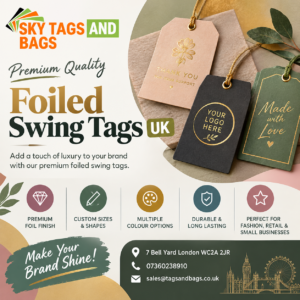
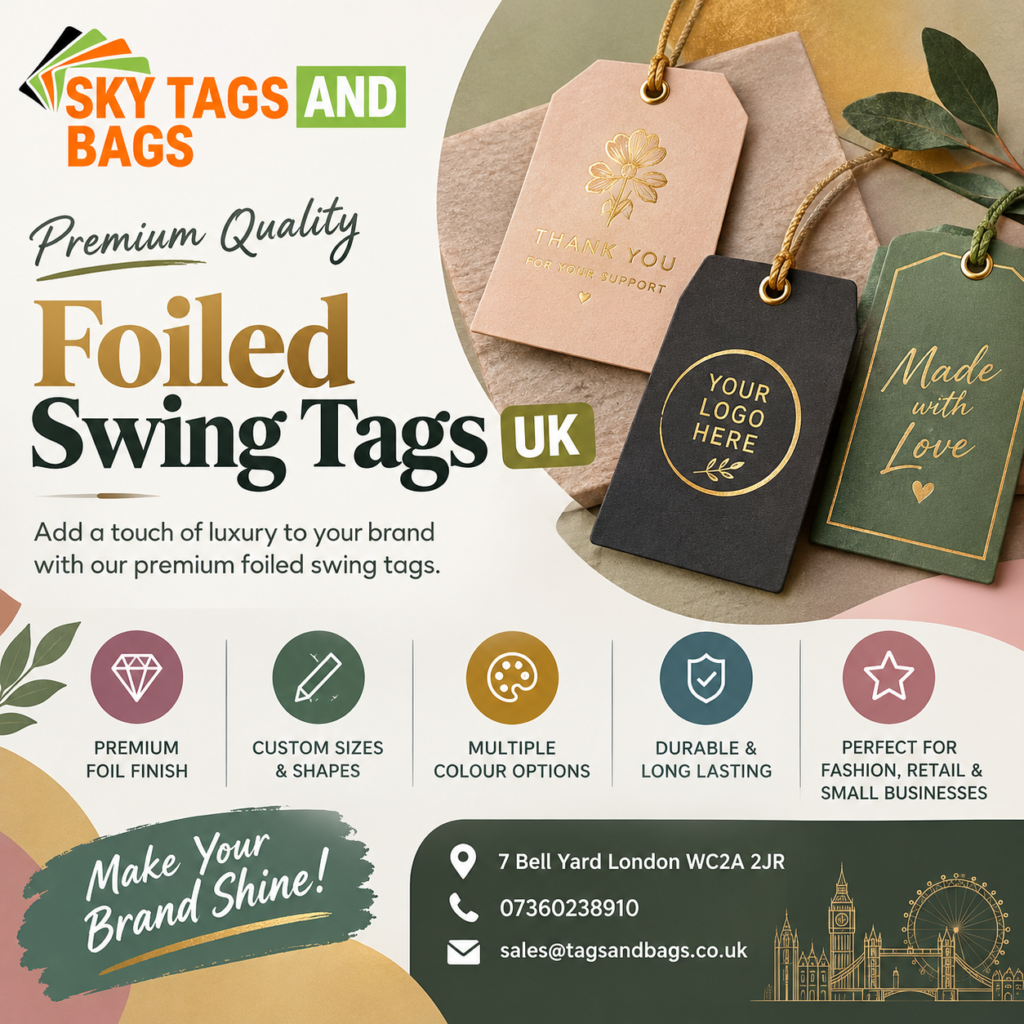
Swing tags are attached to products using string, ribbon, or fasteners. They commonly display brand names, prices, product descriptions, care instructions, or promotional information. Foil finishing adds a metallic or reflective detail to selected areas of the tag, such as a logo, heading, border, or decorative pattern.
The finishing process typically uses heat and pressure to transfer a thin layer of foil onto a suitable surface. Gold, silver, copper, and other coloured foils can create different visual effects depending on the design and material.
Unlike standard printed ink, metallic foil can reflect light, creating contrast against matte or textured backgrounds. This makes it particularly useful for businesses seeking an understated premium appearance.
However, foil does not automatically improve every design. Its effectiveness depends on the quality of the artwork, the chosen paper stock, the positioning of the finish, and the overall relationship between the tag and the product.
Industry Trends and Retail Applications
Packaging trends increasingly reflect consumer expectations around brand identity, product quality, and sustainability. Retailers are exploring tactile finishes, minimalist layouts, recyclable materials, and customised details to create packaging that feels distinctive without becoming unnecessarily complex.

Foil finishing fits several of these trends when used thoughtfully.
Fashion and Clothing Retail
Fashion brands frequently use swing tags to communicate size, pricing, fabric information, and brand identity. Foil accents can highlight a logo or collection name, particularly on formalwear, occasionwear, accessories, and premium garments.
For example, a black card tag with subtle silver lettering can complement a contemporary clothing collection, while warm metallic accents may suit a boutique selling handcrafted accessories.
Gifts and Lifestyle Products
Gift shops, homeware retailers, and lifestyle brands can use decorative tags to reinforce the presentation of their products. Foil details may work well for seasonal collections, gift sets, candles, and special-edition items.
Jewellery and Accessories
Small products often benefit from carefully designed packaging because limited space makes every visual element important. A compact tag with a clear logo and restrained metallic detailing can provide a professional appearance without overwhelming the product.
Across these applications, best foiled swing tags are most effective when the finish supports the product’s identity rather than distracting from it.
Choosing Materials and Designing Effective Tags
Selecting suitable materials is essential for achieving consistent printing results. The paper or card must provide an appropriate surface for the chosen foil application and withstand normal handling during storage, transport, and retail display.
Several practical considerations can help businesses avoid common design problems.
- Choose an appropriate card weight: Thicker card can provide a sturdy feel, although the ideal weight depends on the tag’s dimensions, attachment method, and intended use.
- Keep the design readable: Product information should remain clear, even when metallic finishes are used. Avoid placing small text over busy patterns or reflective areas.
- Use contrast strategically: Dark backgrounds can make certain metallic finishes more noticeable, while lighter stocks can create a softer, minimalist appearance.
- Consider die-cut shapes: Custom shapes can complement a brand identity, but complicated cuts may increase production requirements and material waste.
- Check attachment points: Holes and reinforced areas should be positioned carefully to reduce tearing during handling.
- Request a physical proof: A printed sample helps assess foil colour, card texture, readability, and overall appearance before approving a larger production run.

It is also useful to prepare print-ready artwork with clearly defined foil areas. Following the printer’s specifications for bleed, safe margins, resolution, and separate foil layers can reduce production errors.
Common Challenges and How to Address Them
Although foil finishing can enhance product presentation, businesses should consider several potential challenges before finalising their designs.
Uneven foil application: Surface texture, material compatibility, and production settings can affect the finish. Working with an appropriate card stock and reviewing a production sample can help identify problems early.
Excessive decoration: Applying metallic effects to every element can make a tag visually crowded. Limiting foil to a logo, short heading, or selected graphic often creates a clearer hierarchy.
Budget constraints: Foil finishing can involve additional setup and production costs compared with conventional printing. Businesses can manage expenditure by simplifying the artwork, standardising tag dimensions, and selecting quantities that match realistic demand.
Environmental considerations: Metallic finishes, adhesives, coatings, and mixed materials may influence recycling options. Companies with sustainability goals should ask suppliers about material composition, recyclability, and available paper certifications rather than assuming that every paper-based tag is recyclable.
Inconsistent brand presentation: Different tag designs across product ranges can weaken visual consistency. Establishing standard brand colours, typography, logo placement, and finishing rules helps maintain a recognisable identity.

Measuring the Value of Premium Swing Tags
The value of a packaging detail should be assessed in relation to its purpose. Retailers can evaluate whether a tag improves presentation, communicates useful information, and fits the expectations of their target customers.
Practical measures include customer feedback, packaging costs per unit, product display consistency, and damage rates during handling. For businesses testing a new design, comparing customer responses to two tag variations can provide useful evidence before committing to a larger order.
Companies researching specialist printing options may review suppliers such as Tags and Bags to understand available finishes and design possibilities. Comparing material specifications, production methods, and sample quality is more informative than judging a tag solely by its appearance in a digital mock-up.
The most effective design balances visual appeal with durability, legibility, and production practicality.

Conclusion
Swing tags are more than simple carriers of pricing and product information. Their materials, shape, typography, and finishing details can contribute to the way customers perceive a retail product. Foil accents offer one method of adding distinction, particularly for fashion, gifts, accessories, and lifestyle products.
Successful results depend on thoughtful design choices rather than decoration alone. By selecting suitable card stock, using foil selectively, checking physical samples, and considering production costs and environmental requirements, businesses can create tags that support their brand identity while remaining practical for everyday retail use.
Contact Us : https://www.tagsandbags.co.uk/contact-us/
About Us : https://www.tagsandbags.co.uk/about-us/
Website Link : https://www.tagsandbags.co.uk/