A retired couple in Marion County decides it’s time to move closer to their grandkids. They know their home has gone up in value since they bought it. They don’t know by how much, or whether the online estimate they found is anywhere close to accurate.
This is where home valuation services in Ocala, FL come in. A good valuation gives homeowners a clear, grounded picture of what a property is worth in the current market. That clarity matters whether someone is selling, refinancing, settling an estate, or simply planning ahead.
What a Home Valuation Actually Measures
At its core, a home valuation estimates the price a property would likely sell for under normal market conditions. It is not a guess, and it is not the same as the number a homeowner hopes to get.
Most valuations draw on recent sales of similar homes nearby, often called “comparables” or “comps.” These are usually homes with a similar size, age, layout, and lot, sold within the past few months.
From there, adjustments come into play. A newer roof, an updated kitchen, a pool, or a larger lot can push the value up. Deferred maintenance, an outdated layout, or a busy road nearby can pull it down.
The Different Types of Valuations
Not every valuation is created equal. Homeowners usually run into three main types.
Automated valuation models (AVMs) are the instant estimates found on real estate websites. They use public records and algorithms to produce a number in seconds. They’re useful as a starting point. However, they can’t see inside the home, and they often miss local details.
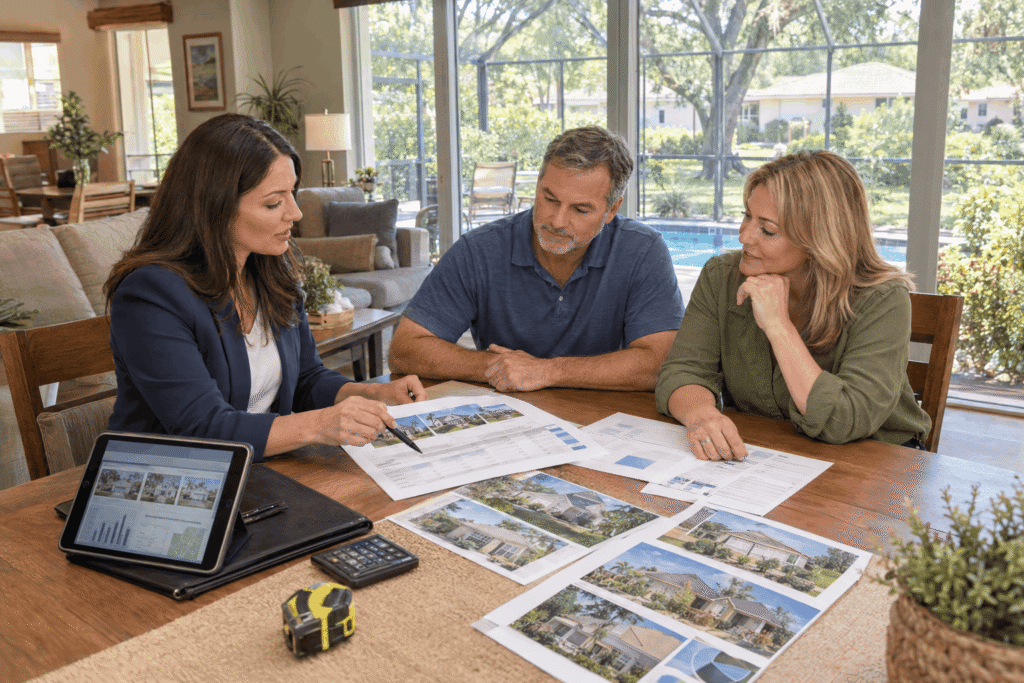
Comparative market analyses (CMAs) are prepared by real estate agents. An agent looks at recent local sales, active listings, and the home’s condition to suggest a realistic price range. CMAs are common when someone is thinking about listing a property.
Formal appraisals are completed by licensed appraisers. Lenders typically require them for mortgages and refinancing. Appraisals follow strict standards and are often considered the most objective option.
Each type serves a different purpose. Many homeowners start with an online estimate, then move to a CMA or appraisal once their plans become more serious.
Why Local Knowledge Matters in Ocala
Ocala’s housing market has its own personality. The area includes everything from historic homes near downtown to large horse properties, golf communities, and fast-growing 55-plus neighborhoods.
That variety makes accurate pricing tricky. A three-bedroom home in an active adult community may follow very different pricing patterns than a similar-sized home on acreage outside the city. Algorithms often struggle to tell the difference.
Florida-specific factors also play a role. Roof age can affect insurance costs, which affects buyer interest. Flood zone status, hurricane-rated windows, and HVAC condition can all shift a home’s appeal. Someone familiar with the local market tends to weigh these details more accurately than a software program.
Key Benefits of Getting a Professional Valuation
The most obvious benefit is pricing accuracy. A home priced too high often sits on the market. Over time, buyers start wondering what’s wrong with it, and price cuts follow. A home priced too low may sell quickly but leave real money behind.
A solid valuation also helps with negotiation. When a seller understands how their price was reached, they can respond to offers with confidence instead of emotion. The same goes for buyers who want to know whether an asking price is fair.
Financial planning is another quiet advantage. Homeowners often use valuations to decide whether to renovate, refinance, or tap into equity. Knowing the real number helps them avoid decisions based on outdated assumptions.
There’s also peace of mind. Many people carry a vague sense of what their home is worth. Replacing that guess with a well-researched figure makes big life decisions feel far less stressful.
Real-World Situations Where Valuations Make a Difference
Consider a family relocating for a new job. They search online for ways to “sell my house in Ocala, FL” and quickly find a dozen different price estimates. Some are tens of thousands of dollars apart. A local market analysis helps them cut through the noise and list at a price that attracts serious buyers.
Then there’s the adult child handling a parent’s estate. They may need a fair market value for tax purposes or to divide assets among siblings. In this case, a formal appraisal often provides the documentation needed and helps keep family conversations fair.
Another common scenario involves homeowners who aren’t selling at all. A couple might want to add a pool or remodel a kitchen. A valuation can show whether the project will likely add value in their neighborhood or whether they risk over-improving for the area.
Divorce, refinancing, and insurance reviews are other situations where an accurate number matters. In each case, the valuation becomes a practical tool rather than just a curiosity.
How Homeowners Can Prepare for a Valuation
A little preparation can lead to a more accurate result. Homeowners often benefit from gathering records of recent upgrades, such as a new roof, water heater, or HVAC system. Receipts and permit details help support those improvements.
Basic cleaning and minor repairs also help. A valuation professional will note the home’s condition, and small fixes can influence how a property is perceived.
It’s also wise to be honest about known issues. Hidden problems tend to surface during inspections anyway. Addressing them early leads to a more realistic number and fewer surprises later.
Choosing the Right Source for a Valuation
When comparing home valuation services in Ocala, FL, experience with local neighborhoods is often the deciding factor. Someone who regularly works in the area will understand how different communities, school zones, and property types affect pricing.
Transparency matters too. A trustworthy valuation should explain which comparables were used and why. If a number seems unusually high or low, homeowners should feel comfortable asking how it was reached.
Local brokerages such as Buckner Homes Realty INC are among the resources homeowners in the area can turn to for market insight. Many people find it helpful to speak with more than one professional before making a final decision. Comparing perspectives often reveals a more balanced price range.
The Bottom Line
A home is usually a person’s largest financial asset. Knowing its true value supports better choices, whether the plan is to sell next month or stay put for years.
Online tools offer a quick snapshot. A deeper, locally informed valuation offers something more useful: a number that reflects real market conditions. For anyone thinking, “it might be time to sell my house in Ocala, FL,” that clarity is the right place to begin.
Frequently Asked Questions
How accurate are online home value estimates?
Online estimates can be a helpful starting point, but they often miss interior upgrades, condition, and local trends. Their accuracy can vary widely, especially for unique or rural properties.
What’s the difference between an appraisal and a CMA?
An appraisal is completed by a licensed appraiser and is often required by lenders. A CMA is prepared by a real estate agent to help set a listing price based on recent local sales.
How much does a home appraisal usually cost?
Costs vary by property size and complexity, but a standard single-family appraisal often runs a few hundred dollars. Larger homes or properties with acreage may cost more.
How often should homeowners check their home’s value?
Many homeowners review their home’s value once a year or before major financial decisions. Checking more often makes sense when the local market is shifting quickly.
Do renovations always increase home value?
Not always. Kitchen and bathroom updates often add value, but some upgrades may not return their full cost. Neighborhood price ranges play a big role in what buyers will pay.