A burst pipe at 2 a.m. rarely gives a warning. Neither does a summer storm that sends water under a back door, or a water heater that quietly fails while a family is away for the weekend. In small communities across north Georgia, these moments are more common than most people expect.
Emergency water damage restoration in Ranger, GA covers the urgent work of removing water, drying a structure, and repairing what moisture has harmed. For homeowners and business owners alike, knowing how the process works makes a stressful situation easier to manage.
This article explains where water damage usually comes from and why the first few hours matter so much. It also covers what restoration typically involves and how property owners approach prevention and recovery.
Where Water Damage Usually Begins
Most water damage does not come from dramatic floods. It starts with everyday systems that wear out or fail without much notice.
Plumbing and Appliance Failures
Supply lines under sinks, washing machine hoses, and dishwasher connections are frequent culprits. A small crack in a braided hose can release hundreds of gallons of water in just a few hours.
Water heaters are another common source. Many tanks last about 8 to 12 years, and older units can leak slowly or rupture suddenly.
Weather and Seasonal Risks
The Gordon County area sees heavy spring rain, summer thunderstorms, and the occasional winter freeze. Each season brings its own risk.
Heavy rain can overwhelm gutters and push water toward foundations. Freezing nights can split pipes in crawl spaces, garages, and exterior walls. Those leaks often go unnoticed until the ice thaws.
Roof Leaks and Hidden Moisture
Roof damage often shows up first as a brown stain on a ceiling. By then, water may have been soaking insulation and framing for weeks.
Hidden leaks behind walls or under flooring are especially tricky. They can quietly feed mold growth long before anyone sees a visible problem.
Why a Quick Response Matters So Much
Water does not stay put. It wicks into drywall, seeps under baseboards, and spreads through subfloors. Each hour of delay widens the affected area and raises repair costs.
Timing is a major factor. Mold can begin growing within 24 to 48 hours in damp conditions. Wood swells, drywall softens, and carpet padding can break down quickly once it is saturated.
There is also the question of water type. Clean water from a supply line is less risky than gray water from appliances. Black water from sewage backups or outside flooding is the most serious. Water that starts clean can turn contaminated if it sits too long, which is another reason speed matters.
Ask yourself: if a leak started tonight, would you know where the main water shutoff is? Many property owners only learn the answer during an emergency.
What Emergency Water Damage Restoration in Ranger, GA Generally Involves
Every situation is different, but most restoration projects follow a similar path. Knowing what to expect can help property owners ask better questions and make informed choices.
Inspection and Assessment
Technicians usually start by finding the source of the water and stopping it. They then measure how far the moisture has spread using tools like moisture meters and thermal cameras.
This assessment shapes the rest of the job. It shows which materials can be saved and which need to be removed.
Water Extraction
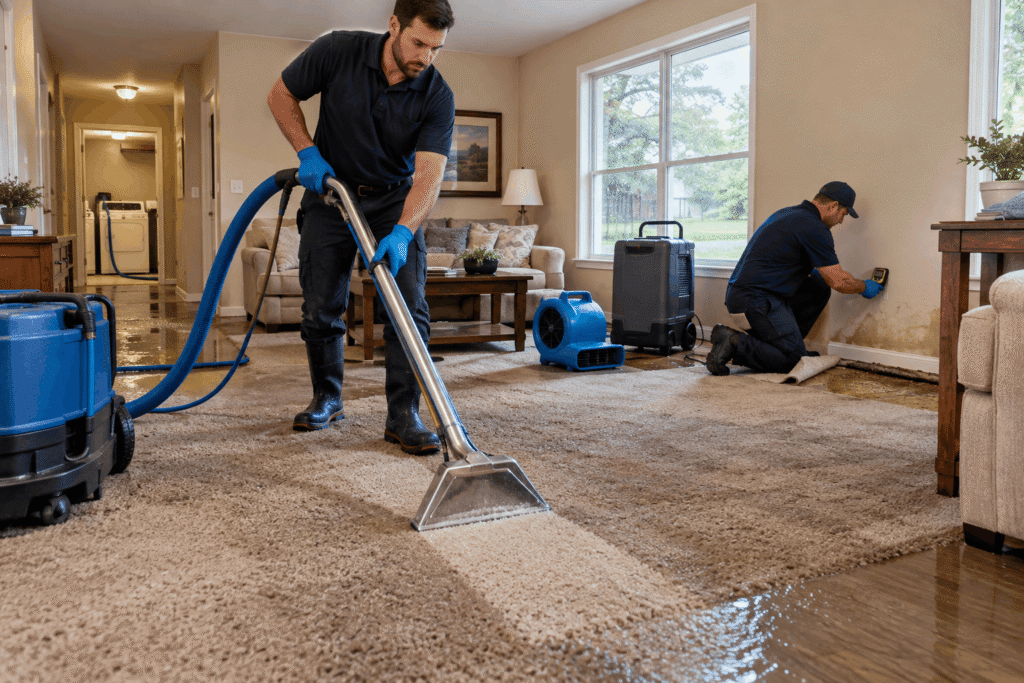
Standing water comes out first, often with truck-mounted or portable extraction units. Removing as much water as possible early on shortens drying time.
Carpets and padding may be lifted during this phase. Padding often has to be replaced, even when the carpet itself can sometimes be saved.
Drying and Dehumidification
Once the visible water is gone, the real drying begins. Air movers and commercial dehumidifiers pull moisture out of walls, floors, and the air.
This phase usually takes several days. Technicians check moisture levels daily to confirm materials are drying to normal standards.
Cleaning, Sanitizing, and Repairs
Affected surfaces are cleaned and treated with antimicrobial products to discourage mold. Contaminated materials are removed and disposed of safely.
The final stage is rebuilding. That can mean replacing drywall, installing new flooring, repainting, or restoring cabinets and trim.
Real-World Scenarios Property Owners Face
Water damage looks different depending on the property. A few common situations show how it plays out.
Picture a family returning from a holiday trip to find their kitchen floor buckled. A dishwasher supply line failed days earlier. The water spread under the cabinets and into the subfloor. What looked like a flooring problem turned out to need cabinet removal and structural drying.
Now consider a small retail shop after a heavy overnight storm. Water entered through a low entryway and soaked the carpet tiles near the front counter. The owner’s biggest concern was not just the damage. It was reopening quickly without losing several days of sales.
That is where Commercial Restoration Solutions in Ranger, GA often come into the conversation. Businesses tend to need work scheduled around operating hours, careful documentation for insurance, and a clear plan to limit downtime.
Another common case involves older homes with crawl spaces. A slow pipe leak beneath the floor can raise humidity throughout the house. Owners may notice musty smells, warped hardwood, or condensation on windows long before they find the source.
How Property Owners Think About Prevention
Prevention rarely gets attention until after a loss. Owners who have been through water damage, though, tend to take a few practical habits seriously.
Routine checks make a real difference. Looking under sinks, inspecting appliance hoses, and watching for stains on ceilings can catch problems early. Many people swap rubber washing machine hoses for braided steel versions as a simple upgrade.
Seasonal upkeep also helps. Cleaning gutters, sloping soil away from the foundation, and insulating exposed pipes before winter all reduce risk.
Some homeowners install water leak sensors near water heaters and appliances. Others add automatic shutoff valves that close the main line when a leak is detected. These devices are fairly affordable and can prevent major losses.
For businesses, prevention often means a written plan. Knowing who to call, where the shutoffs are, and how to protect inventory can save valuable time during an emergency.
Recovery: What Happens After the Water Is Gone
Recovery involves more than drying and repairs. It often includes insurance claims, temporary relocation, and decisions about upgrades.
Documentation is key. Photos of the damage, records of the source, and receipts for emergency expenses help support insurance claims. Many restoration providers document moisture readings throughout the job, which insurers often request.
Property owners also weigh whether to restore things exactly as they were or improve them. A flooded basement, for example, might be rebuilt with water-resistant materials or a better drainage system.
Local providers are often the first call in these situations. Companies such as Voda Cleaning & Restoration are among the businesses that handle this kind of work in the area. Still, owners generally benefit from comparing response times, certifications, and communication styles before choosing anyone.
Certification from the Institute of Inspection, Cleaning and Restoration Certification (IICRC) is a common benchmark. It shows that technicians have trained in industry-standard drying and cleanup methods.
What to Avoid After Water Damage
A few common mistakes can make a bad situation worse.
- Waiting to see if it dries on its own. Surface dryness often hides moisture trapped deeper in walls and floors.
- Using household fans alone. Regular fans rarely remove enough moisture from dense materials.
- Running electrical devices in standing water. This creates a serious shock hazard.
- Throwing away damaged items too soon. Insurance adjusters may want to see them first.
Final Thoughts
Water damage can begin in many ways, from a failed hose to a heavy storm. The common thread is that fast action limits harm. Extraction, thorough drying, and careful cleaning protect both the structure and the people inside it.
For homeowners, staying alert to small leaks and doing seasonal maintenance goes a long way. For businesses, having a response plan and understanding Commercial Restoration Solutions in Ranger, GA can make recovery faster and less disruptive.
One simple next step: find your main water shutoff valve today, and make sure everyone in your home or workplace knows where it is.
Frequently Asked Questions
How quickly should water damage be addressed?
As soon as possible, ideally within the first 24 hours. Mold can start growing within 24 to 48 hours, and materials like drywall and wood deteriorate quickly when wet.
How long does the drying process usually take?
Most structural drying takes about three to five days. Larger losses, dense materials, or high humidity can extend that timeline.
Does homeowners insurance cover water damage?
Many policies cover sudden and accidental damage, such as a burst pipe. Gradual leaks and outside flooding are often excluded, so reviewing your policy details is important.
Can wet carpet be saved after a leak?
Sometimes. Carpet soaked with clean water and dried quickly can often be restored. The padding underneath usually needs to be replaced, and carpet exposed to contaminated water should be discarded.