3D Construction Printing
Construction companies are increasingly examining new technologies that can improve project planning, support customized designs, and simplify selected building operations. 3D Construction Printing is one development attracting attention because it combines digital design systems with automated material placement.
Traditional building processes depend on skilled workers, construction materials, machinery, and carefully coordinated activities. While these methods remain important, automated printing introduces another way to produce certain concrete structures and components.
As construction businesses look for practical ways to improve productivity, understanding the capabilities and limitations of this technology is becoming increasingly relevant. From residential applications to architectural components, concrete printing offers opportunities that deserve careful evaluation.
Understanding How 3D Construction Printing Works
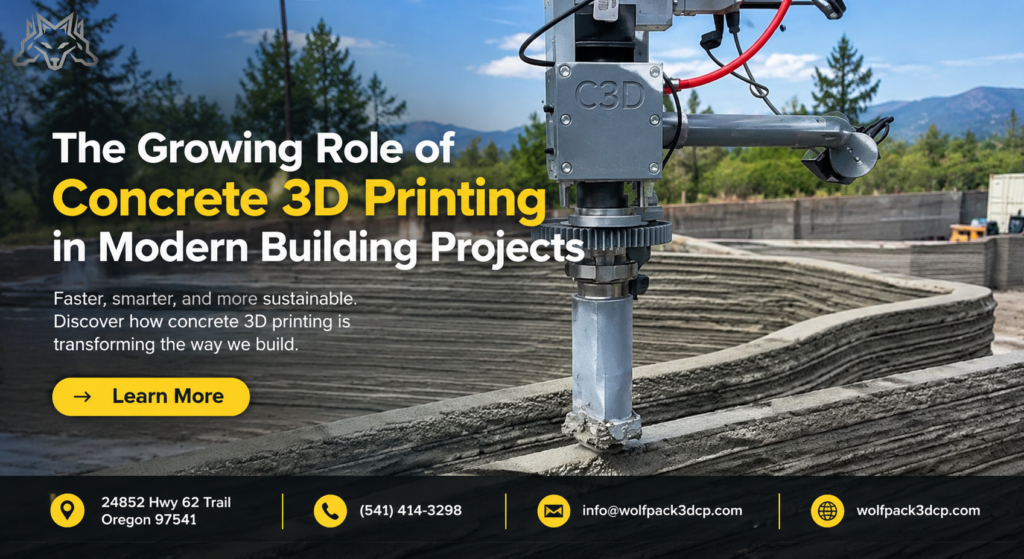
3D Construction Printing uses specialized machinery to deposit printable cement-based material through a controlled nozzle. The equipment follows a digital model and places material in successive layers until the intended shape is produced.
The process starts with a digital design prepared by architects or engineers. This model is converted into machine instructions that control the printer’s movement, printing sequence, and material placement.
Unlike conventional concrete construction, which often relies on molds and formwork to create shapes, automated printing builds selected sections directly from digital instructions.
Concrete 3D printing requires specially formulated mixtures. These materials must remain workable during extrusion while developing enough stability to support additional layers. Their bonding characteristics and final strength must also satisfy the intended application.
Modern 3D Concrete Printers can be designed for different construction environments and project requirements. However, equipment selection should always consider the size, complexity, and technical demands of the proposed structure.
Practical Applications Across the Construction Industry
The potential applications of automated concrete printing extend beyond complete residential buildings. Construction professionals can investigate several uses depending on engineering approval and project requirements.
Residential Building Components
Selected residential construction projects can incorporate printed walls and other suitable components. Architects may use digital modeling to develop customized shapes while coordinating printed sections with conventional structural elements.
Architectural and Decorative Structures
Curved features, decorative walls, and customized landscape elements can benefit from digital design flexibility. These structures may offer architects additional creative options without requiring conventional formwork for every detail.
Landscape and Outdoor Installations
Planters, seating features, garden walls, and selected outdoor structures are other possible applications. These projects can provide controlled environments for evaluating printing processes and material performance.
Specialized Construction Components
Manufacturing selected components through Concrete 3D printing can help companies examine automated production without changing their entire building process.
As 3D Printing in Construction develops, contractors may find additional opportunities to integrate printed components into conventional construction workflows.
Advantages of Automated Concrete Printing
One important advantage of 3D Construction Printing is its ability to produce customized geometries using digital instructions. This can give architects greater flexibility when designing structures with curved surfaces and unusual shapes.
Another potential advantage involves automated material placement. The printer follows a programmed path, which can reduce certain repetitive manual activities. Depending on the project, this may help teams organize construction tasks more efficiently.
The technology can also support more controlled production planning. Designers can prepare digital models before construction begins, allowing teams to review dimensions, printing paths, and potential design issues.
However, the actual benefits depend on the project’s complexity, equipment capabilities, material selection, and workforce experience. Automated printing does not remove the need for skilled construction professionals.
Companies must also understand that Concrete 3D Printing Equipment requires proper setup, calibration, maintenance, and trained operators. These responsibilities should be included in project planning.
Limitations and Challenges Builders Should Understand
Despite its potential, concrete printing is not suitable for every construction project.
Material compatibility is one of the primary challenges. Conventional concrete mixtures cannot automatically be used in printing systems. Specialized materials must meet extrusion, workability, layer stability, and strength requirements.
Structural engineering is equally important. Printed walls and components must be evaluated for load-bearing capacity, reinforcement, durability, and their connection to other building elements.
Environmental conditions can also affect printing operations. Temperature, moisture, wind, and material handling may influence the consistency and performance of the printing process.
Another consideration is regulatory approval. Construction companies must verify applicable building codes, permits, inspection requirements, and engineering documentation before using printed components in actual projects.
For these reasons, 3D Concrete Printers should be treated as specialized construction equipment rather than simple replacements for conventional machinery.
Renting or Purchasing Concrete Printing Equipment
For construction companies interested in adopting this technology, choosing between renting and purchasing equipment is an important financial and operational decision.
Purchasing may suit businesses that expect to use printing systems regularly across multiple projects. Ownership provides direct access to machinery and allows companies to develop their own operational procedures.
However, buying requires an initial investment along with ongoing maintenance, storage, transportation, and staff training expenses.
A 3D Concrete Printer Rental arrangement may be more appropriate for companies testing the technology or handling occasional projects. Renting provides access to equipment without requiring immediate ownership.
Businesses searching for a 3D Construction Printer for Rent should compare rental periods, operator support, transportation, maintenance responsibilities, and material compatibility before signing an agreement.
The availability of a 3D Concrete Printer Rental service can also help contractors evaluate equipment suitability before making a long-term purchasing decision.
Rather than assuming renting is always cheaper, companies should calculate the complete cost of each option based on project duration and expected equipment usage.
Choosing the Right Equipment for a Construction Project
Selecting appropriate Concrete 3D Printing Equipment requires more than comparing machine sizes or available features. Contractors should first identify what they intend to print and whether the proposed design is compatible with the equipment.
Project dimensions, printing requirements, material availability, and site conditions should guide the selection process.
Businesses should also examine transportation and installation requirements. Large printing systems may need specialized arrangements to reach the construction site and operate safely.
Operator training is another essential factor. Teams should understand digital design preparation, machine setup, material handling, printing procedures, and basic troubleshooting.
California construction businesses evaluating a 3D Construction Printer for Rent can review WolfPack 3DCP’s California rental options for information about its concrete printing equipment rental service and operator support.
Before beginning a project, contractors should also investigate applicable California building regulations, local permitting procedures, structural requirements, and inspection standards.
Careful preparation helps reduce avoidable problems and gives construction teams a clearer understanding of what the equipment can realistically achieve.
How Construction Automation May Develop
The continued development of robotic systems, digital modeling, and material science could expand the practical uses of automated concrete printing.
Future improvements may focus on printable material performance, reinforcement integration, quality monitoring, and more efficient connections between design software and construction machinery.
3D Printing in Construction may also become more closely integrated with other building technologies, including digital project management and automated site planning.
However, wider adoption will depend on more than technological improvements. Contractors, engineers, architects, and regulatory authorities will need to establish reliable procedures for designing, producing, and inspecting printed structures.
For construction businesses, evaluating individual projects remains more useful than assuming every building can benefit from automated printing.
Conclusion:
As the construction industry evaluates new building methods, WolfPack 3DCP provides a California-based option worth researching for businesses interested in concrete printing equipment rental. Ultimately, successful implementation depends on suitable project selection, compatible materials, experienced operators, sound engineering, and regulatory compliance. By understanding these factors, contractors can determine where automated concrete printing offers genuine practical value alongside established construction techniques.