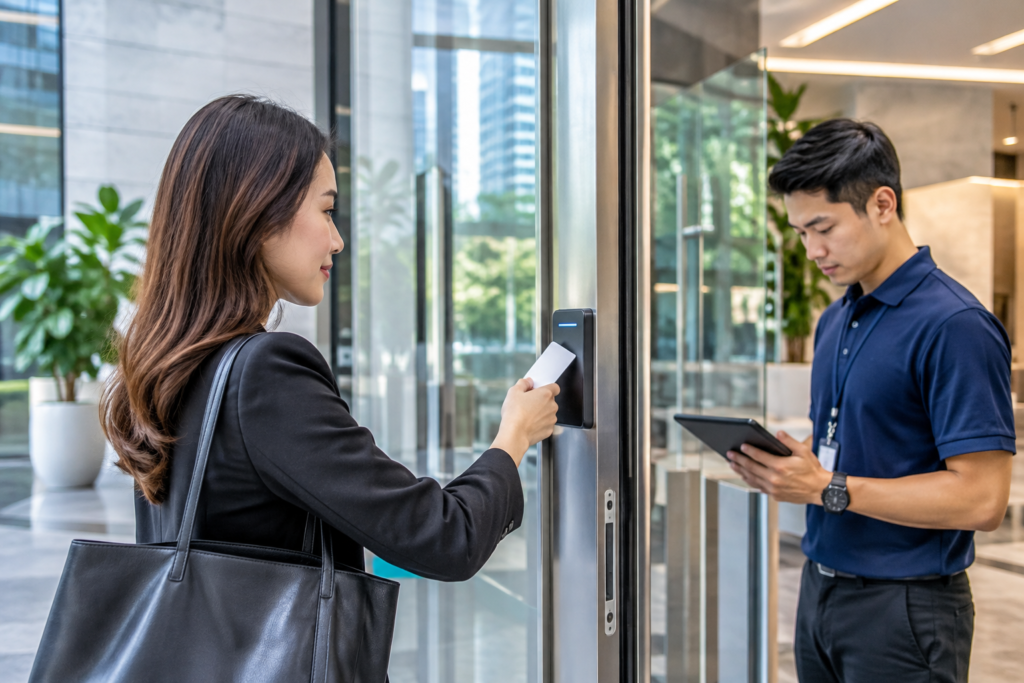
Access control system – Visitors are an important part of daily business operations. Customers attend appointments, suppliers deliver goods, contractors carry out maintenance and business partners visit offices for meetings. In a busy commercial environment, welcoming these people while maintaining appropriate security can be a delicate balance.
For businesses in Singapore, the reception area is often the first point of contact between an organisation and its visitors. A smooth arrival process creates a professional impression, but uncontrolled movement beyond reception can introduce unnecessary risks. Companies therefore need a practical way to distinguish between welcoming visitors and granting unrestricted access to the premises.
A properly planned access control system can form part of this approach by helping businesses manage entry points and restrict access to designated areas.
Why Visitor Management Deserves More Attention
Many organisations focus heavily on employee access but pay less attention to how visitors move through their premises. This can happen when the office is relatively small or when employees are accustomed to recognising familiar suppliers and contractors.
However, a visitor may not understand the layout of the building or know which areas are restricted. If there is no clear procedure, visitors may unintentionally enter workspaces, storage areas or rooms containing confidential information.
The issue is not limited to offices. Retail businesses, commercial buildings, warehouses, clinics and industrial premises may all receive visitors with different reasons for entering.
A suitable visitor management process helps employees understand who is expected, where visitors should go and which areas require additional authorisation.
Creating a Clear Arrival Process
A visitor’s experience begins before they reach the meeting room. Clear instructions, a visible reception point and a consistent check-in procedure can make the arrival process easier to manage.
Businesses should decide who is responsible for receiving visitors and how the relevant employee will be notified when someone arrives. For premises without a full-time receptionist, an alternative arrangement should be established so visitors are not left uncertain about where to go.
The process should also explain whether visitors need to be accompanied. A supplier delivering a package may only need access to a designated receiving area, while a contractor carrying out work in a restricted facility may require additional approval.
The objective is to make the procedure straightforward rather than unnecessarily complicated.
Separating Public and Restricted Areas
One of the most practical ways to improve visitor security is to establish a clear distinction between public-facing and restricted spaces.
A reception area or meeting room may be suitable for visitors, while staff offices, document storage rooms, equipment areas and server rooms should remain accessible only to authorised individuals.
This arrangement allows businesses to welcome guests without exposing every part of the premises. It also gives employees a clearer understanding of where visitors are permitted to go.
An access control system can support this separation by applying different access permissions to selected doors. Depending on the chosen configuration, employees may have access to their working areas while visitors are directed towards approved locations.
Choosing the Right Access Method
Different premises have different visitor management requirements. Some businesses may need a simple electronic door arrangement, while larger facilities may require more structured access permissions.
Access credentials can include temporary cards, PIN codes or other approved identification methods, depending on the equipment and security requirements. The organisation should consider how credentials are issued, who authorises them and when they should expire.
Temporary access should be limited to the purpose and duration of the visit where the technology supports such controls. Businesses should avoid issuing credentials with broader permissions than necessary.
It is also important to establish a process for collecting temporary cards or disabling credentials after a visit has ended.
Managing Contractors and Service Providers
Contractors often require access to areas that ordinary visitors would not enter. Examples include electrical rooms, equipment spaces, maintenance zones and network infrastructure areas.
Their access requirements should be assessed before work begins. The responsible department should confirm the contractor’s identity, the purpose of the visit, the approved work area and whether supervision is necessary.
For longer projects, businesses may need to review access permissions as the scope of work changes. A contractor who initially requires access to one section of a building should not automatically retain the same permissions after the work has been completed.
A consistent procedure helps prevent temporary arrangements from becoming permanent security gaps.
Maintaining a Professional Visitor Experience
Security should support the visitor journey rather than make it unnecessarily difficult. Long waiting times, unclear instructions and repeated administrative steps can create a negative impression.
Businesses can improve the experience by providing clear arrival instructions, assigning responsibility for visitor approval and ensuring that reception staff understand the access procedure.
It is also useful to consider accessibility. Visitors may include older individuals, people with mobility requirements or guests who are unfamiliar with the building. Security arrangements should be designed with practical movement and safe entry in mind.
A professional process is one that is clear, consistent and proportionate to the level of risk.
Considering Privacy and Visitor Information
Visitor management may involve collecting personal information such as names, contact details, appointment information or identification records. Businesses should handle this information responsibly and establish clear internal rules.
Only information that is necessary for the visitor management purpose should be collected. Access to visitor records should also be limited to authorised personnel, and retention practices should follow the organisation’s applicable legal and privacy obligations.
Companies operating in Singapore should consider their responsibilities under the Personal Data Protection Act (PDPA) when designing visitor registration procedures. Security and privacy should be considered together rather than treated as separate concerns.
How Electronic Access Supports a More Structured Process
An electronic access control system can help businesses manage selected entry points more consistently. It may allow authorised personnel to control access to restricted doors and manage credentials according to defined permissions.
However, electronic access equipment is not a complete visitor management policy by itself. Businesses still need clear procedures for registration, approval, escort arrangements, emergency situations and handling lost credentials.
The system should be selected according to the building layout, visitor volume, operating hours and the level of security required. A site assessment can help determine which doors need controlled access and how the arrangement should work during normal operations.
Strengthen Visitor Security with COMNET
A secure visitor process does not have to make a business feel unwelcoming. With clear procedures and suitable entry management, Singapore organisations can protect restricted areas while maintaining a professional experience for customers, suppliers and business partners.
COMNET offers physical access control solutions for businesses seeking a more organised approach to premises security. Visit https://www.comnet.sg/physical-access-control-systems/ to learn more about COMNET’s access control system solutions and explore an arrangement suited to your building and operational needs.