A school needs a wax heater that is safe for beginners, easy to clean between classes, and long-lasting. A thermostat-controlled pot heater with a removable inner pot is the best choice for most schools. Some institutes also offer cartridge heaters in case the course covers roll-on waxing. Salon units are made for one experienced operator. A school unit has to handle lots of hands, lots of mistakes, and constant on/off use.
Match the heater to what the course teaches.
Before you look at any catalogs, read the course outline. Most waxing classes teach more than one style, and each style needs a different set of tools:
- Soft wax that is put on with a spatula and taken off with paper or cloth strips
- Hard wax in beads or blocks that can be taken off without strips
- Roll-on packs are used for bigger areas like arms and legs.
A pot-style wax heater can melt both soft wax and hard wax beads if the pot is big enough. If you want to use a cartridge heater, you can only use sealed replacements. If your school teaches all three formats, you can cover the course material with just one or two cartridge units for demonstrations and a pot heater for the main practice room.
Pot heaters and cartridge heaters compared.
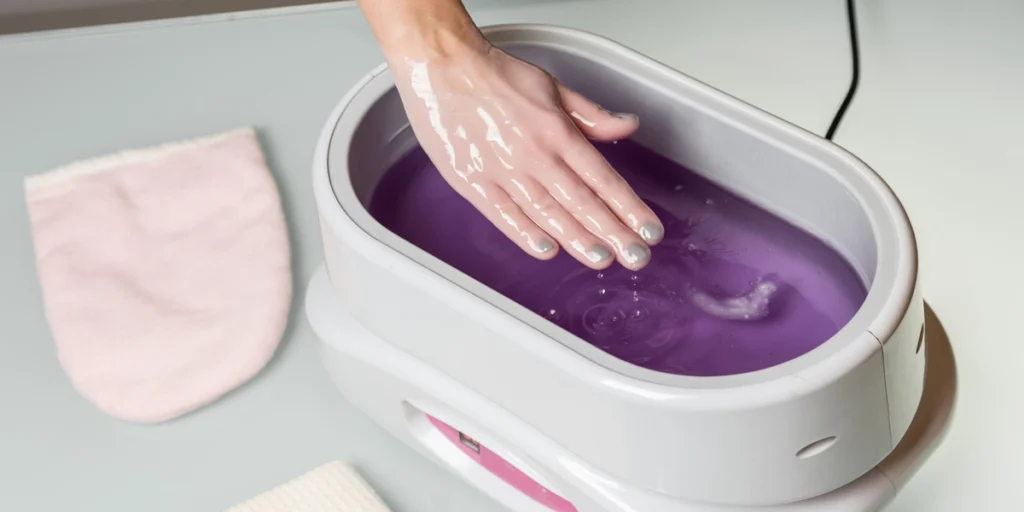
A pot heater melts wax in an open vessel. Students can use any wax that works with it, so it is flexible and cheap to run. It needs more frequent cleaning, and if a student isn’t careful, hot wax could spill.
A cartridge heater warms up a sealed refill, which is then pushed out through a roller head. It is easier to clean up, takes less time to get ready, and prevents spills. Each treatment costs more when you get it again, and the format only teaches one technique. Because of this, a cartridge unit is mostly used as an extra machine and not as the only one in a training room.
Some institutes also consider a double-pot unit, which can hold two kinds of wax at the same time. It saves bench space, but since both pots usually draw power from the same source, a problem with one stops them both.
Temperature control comes first in a classroom.
They are slow, so the wax stays on the heater for a long time while they work. In that case, a wax heater with a set setting will get too hot. When wax gets too hot, it burns the skin, gets stringy, and loses its grip. Bad wax teaches beginners bad habits.
Pick a model with a visible scale or digital screen, and one that turns off automatically if the wax gets too hot. If a wax heater has only an on/off switch and no way to adjust the heat, students can’t tell when it’s on, so avoid it.
How much space and how many units
The number of students who can use the same heater depends on the pot size, measured in milliliters or ounces. During practice, small pots run out of water quickly and need constant refilling. Very large pots take a long time to melt, and only a few students can use them.
One useful method is to put students into pairs and count them each for each practical session. Each pair should be given its own wax heater. That reduces wait times without having too many machines in the room. Add one extra unit so a broken heater doesn’t stop a class. The supplier can tell you which pot size will work best for your group, and you might also want to ask what type other schools use.
Proper hygiene and ease of cleaning
When you use a scraper to clean a fixed pot, the surface gets worn down. Wax stays hard in the pot. You can take the inner pot out and clean it on a bench or at a sink. Between classes, you can use a different pot. The non-stick coating makes it easier to remove wax, and the smooth, seamless interior prevents old wax from building up in corners.
Training rooms also need clear cleanliness rules that match the equipment they use. For each task, students should use a new, single-use spatula and never put a used one back in the pot. If a wax heater is shared, give each student their own disposable jar with a small amount of wax. A wide, low pot is better for this than a tall, narrow one.
Build quality and electrical details.
Things in the classroom get bumped, dropped, and moved around. To keep the heater from moving around on a bench, look for a base with stable, non-slip feet. In a crowded room, the pot should have a strong handle, a cool-touch exterior, and a cord that’s long enough to reach the plug without stretching.
Pakistan has a 220 to 240 volt supply, so read the label to confirm the voltage before you buy, especially if the unit is from another country. Make sure the plug fits the sockets. Power supply changes can damage cheap heaters, so ask the seller whether they recommend a surge protector and put one on the bench.
Things you should ask the supplier
Ask yourself these things before you buy a wax heater:
- What is the pot capacity, and what wax formats does it take?
- Does it have adjustable temperature control and an overheat cut-off?
- Is the inner pot removable, and can you buy a spare separately?
- What does the warranty cover, and who handles fixes locally?
- Are replacement parts such as thermostats and cords available?
- Is the seller an authorized dealer for the brand?
If the seller cannot answer these clearly, that tells you something about the after-sales service. An institute depends on its equipment every day, and a heater that cannot be repaired locally will sit unused during a course.
Price, brand and what to skip
The cheapest unit is rarely the best value for a school. A basic salon wax heater with set heat may cost less on day one and cause trouble within weeks. A mid-range unit with a thermostat, removable pot and local warranty usually costs less over a year because it breaks down less often.
Be careful with lookalike goods sold under well-known brand names at very low prices. Check the packaging, the serial number, and the seller’s reviews. Skip any machine without safety approval marks or labels in a language you can read, since you will be putting students in front of it.
Safety habits to teach with the equipment
Even the best wax heater needs good practice. Teach students to test wax on the inside of their own wrist before applying it to a model. Remind them to keep the heater on a flat, dry surface away from the edge of the bench, and never leave it unattended. Discard wax that smokes or smells burnt, as it has overheated. Keep a first-aid kit and a bowl of cool water within reach, and make the burn process part of the first lesson.
Switch the heater off at the socket at the end of the day, let it cool, and clean the pot and the surrounding bench before the next class. Clean equipment lasts longer and sets a standard students carry into their own salons.
To Read More Blog: Best Nail Salon in Dubai: Your Guide to Beautiful, Long-Lasting Nails
A sensible starting buy
For a typical institute, a sound starting set is one pot-style wax heater for every two students, with adjustable heat, a removable pot and an overheat cut-off, plus one cartridge unit for roll-on demonstrations and a spare pot or two. Check the voltage, confirm the warranty in writing, and ask for a demonstration before you buy in bulk. A wax heater picked with the classroom in mind will serve the institute through many batches of students.