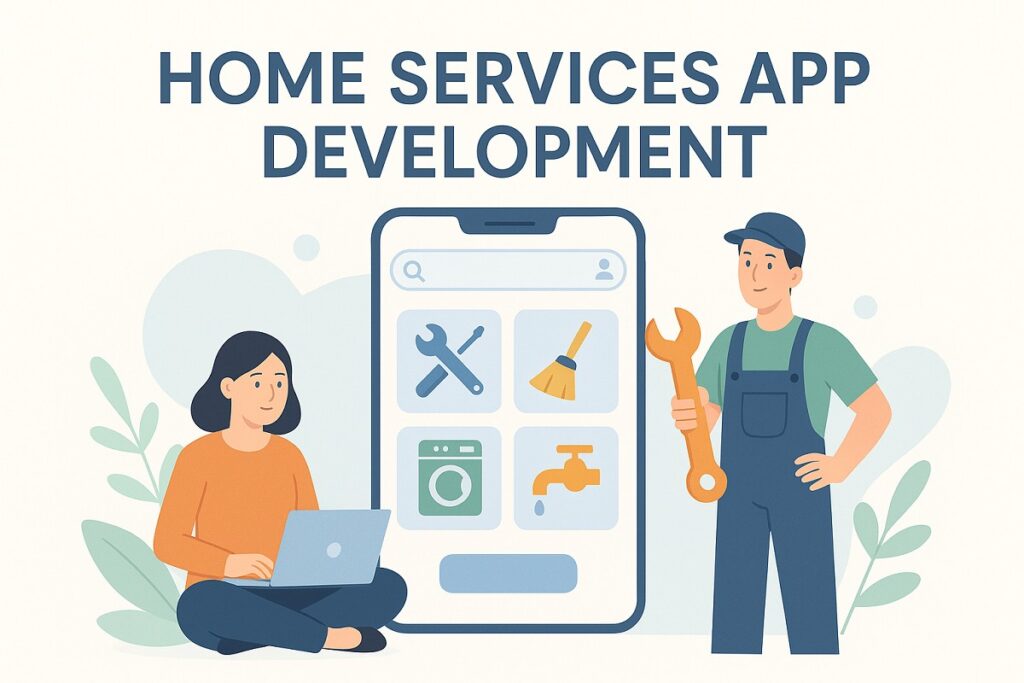
Building a successful on-demand platform for plumbing, cleaning, HVAC, electrical, or similar offerings requires more than a good idea. The quality of your home services app development team directly impacts user experience, operational efficiency, scalability, and long-term ROI. Many businesses underestimate how specialized this domain is and hire generalists who struggle with real-world service workflows, location-based logic, and high-volume user interactions.
This article serves as a detailed hiring checklist for companies seeking reliable mobile app development partners or assembling in-house teams. It is written for decision-makers seeking development services, not just theoretical guidance. Each section explains what to look for, why it matters, and how it affects business outcomes in the home services ecosystem.
Understanding the Scope of Home Services App Development
Home services platforms are complex ecosystems that connect customers, service providers, dispatchers, and administrators in real time. Unlike standard apps, they must manage dynamic availability, location tracking, service pricing, and post-service feedback without friction. When hiring a team, the first step is ensuring they understand this complexity from a business and technical perspective.
A capable home services app development team should demonstrate experience with use cases such as booking workflows, service categorization, emergency requests, and multi-vendor management. They should also understand seasonal demand fluctuations and the need for system stability during traffic spikes. This level of awareness reduces costly rework later and ensures the app is aligned with real operational needs rather than assumptions.
Core Technical Skills to Evaluate Before Hiring
Technical competency is the foundation of any successful app, but for home services platforms, certain skills are non-negotiable. Teams should not only list technologies but also explain how and why they use them in service-based applications.
Key technical capabilities to assess include:
- Proficiency in iOS and Android development, whether native or cross-platform
- Strong backend architecture design for handling concurrent bookings
- Experience with real-time features such as GPS tracking and live notifications
- Secure payment gateway integration and data encryption practices
Beyond these points, teams should be able to discuss scalability planning and performance optimization. Home services platforms often start small but grow rapidly once demand increases. Developers who plan for growth from day one help avoid infrastructure bottlenecks and user dissatisfaction.
Domain Knowledge and Industry-Specific Experience
Hiring developers without domain exposure can slow progress and increase miscommunication. Home services app development requires familiarity with how service businesses operate on the ground. This includes understanding technician scheduling, service zones, job assignment logic, and cancellation policies.
Teams with prior experience in similar platforms can anticipate challenges before they arise. They are more likely to propose practical features such as flexible pricing rules, provider verification flows, and dispute management systems. This industry awareness shortens the learning curve and leads to faster time-to-market with fewer revisions.
UI/UX Expertise for Service-Based Applications
User experience plays a decisive role in customer retention for home service apps. A technically sound app can still fail if booking feels complicated or navigation is unclear. When evaluating a team, look closely at their UI/UX process rather than just visual design samples.
Effective teams conduct user journey mapping for both customers and service providers. They understand that these two user groups have very different expectations and workflows. Clear service listings, intuitive booking steps, and simple provider dashboards are essential. Good UI/UX also reduces support requests, which directly lowers operational costs.
Backend Architecture and Scalability Planning
The backend is where many home services apps encounter problems after launch. Poor architectural decisions can lead to downtime, delayed bookings, or inaccurate service availability. A strong development team should clearly articulate how they design scalable backend systems.
Ask how they handle:
- High volumes of simultaneous booking requests
- Data synchronization between customers and providers
- Failover and backup strategies
- API performance and response times
Teams offering advanced mobile app development solutions usually adopt modular architectures that allow features to evolve independently. This flexibility becomes critical when adding new service categories or expanding into new regions.
Integration Capabilities and Third-Party Services
Modern home services platforms rarely operate in isolation. They depend on multiple integrations to deliver a seamless experience. A competent development team should be comfortable working with third-party APIs and external systems.
Common integrations include mapping services, payment processors, CRM tools, and analytics platforms. Some businesses also require connections with IoT devices or property management systems. In advanced cases, teams may even integrate custom smart home automation software services for premium offerings. The ability to manage these integrations securely and efficiently is a strong indicator of technical maturity.
Security, Compliance, and Data Protection Readiness
Home services apps handle sensitive user information, including addresses, payment details, and sometimes access schedules. Security lapses can damage trust and expose businesses to legal risks. When hiring a team, security should be treated as a core requirement, not an afterthought.
Evaluate their approach to authentication, authorization, and data storage. Teams should follow industry standards for encryption and be familiar with compliance requirements relevant to your target market. A proactive security mindset protects both users and the brand.
Team Composition and Role Clarity
A well-structured team is more effective than a collection of individual experts. When reviewing proposals, pay attention to how roles are distributed and coordinated. A typical home services app development team includes project managers, frontend and backend developers, UI/UX designers, and quality assurance specialists.
Clear role definitions reduce confusion and ensure accountability. Project managers act as a bridge between business goals and technical execution, while QA teams validate real-world scenarios before release. Balanced team composition improves delivery speed and product stability.
Communication, Process Transparency, and Collaboration
Strong communication is often overlooked during hiring, yet it significantly affects project outcomes. Development teams should offer transparent workflows, regular progress updates, and clear documentation. This is especially important for service-based platforms where requirements may evolve based on market feedback.
Agile methodologies are commonly used, but what matters most is adaptability. Teams should be open to iteration and capable of incorporating changes without disrupting timelines. Businesses benefit from partners who treat development as a collaborative process rather than a fixed contract.
Evaluating Flexibility and Long-Term Support
Home services platforms are not static products. They require ongoing enhancements, bug fixes, and feature updates as user expectations change. When hiring, consider whether the team offers long-term support and maintenance options.
Some businesses explore no-code application development tools for rapid prototyping, but scaling a robust home services platform typically demands custom development expertise. Teams that can support post-launch growth, performance tuning, and feature expansion add lasting value beyond initial development.
Budget Alignment and Value-Based Hiring
Cost is always a factor, but the lowest quote rarely delivers the best outcome. Instead of focusing solely on price, evaluate the value offered. A slightly higher investment in an experienced home services app development team often results in fewer issues, faster deployment, and better user retention.
Ask for detailed cost breakdowns and milestone-based pricing. Transparent financial planning reflects professionalism and helps avoid unexpected expenses later in the project lifecycle.
Conclusion
Hiring the right team is one of the most critical decisions in building a successful home services platform. A thoughtful approach that evaluates technical skills, domain knowledge, communication practices, and long-term support capabilities leads to stronger products and better business outcomes. By following this hiring checklist, businesses can confidently choose home services app development partners who understand both technology and real-world service operations, ensuring a reliable, scalable, and user-focused solution.
FAQs
What makes home services app development different from other app types?
Home services apps require real-time coordination between customers and providers, location-based logic, dynamic pricing, and reliable scheduling. These complexities demand specialized technical and domain expertise.
Should I hire an in-house team or outsource development?
Both models can work. Outsourcing to experienced teams is often faster and more cost-effective for businesses without internal technical leadership, while in-house teams suit long-term product ownership.
How long does it take to build a home services app?
Timelines vary based on features and complexity, but a well-planned MVP typically takes three to five months, followed by iterative improvements.
Is scalability important at the early stage?
Yes. Even early-stage platforms should be built with growth in mind to avoid expensive re-architecture later.