If you share your home with a Labrador, German Shepherd, Golden Retriever, or any other large breed dog, hip dysplasia is a term you’ve likely encountered. Perhaps your vet mentioned it during a routine check-up, or you’ve noticed your beloved companion struggling to rise from their bed in the morning, reluctant to climb stairs, or limping after exercise.
Hip dysplasia is one of the most common orthopaedic conditions affecting large dogs in the UK, impacting quality of life for thousands of dogs and their devoted owners. While it cannot be cured, the condition can be managed effectively with the right combination of veterinary care, lifestyle adjustments, and thoughtful home modifications. Understanding hip dysplasia and knowing how to support your dog through daily life can make an enormous difference to their comfort, mobility, and happiness.
This guide offers practical advice for UK dog owners navigating hip dysplasia, focusing on the daily management strategies that truly matter.
Understanding Hip Dysplasia: What’s Actually Happening
Hip dysplasia is a developmental condition where the hip joint fails to form properly. In a healthy hip, the ball-shaped head of the femur (thigh bone) sits snugly within the cup-shaped socket of the pelvis, creating a stable, smooth-moving joint. With hip dysplasia, this fit is loose and malformed. The ball and socket don’t align correctly, causing abnormal wear, inflammation, and eventually arthritis.
The condition is largely hereditary, which is why certain breeds face significantly higher risk. German Shepherds, Labrador Retrievers, Golden Retrievers, Rottweilers, Bernese Mountain Dogs, and Mastiffs are among the breeds most commonly affected. However, environmental factors during puppyhood, including rapid growth, excessive exercise, obesity, and nutrition, can influence whether a genetically predisposed dog develops clinical symptoms.
Many dogs with hip dysplasia show no signs during their energetic youth. Symptoms typically emerge between 6-18 months for early-onset cases, or later in life as arthritis develops in the abnormal joint. The condition is progressive, meaning it worsens over time without proper management.
Common signs to watch for include:
Difficulty rising from a lying position, especially after rest or sleep. Reluctance to climb stairs, jump into the car, or onto furniture they previously managed easily. A “bunny hopping” gait where both back legs move together rather than alternating. Decreased activity levels or reluctance to go for walks they once enjoyed. Stiffness after exercise or first thing in the morning. Muscle wastage in the hindquarters as the dog unconsciously shifts weight forward. Audible clicking or grinding sounds from the hip joint during movement. Increased irritability or sensitivity when the hip area is touched.
If you notice several of these signs, particularly in a breed predisposed to hip dysplasia, consult your vet. Early diagnosis through physical examination and X-rays allows for more effective management.
Medical Management: Working With Your Vet
Your veterinary surgeon is your most important partner in managing your dog’s hip dysplasia. Treatment approaches vary depending on your dog’s age, severity of symptoms, and overall health.
Non-surgical options are often tried first, particularly for mild to moderate cases or older dogs where surgery poses greater risks. These may include pain relief medications such as non-steroidal anti-inflammatory drugs (NSAIDs) to reduce pain and inflammation, though these require careful monitoring for side effects. Joint supplements containing glucosamine and chondroitin may help support cartilage health and reduce deterioration, though evidence for their effectiveness varies. Some vets recommend hydrotherapy or physiotherapy to strengthen muscles supporting the hip joint without high-impact stress.
Surgical interventions become necessary for severe cases or young dogs with significant discomfort. Options include femoral head ostectomy (FHO) where the ball of the hip joint is removed, allowing scar tissue to form a “false joint”, or total hip replacement, which involves replacing the entire joint with an artificial one. This is highly effective but expensive, typically costing £3,000-£6,000 per hip in the UK. Juvenile pubic symphysiodesis (JPS) is a preventive surgery performed on very young dogs to alter pelvic growth and improve hip socket depth.
Regular veterinary check-ups are essential for monitoring progression and adjusting treatment as needed. Be open with your vet about what you’re observing at home, as daily behaviour changes often indicate whether current management is adequate.
Weight Management: The Single Most Important Factor
If there’s one thing that makes the biggest difference to a dog with hip dysplasia, it’s maintaining a healthy weight. Every extra kilogram your dog carries places additional stress on already compromised joints, accelerating deterioration and increasing pain.
Research shows that even modest weight loss can significantly reduce symptoms in dogs with joint disease. For a large breed dog, losing just 5-10% of excess body weight can translate to noticeably improved mobility and reduced pain medication requirements.
Practical weight management strategies for UK dog owners:
Work with your vet to establish your dog’s ideal weight. Large breed standards vary enormously, and what’s healthy for one Labrador may not suit another. Feed measured portions rather than free-feeding. It’s remarkably easy to overfeed when pouring kibble by eye. Use a measuring cup and stick to recommended amounts based on your dog’s ideal weight, not their current weight.
Choose high-quality food formulated for large breeds with joint support ingredients. Many premium UK brands now offer specific formulations for dogs with mobility issues. Account for treats in daily calorie intake. Those training treats, dental chews, and table scraps add up quickly. Consider switching to low-calorie alternatives like chopped carrots or green beans.
Resist those pleading eyes. Yes, your dog looks hungry. Dogs with hip dysplasia often become less active, which can increase food-seeking behaviour out of boredom. Stay strong for their long-term health.
If your dog is already overweight, work with your vet to create a safe weight loss plan. Rapid weight loss can cause other health problems, so gradual reduction over several months is ideal.
Exercise: Finding the Right Balance
Exercise presents a paradox for dogs with hip dysplasia. Too much high-impact activity causes pain and accelerates joint damage. Too little leads to muscle wastage, weight gain, and stiffness. Finding the right balance is crucial.
Low-impact exercise options that work well:
Swimming is genuinely ideal if you have access to facilities. The buoyancy supports your dog’s weight while allowing full range of motion, building muscle without stressing joints. Hydrotherapy pools designed for dogs are increasingly available across the UK and are worth investigating. Controlled lead walking on soft surfaces like grass or woodland paths is excellent. Avoid pavements where possible, as hard surfaces increase impact stress. Short, frequent walks are better than one long expedition. Three 15-minute walks work better than one 45-minute trek.
Gentle play is fine, but avoid high-impact activities like ball chasing, which involves sudden stops and sharp turns. Stick to games that encourage steady movement rather than explosive bursts.
What to avoid:
Jumping on and off furniture or in and out of cars. Provide ramps or steps where possible. Running off-lead where your dog might sprint after squirrels or other dogs. Sustained exercise on hard surfaces like concrete or tarmac. Rough play with other dogs, particularly large, boisterous companions who might knock your dog over.
Monitor your dog during and after exercise. Some discomfort during activity is normal, but if they’re limping significantly or showing signs of pain, reduce intensity or duration. Stiffness lasting more than an hour or two after exercise suggests you’ve done too much.
Home Modifications That Make a Real Difference
Your home environment plays a significant role in your dog’s daily comfort. Simple modifications can dramatically reduce pain and make everyday activities easier.
Flooring considerations matter enormously. Slippery floors like laminate, tile, or polished wood are treacherous for dogs with hip problems. They struggle to gain purchase, which increases anxiety and risk of falls. Place non-slip rugs or runners in areas your dog frequently walks, particularly routes between their bed and outside access. Yoga mats work brilliantly and are affordable. For permanent solutions, consider non-slip floor coatings designed for pet areas.
Ramps and steps can preserve your dog’s joints. If your dog sleeps on your bed or sofa, provide pet stairs or a ramp. Car ramps are particularly valuable, as repeatedly jumping into boots or backseats causes enormous strain. Foldable ramps are widely available from UK pet retailers and typically cost £40-£100 depending on size and weight capacity.
Temperature control affects joint stiffness. Cold, damp British weather exacerbates arthritis pain. Ensure your dog has access to warm, draught-free areas. Some owners find heated pet mats helpful during winter, though supervision is important. Keep your dog dry after walks, drying legs and underbelly thoroughly where dampness lingers.
The Critical Importance of Proper Bedding
Where your dog sleeps might be the single most important home modification you can make. Large breed dogs with hip dysplasia spend significant time lying down, often 14-18 hours daily. If those hours are spent on inadequate bedding, the consequences are severe: increased pain, accelerated joint deterioration, pressure sores, and poor sleep quality that affects overall wellbeing.
Why orthopaedic beds matter:
Standard dog beds, including those plush cushions that look comfortable, typically lack the support necessary for dogs with joint problems. They compress under your dog’s weight, offering minimal cushioning where bones meet the ground. Over time, this creates pressure points on hips, shoulders, and elbows.
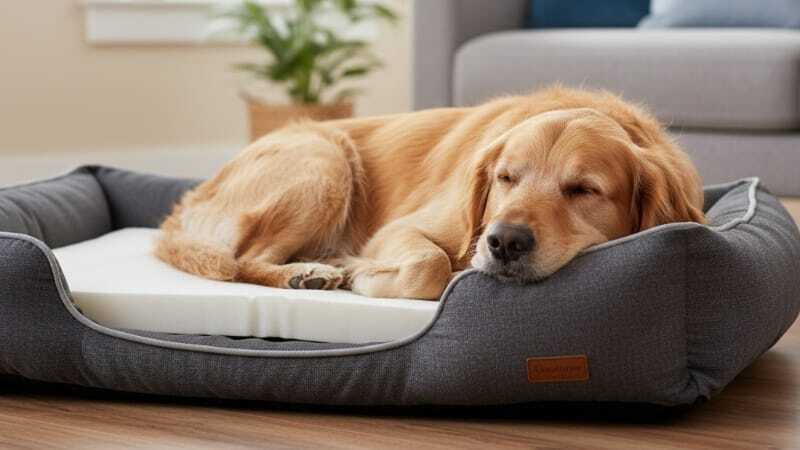
Orthopaedic dog beds are specifically engineered with memory foam or high-density supportive foam that distributes weight evenly across the sleeping surface. This even weight distribution reduces pressure on the compromised hip joint, alleviating pain and allowing muscles to fully relax during rest.
Quality orthopaedic beds also provide proper spinal alignment. When a large dog lies on an unsupportive surface, their spine sags, creating additional strain on hip joints as muscles work to stabilise the body even during rest. Proper support maintains natural spinal curves, reducing this compensatory tension.
Features to look for in an orthopaedic bed:
Memory foam thickness matters. For large breed dogs, look for at least 10cm of memory foam or equivalent high-density supportive filling. Thinner options simply won’t provide adequate cushioning for heavier dogs. The base should be firm enough to prevent bottoming out, where your dog’s weight compresses the foam entirely and they end up essentially lying on the floor.
Easy access is crucial. High-sided beds that require your dog to step up and over create unnecessary strain. Look for bolster-style beds with a low-profile entrance or completely flat beds. Waterproof liners protect the foam from accidents, which become more common in dogs with mobility issues who struggle to get up quickly. Removable, machine-washable covers are non-negotiable for hygiene, particularly given that joint conditions can increase drooling and general messiness.
Size appropriateness is critical. Your dog should be able to stretch out fully without any part of their body hanging off the edge. For large breeds, this often means investing in an XL or XXL size, even if it seems excessive. Measure your dog from nose to tail while stretched out, then add 20-30cm to ensure adequate space.
UK-made beds often offer better quality control and adhere to higher safety standards. Vet-approved designs indicate the bed has been evaluated by professionals who understand canine orthopaedic needs.
The cost-benefit calculation:
Quality orthopaedic beds for large dogs typically range from £70-£150, which can seem steep. However, consider this against the alternatives: pain medications cost £30-£60 monthly in perpetuity, veterinary consultations for managing worsening symptoms run £40-£80 per visit, and potential surgical interventions cost thousands. A bed that genuinely improves your dog’s comfort, potentially reducing medication requirements and slowing condition progression, pays for itself many times over. More importantly, the improvement in your dog’s quality of life is genuinely priceless.
Many owners report visible improvements within days of switching to proper orthopaedic bedding: their dog rises more easily in the morning, seems more comfortable throughout the day, and sleeps more soundly through the night.
Living Well With Hip Dysplasia
Hip dysplasia is a challenging diagnosis, but it’s not a sentence to misery. Thousands of dogs across the UK live happy, comfortable lives with this condition through thoughtful management and devoted owners who prioritise their wellbeing.
Your dog doesn’t understand why their hips hurt or why activities that once came easily now challenge them. What they do understand is your presence, your patience, and your commitment to their comfort. Every modification you make to support them, from choosing the right bed to maintaining their ideal weight, directly translates to reduced pain and improved quality of life.
Stay observant, work closely with your veterinary team, and don’t hesitate to adjust your approach as your dog’s needs evolve. Hip dysplasia is progressive, which means management strategies that work today may need refinement tomorrow. Flexibility and attentiveness are your greatest assets.
Most importantly, focus on what your dog can still do rather than what they’ve lost. They may no longer bound up stairs or race across fields, but they still find joy in gentle walks, delicious treats, and time spent with you. Those moments of contentment and connection matter far more than physical capability.
With proper care, many dogs with hip dysplasia enjoy years of comfortable, happy life. Your commitment to their daily comfort makes that possible.