Growing a business in the UAE today can feel like riding a roller coaster. You’re thrilled by the potential, yet worried that people may miss your brand in the noise. This is why digital ads now play such a huge part in the success of almost every business. You can have the best product in Dubai or the most trusted service in Abu Dhabi, but without visibility, the market may never notice you.
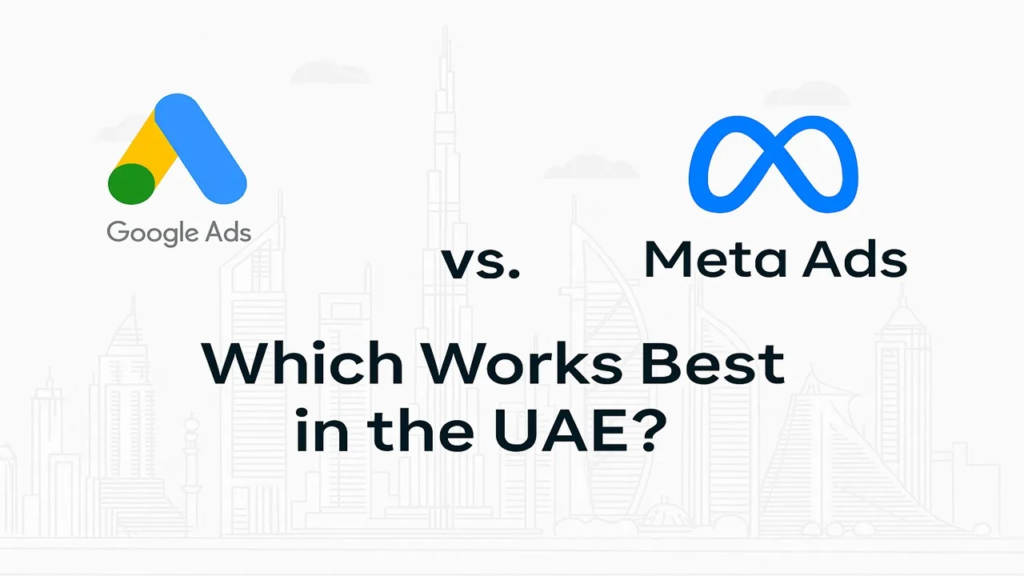
Paid advertising platforms have become a lifeline, and two of them dominate the conversation, Google Ads and Meta Ads. Both promise reach, leads, and growth. Both are proven players. Yet owners still ask the same question: Which one delivers better ROI in 2026?
Let’s take a real, human look at both platforms, not as marketers but as business people who need results, not buzzwords.
Why Paid Ads Aren’t Optional Anymore?
The UAE is home to fierce competition. Every week new brands launch, from home-run food ventures to full-scale commercial companies. The buyer now has endless choices, which makes attention precious and difficult to win.
Organic reach is helpful, but it is slow. SEO, blogs, videos, all take months. Paid ads, on the other hand, can put your name in front of the right customer tonight.
For many business owners, paid ads are not just a marketing option, they are a survival tool. But this brings us to the real decision: if the budget is limited, where should you invest, Google or Meta?
What Makes Google Ads Stand Out?
Google is where intent lives. When users search, they already want something. They might need a dentist, a plumber, a party planner, or a replacement laptop. When that happens, they turn to Google and type exactly what they need. This means ads show up at the exact moment someone is ready to buy. You are matching a solution to a direct need.
With Google, users are already on the path to action. They simply need to choose. This is why conversion rates on Google often feel higher than other channels. A business that solves an urgent problem benefits the most, doctors, repair services, moving companies, fitness centers, and home service providers see fast results here.
Of course, there is a trade-off. Google is crowded, and competitors often fight over the same keywords. When many companies bid on the same term, the cost goes up. But even with higher click prices, the leads are often stronger, more serious, and closer to paying.
Why Meta Ads Win Hearts, and Customers Too?
Meta includes Facebook, Instagram, Messenger, and their ecosystem of placements. These platforms don’t wait for people to search. Instead, they meet them where they relax, scroll, browse reels, and explore stories.
Users are not actively shopping, yet purchase happens anyway, a friend sees a new café ad and tries it. Someone spots a gym video and signs up. A mother scrolling Instagram at night orders toys she didn’t plan to buy. Meta excels at desire-building instead of need-matching.
This makes Meta perfect for visual brands. Clothing lines, decor stores, handmade products, food joints, grooming and salon services, and cafés can explode here. Even B2B brands earn success by building awareness and trust.
But Meta has its own challenge. Because users are not always ready to buy, they may visit your page and leave without completing a purchase. Sales often come after multiple touches, an ad, a story, a reminder, a remarketing message. This means creatives, landing pages, and audiences require more testing.
How Costs Compare, And Why Businesses Must Measure ROI Carefully?
In most cases, Meta ads deliver cheaper clicks, and businesses can stretch smaller budgets longer. However, a low click cost does not always mean great ROI. If the user isn’t ready to buy, you may pay for attention, not revenue.
Google clicks often cost more, but the traffic comes with a higher buyer intent. If someone searches “emergency AC repair,” the chance of a call is very high. The real calculation is not cost per click, it is cost per sale.
Why Using Both Platforms Is Often the Winning Strategy?
Many UAE businesses see the best results when they stop forcing a choice. Google and Meta do not compete, they complement each other.
- Google captures those who already want your service.
- Meta finds new people who may want your service later.
Meta builds curiosity and familiarity. Google turns that familiarity into action.
A person may scroll past your brand on Instagram today and forget about it. But a week later, when they search for a related service, they click your name because it already feels familiar. This cross-channel effect is strong, especially in the UAE where users switch devices and apps all day.
Choosing Based on Business Size, Offer Type, and Goals:
Small businesses may prefer Meta at first because it stretches budgets and helps with awareness. But if they offer a specialized or emergency service, Google gives faster results.
Ecommerce brands almost always benefit from a multi-platform approach. Meta builds interest and product discovery, while Google Shopping and Search convert users who are comparing items or searching for deals.
High-value Digital Marketing Services in the UAE, legal firms, clinics, tech consultants, thrive on Google because buyers usually search with a clear need.
No matter the industry, the right platform depends on your customers’ behavior, not what is popular.
What UAE Consumers Want in 2026?
People across the UAE trust brands that show real human value. They look for brands that feel local, helpful, and easy to reach. They judge based on reviews, user comments, page activity, and fast replies. This means ads alone cannot carry the weight. They must lead to:
- Clear offers
- Quick communication
- Honest pricing
- Good online reputation
Both platforms are just gateways. What you do after the click decides whether the money spent returns profit or disappears.
Which One Delivers Better ROI?
There is no single winner. Google tends to bring higher-intent customers and faster sales. Meta delivers wide reach at a lower cost and builds a loyal audience over time.
ROI comes from planning, tracking, testing, and improving. It grows when messages are sharp and landing pages make sense. It dies when ads run without purpose.
A smart approach is simple: understand your audience, know your goal, and pick the platform that fits that moment in your business journey.