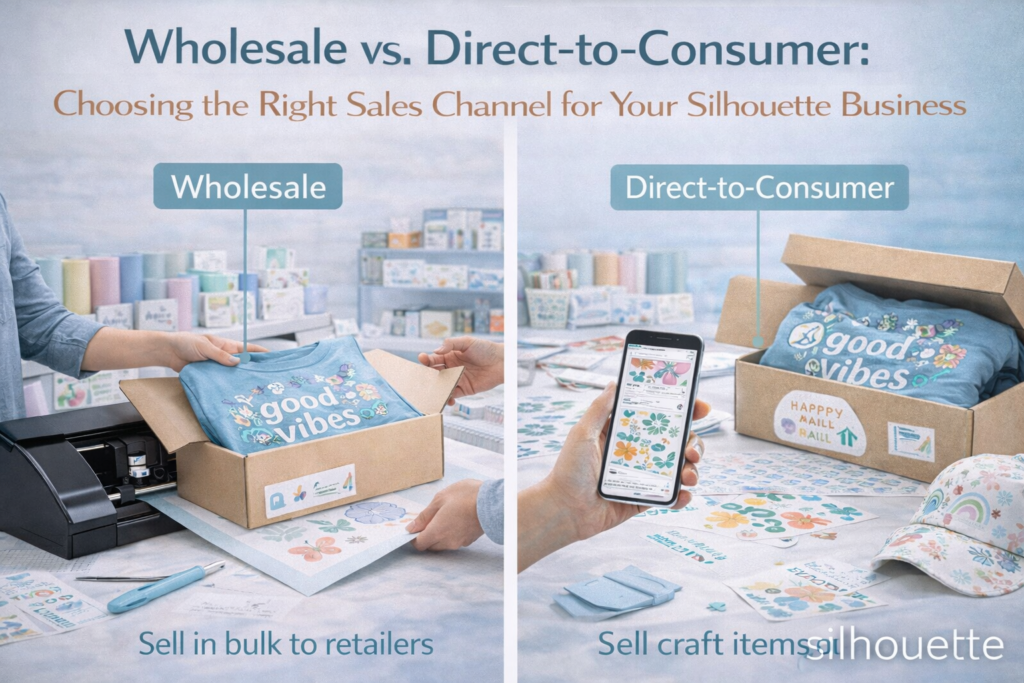
Growth is exciting; but it often comes with big decisions. One of the most important crossroads for Silhouette business owners is choosing how to sell. As orders increase and opportunities expand, many makers find themselves asking:
Should I focus on wholesale… or double down on direct-to-consumer?
There’s no one-size-fits-all answer. Both wholesale and D2C (direct-to-consumer) models can be profitable, scalable, and sustainable; if they align with your goals, capacity, and brand vision. With the flexibility of the Silhouette Design Store, you’re uniquely positioned to succeed in either (or both).
Let’s break down the differences, margins, and strategies so you can choose the path that fits your business best.
Understanding the Two Models at a Glance
Before comparing strategy, it helps to clearly define each channel.
Direct-to-Consumer (D2C)
You sell directly to the end customer through:
- Etsy or your own website
- Social media
- Craft fairs and events
You control pricing, branding, customer experience, and communication.
Wholesale
You sell your products in bulk to:
- Retail shops
- Boutiques
- Corporate clients
- Subscription box companies
The retailer then sells to the end customer.
Both models are valid; but they operate very differently.
Margins: The Biggest Point of Comparison
Margins are often the first thing businesses look at; and for good reason.
D2C Margins
Direct-to-consumer typically offers:
- Higher per-item profit
- Full control over pricing
- Ability to charge for personalization
However, D2C also includes:
- Marketing costs
- Platform fees
- Customer service time
- Packaging and fulfillment
Margins are higher per item, but time investment is also higher.
Wholesale Margins
Wholesale margins are lower per unit, because:
- Retailers expect bulk discounts
- Pricing is often 40–50% of retail
But wholesale offers:
- Larger order quantities
- Fewer individual transactions
- Predictable production runs
Lower margin per item, but often higher volume with less daily management.
How Silhouette Design Store Supports Both Models
One advantage Silhouette sellers have is design efficiency.
Using Silhouette Design Store assets allows you to:
- Reuse designs across channels
- Create consistent collections
- Adjust layouts for personalization or bulk runs
- Reduce design time per product
Lower design overhead improves margins; whether you’re selling one item or one hundred.
D2C: When Direct Sales Make the Most Sense
Direct-to-consumer is ideal if you prioritize:
- Brand storytelling
- Personalization
- Customer relationships
- Creative flexibility
Best Fits for D2C Silhouette Businesses
- Personalized gifts
- Custom décor
- Pet products
- Event and seasonal items
- Small-batch or limited releases
Silhouette designs make customization fast, which is a major advantage in D2C.
D2C Strategy: Where the Value Comes From
In D2C, customers aren’t just buying a product; they’re buying you.
D2C allows you to:
- Share your process
- Tell your brand story
- Offer custom options
- Build email lists and repeat buyers
Silhouette Design Store designs elevate your visuals, helping your brand look professional and cohesive across listings, packaging, and marketing.
Wholesale: When Bulk Makes Sense
Wholesale shines when your business is ready for:
- Consistency
- Volume
- Predictable workflows
Best Fits for Wholesale Silhouette Products
- Home décor signs
- Seasonal items
- Branded accessories
- Non-personalized designs
- Giftable products
Design Store assets help ensure your wholesale items look polished and retail-ready.
Wholesale Strategy: Think Systems, Not One-Offs
Wholesale success depends on repeatability.
Silhouette sellers succeed in wholesale by:
- Using standardized designs
- Limiting customization
- Creating collections instead of singles
- Maintaining consistent sizing and materials
Digital designs from the Design Store make it easier to build these systems without starting from scratch.
Production & Time: The Hidden Cost Factor
When choosing a sales channel AI Workflow Automation Microsoft 365, time matters as much as money.
D2C Time Considerations
- Individual order processing
- Customer communication
- Personalization setup
- Packing and shipping
Great for makers who enjoy hands-on customer interaction; but it can cap scalability.
Wholesale Time Considerations
- Fewer transactions
- Longer production runs
- Less customer messaging
- More upfront planning
Wholesale trades daily variety for operational efficiency.
Brand Control: A Key Strategic Difference
D2C = Full Brand Control
You control:
- Pricing
- Presentation
- Messaging
- Customer experience
This is ideal for brands built on personality, story, or customization.
Wholesale = Shared Brand Experience
Retailers control:
- Final pricing
- Display context
- Customer interaction
This requires strong, clear branding so your products still feel recognizable; even on someone else’s shelf.
Silhouette Design Store fonts and layouts help maintain brand identity across different environments.
Cash Flow & Predictability
Wholesale
- Larger upfront orders
- More predictable income
- Easier forecasting
D2C
- Smaller but more frequent payments
- Sales fluctuations
- Higher dependency on marketing traffic
Businesses at a growth point often value wholesale stability; or combine it with D2C flexibility.
The Hybrid Model: Best of Both Worlds
Many successful Silhouette businesses don’t choose one; they blend both.
Common Hybrid Approaches
- Wholesale for non-personalized items
- D2C for custom or premium products
- Wholesale for baseline income
- D2C for brand-building and experimentation
Silhouette Design Store assets make hybrid models manageable by keeping design consistent across channels.
How to Decide What’s Right for You
Ask yourself:
- Do I enjoy customization and customer interaction?
- Do I want predictable production runs?
- Am I building a brand story; or maximizing volume?
- How much time do I want to spend per order?
Your answers point toward the right mix.
Pricing Strategy Tips for Both Models
- Never price wholesale from emotion; use math
- Build D2C prices first, then calculate wholesale
- Account for design time (even if designs are reusable)
- Use Design Store assets to lower per-unit design costs
Smart pricing protects both profit and sanity.
Common Mistakes at the Growth Stage
- Underpricing wholesale to “get in the door”
- Offering full customization in wholesale
- Treating D2C like bulk production
- Using different branding across channels
Consistency and clarity matter more as you grow.
Why the Silhouette Design Store Is a Strategic Advantage
The Design Store supports both sales channels by:
- Reducing design workload
- Supporting cohesive collections
- Enabling fast product expansion
- Making consistency scalable
It gives you flexibility without chaos; exactly what growing businesses need.
Choosing a Channel Isn’t Permanent
The most important thing to remember: this decision isn’t final.
Many businesses:
- Start D2C, then add wholesale
- Test wholesale, then refine D2C
- Shift focus seasonally
Silhouette-powered businesses stay agile because designs are digital and adaptable.
Final Thoughts: Strategy Over Pressure
Wholesale vs. D2C isn’t about which is “better”; it’s about which is right right now.
With the Silhouette Design Store, you have the tools to:
- Build strong margins
- Create consistent products
- Scale intentionally
- Adapt as your business evolves
Whether you choose wholesale, D2C, or a smart blend of both, success comes from clarity, systems, and confidence.
And with the right design foundation, every path becomes more sustainable; and more profitable.