Introduction
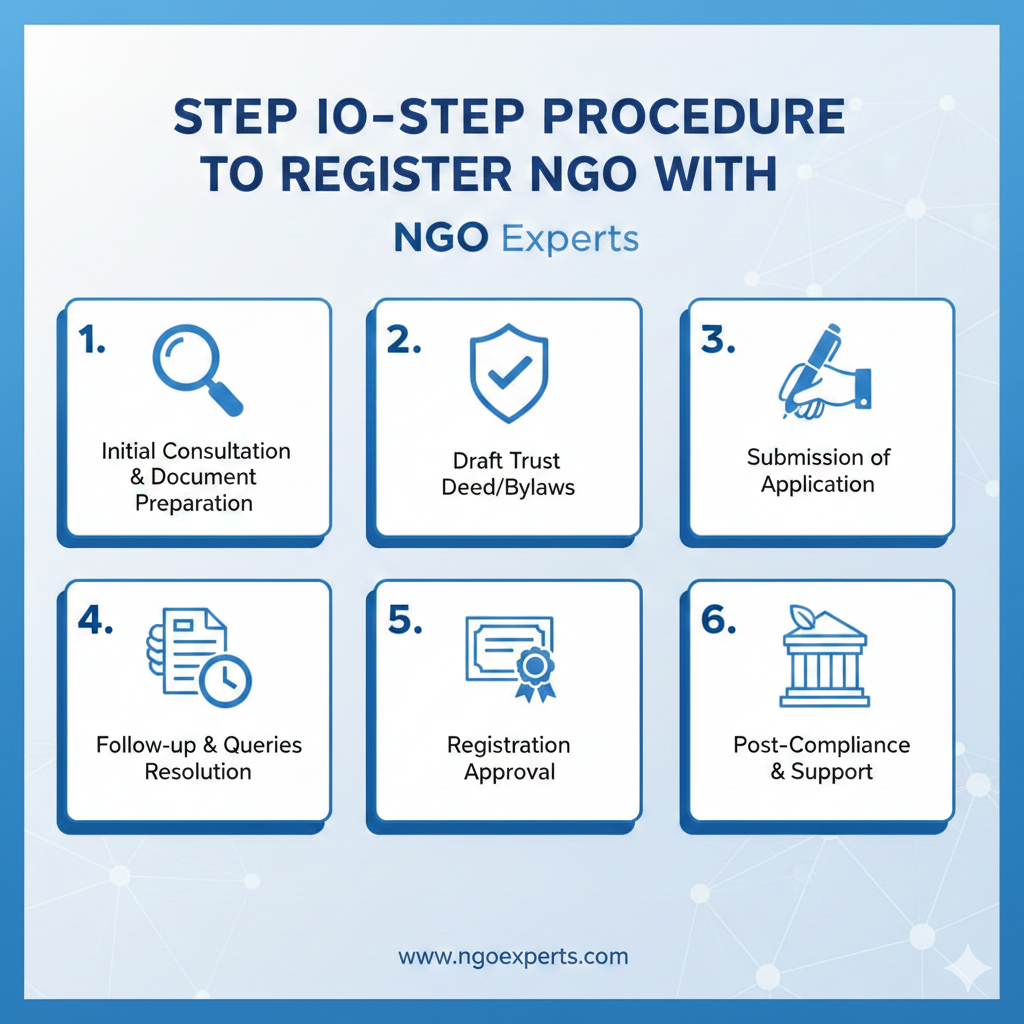
Starting an NGO can feel overwhelming, but with the right guidance, the procedure to register NGO becomes simple and structured. I have helped many organizations navigate this process through NGO Experts, and I want to share the key steps so you can proceed confidently. Whether you are aiming for NGO Darpan portal registration or 12A registration, following a clear roadmap ensures your NGO complies with legal requirements and starts operations smoothly.
Understanding the Basics Before Registration
Before diving into paperwork, it is essential to understand what NGO registration entails. First, you need to decide the legal structure of your NGO. Typically, NGOs in India are registered as:
- Trusts – governed by the Indian Trust Act
- Societies – governed by the Societies Registration Act
- Section 8 Companies – governed by the Companies Act
Once you select the structure, you can prepare for the procedure to register NGO. Additionally, understanding your eligibility for 12A registration is crucial, as it allows tax exemptions for your NGO.
Step 1 – Preparing the Required Documents
I always start by ensuring all documents are ready. These documents are essential for both NGO Darpan portal registration and legal approvals:
- A clear memorandum of association or trust deed
- Identity proof and address proof of founders
- No Objection Certificate (NOC) if renting office space
- Bank account details in the NGO’s name
Preparing documents carefully reduces delays later. Moreover, I recommend double-checking the accuracy of all details, as discrepancies can cause rejection.
Step 2 – Registering Your NGO Legally
Once documents are ready, the next step is the formal registration. Here’s how I guide organizations:
Trust Registration
For a trust, I file the trust deed with the local registrar along with required fees. After verification, the NGO receives its registration certificate.
Society Registration
For societies, I submit the memorandum and bylaws with the Registrar of Societies. This process usually takes a few weeks and results in a society registration certificate.
Section 8 Company Registration
If you choose a Section 8 company, the process involves applying to the Registrar of Companies (ROC) with required documents. After approval, the NGO becomes a legal entity under the Companies Act.
Step 3 – Applying for 12A Registration
After legal registration, I always recommend applying for 12A registration. This is crucial for tax exemption on donations and funding. The steps include:
- Submitting the NGO registration certificate
- Providing detailed financial statements
- Filling the online 12A form with the Income Tax Department
Timely submission ensures that the NGO benefits from tax exemptions from the beginning.
Step 4 – Completing NGO Darpan Portal Registration
The NGO Darpan portal registration is a government-mandated step to increase transparency and access funding opportunities. I help NGOs complete the portal registration efficiently:
- Create an account using your NGO’s PAN and registration certificate
- Fill in organizational details accurately
- Upload scanned documents as per guidelines
After approval, your NGO gets a unique Darpan ID, which is essential for CSR funding and government schemes.
Tips to Simplify the Registration Process
Throughout the process, I follow a few strategies that make things smoother:
- Use a checklist to track all documents and steps
- Follow government guidelines carefully to avoid errors
- Consult professionals for legal and financial compliance
- Stay updated on portal notifications and submission deadlines
These steps help prevent delays and ensure your NGO becomes operational quickly.
Conclusion
The procedure to register NGO may seem complicated at first, but with proper planning and guidance from NGO Experts, it becomes manageable. From legal registration to 12A registration and NGO Darpan portal registration, every step is critical for establishing a compliant and transparent NGO. By following these steps, you can focus on your NGO’s mission instead of administrative hurdles.