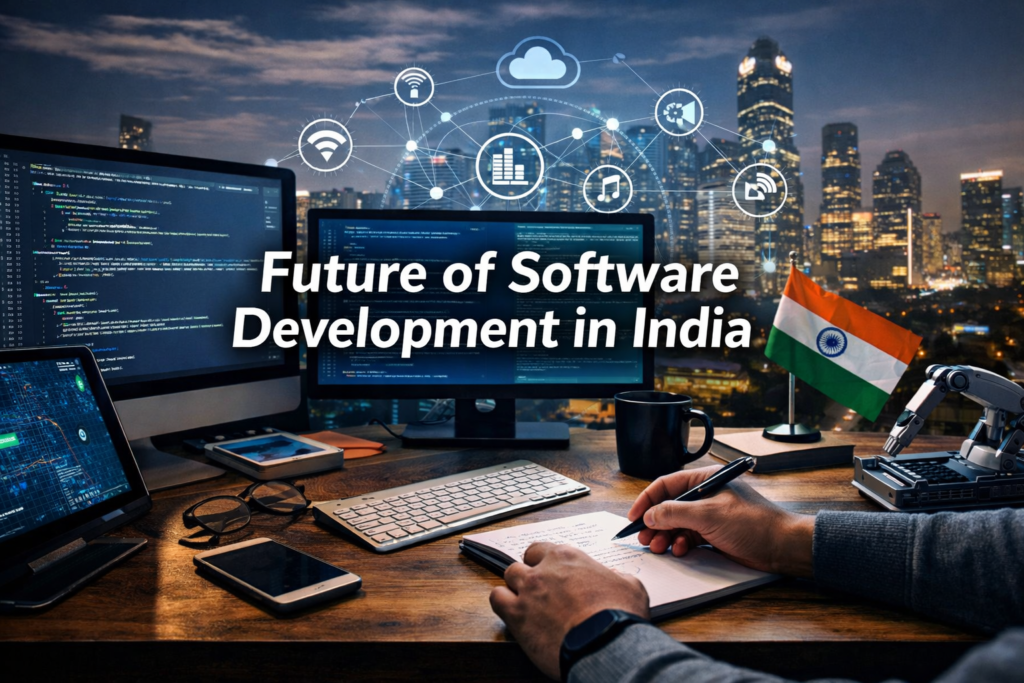
India has emerged as one of the largest technology hubs globally. In the country, software development is on a fast track. From small start-ups to multinational IT companies, software is currently used in the majority of industries such as education, healthcare, banking, agriculture, entertainment, and business management. Technology is changing how people live their daily lives and perform their work. As such, the future of software development in India is full of promise for our nation.
To put it simply, software development is used to create applications, websites, and systems that assist in solving problems with the aid of technology. With India entering the phase of a digital revolution, every year we see an increase in the need for developers and unique software solutions.
Growing Demand for Software Developers
There are millions of software engineers in India, and the demand continues to grow. Companies need developers to develop mobile apps, manage cloud systems, create automation tools, and strengthen cybersecurity.
Several Indian startups are experimenting with new digital products. Simultaneously, due to the availability of skilled talent and cost efficiency, international companies are establishing development centres in India. As companies continue to expand, more jobs are being generated for students and professionals pursuing careers in technology.
Software development is not only reserved for big cities like Bengaluru or Hyderabad. Developers from smaller towns have also received opportunities to work with global companies due to remote work culture.
Role of Artificial Intelligence and Automation
AI is spearheading the software development space. Developers increasingly rely on AI tools to write code more quickly, test applications, and identify bugs automatically. Automation helps reduce repetitive work and boosts productivity.
However, AI will not replace developers in the future; it will assist them. We will see a shift in work patterns, with developers spending more time being creative, using problem-solving skills, and innovating, while AI manages repetitive and mundane tasks.
Indian companies are investing heavily in AI-based software products like chatbots, data analytical platforms, and intelligent business systems. This trend will continue growing in the coming years.
Rise of Cloud Computing
Hosting software on the cloud has transformed how applications are developed and consumed. Previously, businesses required costly equipment to implement applications. Today, cloud platforms enable businesses to host data and run software on internet-based systems.
Cloud computing enables startups to launch products faster and at lower costs. Indian developers are learning cloud technologies, DevOps, containerization, and microservices architecture to remain competitive in the global marketplace.
There will be an increase in cloud-native applications as the demand for scalability, security, and flexibility continues to grow.
Growth of Mobile and Web Applications
India has millions of smartphone users, making mobile technology an important part of everyday life. This is why mobile application development is booming. Businesses want apps that provide smooth user experience, faster performance, and easy access to services.
Modern frameworks and responsive design are also changing web development. Progressive Web Apps (PWAs) are growing in popularity as they feel like mobile applications but run inside a browser.
Software programmers develop solutions ranging from food delivery apps and online education platforms to mobile gaming applications that facilitate users in their everyday lives.
Opportunities in Different Industries
IT companies are no longer the only ones building software. Software solutions are required by virtually every industry today.
Healthcare uses software for telemedicine and patient management systems.
The finance sector leverages secure payment systems and fintech applications.
Smart technology in agriculture is leveraging data for farm efficiency. Even modern farming equipment such as a tractor, relies on software for GPS tracking, automation, and performance reporting. It illustrates how software development bridges the gap between traditional industries and modern technology.
Importance of Cybersecurity
With increased digital usage, cybersecurity has become more important. Businesses store large amounts of personal and business data online, and developers have a major responsibility to protect this information.
The focus of software development in India is shifting more toward secure coding practices, data privacy protection, and ethical hacking. Businesses want to avoid cyber attacks and data breaches, creating high demand for cybersecurity experts.
Startup Culture and Innovation
India’s startup ecosystem is among the world’s fastest growing. Innovative software products are emerging in fintech, health tech, edtech, and artificial intelligence across multiple industries.
Initiatives such as Digital India and Startup India are propelling innovation by offering funding, infrastructure, and training programs. This environment encourages developers to create new solutions instead of only working for outsourcing firms.
India may soon produce more global software products and technology platforms developed within the country.
Skills Required for Future Developers
A future developer requires more than just coding knowledge. Technology evolves quickly, making continuous learning essential.
Important skills future software developers must have include:
- Programming languages such as Python, JavaScript, and Java
- Cloud computing and DevOps knowledge
- Basic understanding of Artificial Intelligence and Machine Learning
- Problem-solving and logical thinking
- Communication and teamwork skills
Developers who combine creativity with strong technical skills will succeed moving forward.
Remote Work and Global Opportunities
Remote work is one of the most significant changes brought by the pandemic. Indian software developers can now work for international companies without relocating abroad.
Freelancing and global collaboration platforms like Upwork and Fiverr allow developers to work on international projects, earn better income, and gain global exposure from their homes.
This trend will continue transforming the future of software development in India.
Challenges Ahead
Although the future is bright, some challenges remain:
- Skill gap between education and industry needs
- Rapidly changing technology requiring continuous learning
- Increasing competition among developers
- Need for improved digital infrastructure in rural areas
Educational institutions and companies must work together effectively to ensure professionals gain real-world practical skills.
Conclusion
With a large pool of world-class technical talent, a growing startup culture, strong government support, and increasing digital adoption across traditional and modern sectors, India is on the path to becoming a global technology powerhouse.
Software development will continue transforming businesses, enhancing services, and creating employment opportunities for young professionals. Developers who stay updated with new technologies and focus on solving real-world problems will lead India’s digital future.
In simple terms, software development is no longer limited to traditional coding. It focuses on creating solutions that make people’s lives smarter, faster, and more connected.