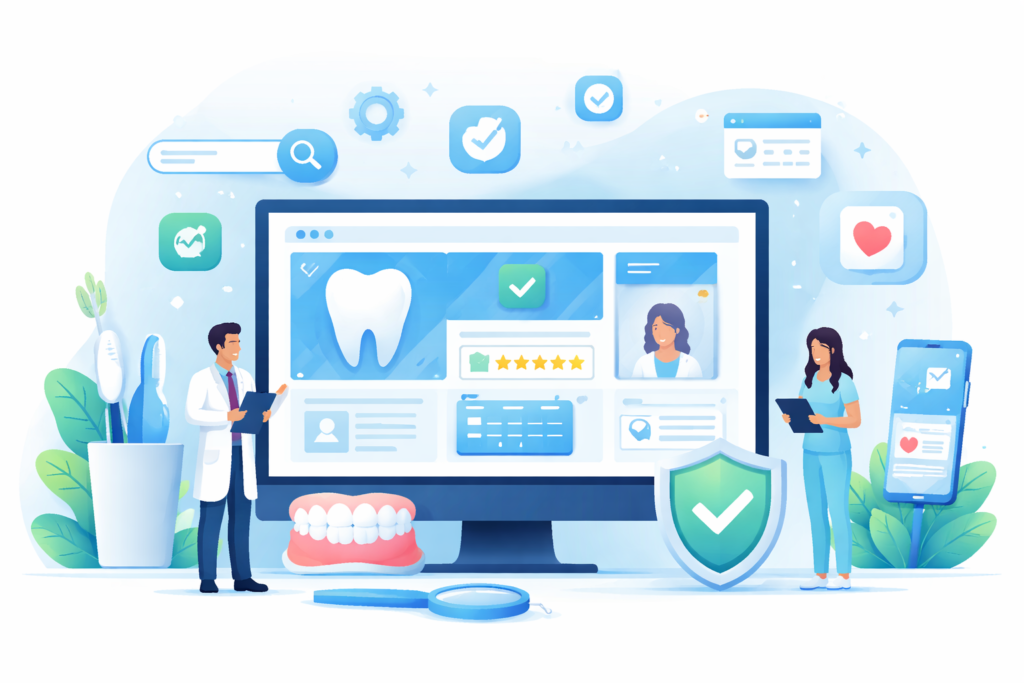
In 2026, a dental website is no longer just a digital brochure that shows your services and phone number. It has become the main entry point of your practice, the place where first impressions are formed and where most patient decisions are made.
Before a patient ever steps into your clinic, they have already formed an opinion about your professionalism, credibility, and trustworthiness based on your website.
For dental website design experts in Australia, the challenge is no longer about making websites simply look good. The real goal now is to build platforms that feel effortless to use, load instantly, answer patient questions clearly, and guide visitors towards booking without friction.
A modern dental website must balance design, psychology, technology, and search visibility in one cohesive experience.
A Mobile Experience That Feels Natural, Not Forced
By 2026, the majority of dental searches happen on mobile devices, and not in calm situations.
Most patients are searching while in discomfort, under stress, or in an urgent situation. This means your website must feel intuitive within seconds. If users have to zoom, scroll excessively, or hunt for basic information, they will leave immediately.
Mobile-first design is not about shrinking a desktop layout. It is about designing the entire experience around thumb movement, readable text, and simple navigation.
A well-designed mobile dental website allows patients to find services, location, and booking options almost instinctively, without needing to think.
When mobile usability is done properly, it does not feel like a “mobile version” at all. It feels like the only version.
Speed as a Trust Factor
Website speed has become one of the most underestimated trust signals in healthcare. In 2026, patients subconsciously associate slow websites with outdated clinics, poor systems, and low professionalism.
If a dental website takes more than a few seconds to load, patients assume the same delay might exist in appointment handling or communication.
Fast-loading websites create the opposite perception: efficiency, organisation, and modern care.
Speed is not just a technical factor anymore. It directly shapes brand credibility.
Clear Structure That Reduces Mental Effort
One of the biggest mistakes dental websites still make is providing too much information. Long pages with mixed services, repeated text, and unclear hierarchy create confusion instead of clarity.
A strong dental website in 2026 feels structured and calm. Each service has its own space. Navigation feels predictable. Patients never feel lost or overwhelmed.
Good structure reduces mental effort. It allows visitors to understand what you offer, who it is for, and how to proceed, all without reading excessive content.
This is especially important for anxious patients, who already feel emotionally overloaded before they even arrive at your clinic.
Booking Without Friction
In 2026, patients expect digital convenience as a standard, not a luxury. Most people prefer booking online rather than calling, especially younger patients and working professionals.
A modern dental website allows patients to book or enquire in less than a minute. The process feels simple, natural, and reassuring. There are no long forms, no unnecessary steps, and no confusing instructions.
The easier it is to book, the higher your conversion rate becomes. Every extra field or click reduces the likelihood of follow-through.
Content That Feels Human, Not Corporate
Patients do not want marketing language. They want clarity, reassurance, and honesty.
The most effective dental websites in 2026 use conversational, natural language. They explain procedures in simple terms. They address common fears. They focus on patient outcomes, not technical jargon.
This type of content builds emotional trust, not just search engine rankings. When patients feel understood, they are far more likely to choose your clinic over a competitor with generic content.
Trust Signals That Feel Real
Trust cannot be claimed. It must be shown.
Real photos, real team profiles, genuine patient reviews, and authentic clinic environments now matter more than ever. Stock images and fake testimonials create emotional distance and suspicion.
A strong dental website feels transparent. Patients can see who they are dealing with, what the clinic looks like, and what others have experienced. This reduces anxiety and increases confidence before the first visit.
Designed for How People Actually Search
Search behaviour in 2026 is not just about keywords. It includes voice search, AI summaries, and local intent.
Dental websites must be structured so both humans and search systems can easily understand them. Clear headings, logical sections, and well-organised content allow your site to appear in featured answers, local results, and AI-generated responses.
This means your website works not only for today’s users, but also for how search technology will continue to evolve.
Final Thoughts
In 2026, the best dental websites do not try to impress with flashy design. They focus on reducing friction, building trust, and guiding patients effortlessly from search to appointment.
A successful dental website feels fast, simple, human, and reliable. It answers questions before they are asked. It removes doubts before they form. And most importantly, it makes patients feel comfortable choosing your clinic.
For practices looking to future-proof their online presence, working with true dental website design experts in Australia is no longer optional. It is a strategic investment in growth.
If you want a dental website that is built for real patients, real behaviour, and real results, PSM Digital Agency helps Australian clinics design websites that convert visitors into booked appointments, not just page views.