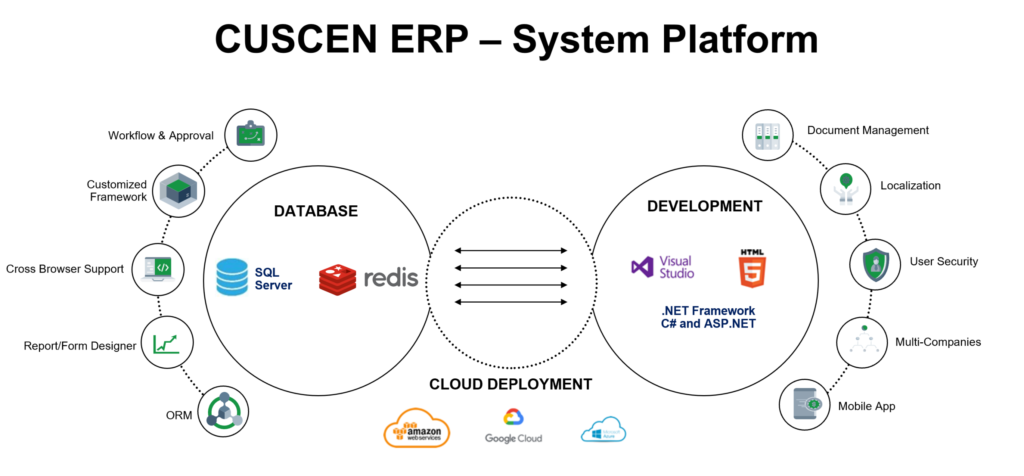
When companies start looking for a new ERP system, the discussion usually begins with software features. Finance wants cleaner reporting. Operations wants better control over inventory and purchasing. Management wants one version of the truth instead of five separate spreadsheets and three systems that do not match.
That is exactly why Cuscen ERP Thailand has started getting attention from businesses that want a practical ERP setup without turning the project into a never-ending IT exercise. But choosing software is only half the job. The real difference usually comes from the quality of the ERP implementation service behind it.
Anyone who has worked around ERP projects knows this already. A good ERP system can still fail if the implementation is rushed, badly scoped, or handled by a team that does not understand day-to-day operations. On the other hand, the right ERP implementation service can turn a complex system rollout into something structured, measurable, and useful from the first phase.
This is where Cuscen ERP Thailand deserves a closer look. For companies in manufacturing, trading, distribution, retail, and service businesses, ERP is not just about digitizing records. It is about getting tighter control over finance, stock, procurement, sales, reporting, and workflows that currently waste time or create avoidable errors.
Why ERP Projects Fail More Often Than Businesses Expect
A lot of ERP projects begin with good intentions and weak planning. Leadership signs off on a system because it looks comprehensive in a demo. A vendor promises fast go-live timelines. Department heads assume the software will “fix the process” once it is installed. Then reality arrives.
Data is inconsistent. Approval flows are unclear. Item masters are incomplete. Users want old processes copied exactly as they were, even when those processes are the reason the company needed ERP in the first place.
This is why the software itself is never the full story. Cuscen ERP Thailand may offer the framework a business needs, but without a capable ERP implementation service, the rollout can still get stuck in rework, delays, and user resistance.
A proper implementation partner does more than configure screens and create user logins. They map the current process, identify the weak points, clean up the data structure, define future workflows, and train users in a way that matches how the business actually runs.
What Makes Cuscen ERP Thailand Relevant for Growing Businesses
Many businesses in Thailand are at a stage where they have outgrown basic accounting tools and disconnected business applications. They might be using one system for finance, another for inventory, separate spreadsheets for procurement, and manual approvals through email or chat. That setup works for a while, but it becomes hard to manage once transaction volumes grow.
This is where Cuscen ERP Thailand fits the conversation. It can help bring core business functions into one structured platform. Instead of reconciling mismatched information every week, teams can work from a central system that connects departments more clearly.
For example, sales orders should affect inventory visibility. Procurement should tie back to demand and stock levels. Finance should not be waiting until month-end to understand the operational picture. Businesses looking at Cuscen ERP Thailand are often trying to solve exactly these issues.
Still, none of that matters if the rollout is handled poorly. The software can be right and the project can still go wrong. That is why the ERP implementation service matters just as much as the platform choice.

What a Good ERP Implementation Service Actually Looks Like
The term ERP implementation service gets used a lot, but not every provider means the same thing. In some cases, it is little more than installation and basic setup. In stronger projects, it includes process assessment, module planning, master data design, integration mapping, role-based training, testing, migration, go-live support, and post-launch correction.
That difference matters.
A serious ERP implementation service should begin with business understanding, not just technical configuration. The implementation team should know how purchasing interacts with stock, how finance needs reporting structures, how approval bottlenecks affect cycle time, and how operational mistakes show up in real costs.
Take a mid-sized distributor as an example. If the ERP team only sets up item codes and invoice screens, the business might technically “go live” but still struggle with reorder planning, stock aging, or margin visibility. A stronger ERP implementation service would look deeper. It would define inventory categories correctly, connect purchasing rules with demand patterns, and build reports that management can actually use.
That is the level of thinking businesses should expect when evaluating Cuscen ERP Thailand implementation support.
Why Process Fit Matters More Than Feature Lists
One of the most common mistakes during software selection is overvaluing feature lists. ERP buyers often compare vendors by counting modules, dashboards, or automation features. That is understandable, but it misses the more important question: does the system fit how the business needs to operate?
That is where Cuscen ERP Thailand should be assessed carefully. A business does not need the longest feature sheet. It needs a system that supports purchasing, finance, inventory, sales, production, or service workflows in a way that makes daily work more accurate and less dependent on manual correction.
A good ERP implementation service helps test that fit before the business commits too deeply. It does not just say yes to every request. It asks useful questions. Which reports matter most? Where do delays happen now? Which process errors cost money? Which approvals are necessary, and which ones are just habits?
Those questions often reveal more than any software demo.
Real Benefits Companies Usually See After ERP Implementation
When ERP is implemented well, the benefits are usually practical rather than flashy. Businesses get faster reporting. Inventory visibility improves. Duplicate data entry drops. Teams spend less time chasing approvals and correcting avoidable mistakes. Finance and operations stop arguing over whose numbers are right.
That is the kind of improvement companies hope to get from Cuscen ERP Thailand. The value is not only in centralization. It is in consistency, control, and better decision-making.
A reliable ERP implementation service also helps reduce the post-go-live panic that so many companies experience. Instead of finding basic gaps after launch, the project team catches them during process mapping, user acceptance testing, and training.
For management, this means less disruption. For users, it means better adoption. And for the business as a whole, it means the system starts supporting operations instead of slowing them down.
What Businesses in Thailand Should Check Before Starting
Before moving forward with Cuscen ERP Thailand, companies should be clear about their internal readiness. ERP projects often expose problems that already exist in the business, such as unclear ownership, weak data discipline, or inconsistent process rules.
That is not a reason to avoid ERP. It is a reason to prepare properly.
Businesses should review master data quality, define process owners, identify reporting needs, and involve actual users early in the project. They should also ask detailed questions about the ERP implementation service being offered. Who handles business analysis? Who supports migration? How is training delivered? What happens after go-live? How are process changes documented?
Those questions matter because ERP success is rarely about the software alone. It is usually about whether the business and the implementation team can work together with enough clarity and discipline.
Final Thoughts
Cuscen ERP Thailand is relevant for businesses that need better control over finance, inventory, procurement, sales, and day-to-day operations. But software alone is not the answer. The real outcome depends heavily on the quality of the ERP implementation service attached to it.
That is the part many companies underestimate. They focus on what the ERP can do and spend less time evaluating how it will be rolled out, who will guide the process, and whether the implementation team understands the business beyond the software menu.
A strong ERP project is not built on promises. It is built on clean process mapping, realistic planning, user training, data discipline, and a rollout approach that respects how the business actually works. When those elements are in place, Cuscen ERP Thailand can become much more than a software purchase. It can become a working foundation for smarter operations and better business control.