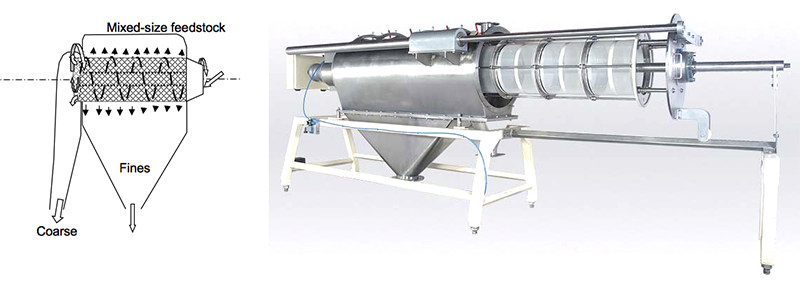
vibrator sifter machine
In food processing and industrial manufacturing, product purity is not a finishing touch — it is a foundational requirement built into every stage of production. Yet one of the most critical quality control steps in any powder, grain, or granule processing line is also one of the most frequently underestimated: sifting. A single batch of contaminated or improperly graded material passing through to packaging can trigger a product recall, a failed audit, or a lost customer relationship. The vibrator sifter machine exists precisely to prevent this — delivering consistent, high-throughput separation of particles by size, removing foreign matter, and ensuring that every batch leaving your line meets the purity and grade specifications your buyers expect.
What is a Vibrator Sifter Machine?
A vibrator sifter machine — also known as a vibrating sieve or vibratory screener — is an industrial separation device that uses controlled mechanical vibration to sort bulk materials by particle size, remove oversized contaminants, and grade product streams into distinct fractions simultaneously.
The machine operates by passing material across one or more tensioned mesh screens mounted within a vibrating frame. The vibration — generated by an eccentric motor or vibratory drive unit — causes fine particles to pass through the screen mesh while oversized particles, lumps, and foreign matter are retained and discharged separately. Depending on the configuration, a single vibrator sifter machine can perform scalping of coarse oversize, fine screening for grade separation, and de-dusting of fine particles in a single continuous pass — making it one of the most efficient quality control investments in any processing line.
Key Features & Benefits
A properly specified vibrator sifter machine delivers consistent and measurable improvements to product quality, line efficiency, and compliance readiness:
- Precise Particle Size Separation: Interchangeable mesh screens in a wide range of aperture sizes allow the same machine to be configured for different products and grade specifications — giving production managers flexibility to switch between materials without replacing the entire unit.
- High Throughput with Minimal Footprint: Circular and rectangular vibrating sifters achieve remarkably high screening capacities relative to their physical footprint, making them easy to integrate into existing production lines without major floor space reorganisation.
- Continuous, Automated Operation: Unlike manual inspection or batch sieving, a vibrator sifter machine operates continuously inline — screening every kilogram of product as it flows through the line, not just representative samples — providing a genuine quality gate rather than a statistical check.
- Multi-Deck Configuration for Multiple Fractions: Multi-deck vibrator sifters stack two or three screens of different mesh sizes vertically within a single frame, simultaneously separating a product stream into three or four distinct size fractions in one pass — significantly reducing equipment count and processing time.
- Easy Screen Change and Cleaning: Quality vibrating sifters are designed with quick-release screen frames, fully accessible interior chambers, and smooth stainless steel surfaces that allow screen changes and thorough cleaning between product runs in minutes rather than hours.
Industrial Applications
The vibrator sifter machine serves a remarkably wide range of industries across Pakistan’s food, chemical, and industrial manufacturing sectors — anywhere consistent material grading and contamination removal are production requirements:
- Flour and Grain Milling using vibrating sifters at multiple stages of the milling process to separate refined flour from bran, middlings, and coarse particles — ensuring consistent particle size distribution in the final flour product
- Spice and Seasoning Processing screening ground masalas, chilli powder, turmeric, and blended seasoning mixes to remove stems, seed fragments, and oversized particles before packaging for retail or food service supply
- Sugar and Confectionery Manufacturing grading refined sugar crystals by size for specific confectionery applications, removing lumps caused by moisture absorption in storage, and ensuring free-flowing powder consistency in fondant and icing sugar production
- Salt Processing Plants separating refined salt into consumer-grade fine, table, and coarse fractions while simultaneously removing oversized crystals and foreign mineral particles before iodization and packaging
- Animal Feed and Poultry Industry grading pelleted feed by size to ensure uniformity across the batch, removing fines generated during pellet handling, and screening raw grain ingredients before mixing
- Chemical and Pharmaceutical Manufacturing separating active pharmaceutical ingredients, excipient powders, and chemical compounds by precise particle size bands required for tableting, capsule filling, or chemical reaction control
- Fertiliser Production screening granular fertilisers to remove oversized agglomerates and undersized dust fractions before bagging, ensuring consistent granule size that meets agronomic application requirements
How to Choose the Right One
Selecting the correct vibrator sifter machine for your application requires careful matching of machine specification to your material properties, throughput targets, and quality objectives:
- Define Your Separation Requirements First: Determine whether you need scalping of gross oversize, fine grading into multiple fractions, or de-dusting of fine particles — or a combination. This defines the number of decks, screen mesh sizes, and machine configuration you need before any other specification decision is made.
- Know Your Material’s Flow Properties: Bulk density, moisture content, particle shape, and tendency to agglomerate or blind the screen mesh all affect machine selection. Sticky, hygroscopic, or fibrous materials may require specialised screen types — such as ball-deck cleaners or ultrasonic screen vibration — to prevent blinding and maintain consistent throughput.
- Calculate Your Required Throughput Capacity: Specify your peak hourly volume in kilograms. This determines the machine diameter or screen area required. Undersizing the sifter creates a bottleneck that backs up the entire upstream production line; oversizing wastes capital and increases cleaning time unnecessarily.
- Specify Food-Grade Construction Where Required: For food, pharmaceutical, and nutraceutical applications, confirm that the machine is fabricated from 304 or 316 stainless steel, with food-safe gaskets, fully accessible interior chambers, and a surface finish compatible with your hygiene and CIP requirements.
- Evaluate Screen Change Speed and Maintenance Access: In production environments where multiple products are run on the same line, the time required to change screens between runs directly affects your production scheduling. Choose a machine where screen frames are tool-free, clearly labelled by mesh size, and accessible without partial disassembly of the drive unit.
Why Quality Matters
A vibrator sifter machine occupies a critical quality control position in any processing line — and the reliability of that quality gate depends entirely on the build quality of the machine performing it. A sifter with poorly tensioned screens allows oversized particles and foreign matter to pass through alongside on-specification product, defeating the entire purpose of the screening stage. Loose screen frames vibrate asymmetrically, creating dead zones where material accumulates rather than screens cleanly.
In food processing specifically, screen integrity is a food safety matter. A failed screen weld or cracked mesh allows wire fragments to enter the product stream — a foreign body contamination event with serious regulatory and reputational consequences. This is why food-grade vibrator sifters use stainless steel mesh with documented wire diameter and aperture specifications, and why screen condition must be checked and recorded as part of every production run.
Beyond safety, machine build quality determines operational consistency. A well-engineered vibratory drive maintains consistent amplitude and frequency across the full production run. A poorly built unit develops bearing wear and vibration imbalance that degrades screening accuracy over time — creating the illusion of quality control while gradually allowing off-specification product to pass. For Pakistani manufacturers competing on product quality in domestic retail and export markets, this hidden degradation is a risk no business can afford.
Conclusion
In any processing line where powder, granule, or grain quality is a commercial and safety commitment, the vibrator sifter machine is the equipment that makes that commitment operationally real — screening every kilogram of product continuously, removing contamination, and ensuring grade consistency that manual inspection could never match at production scale. Investing in the right machine, built to the correct specification for your material and throughput requirements, transforms product quality from an aspiration into a reliable, auditable outcome. For production managers and plant buyers ready to upgrade their screening and separation infrastructure, you can explore fully specified industrial solutions for a dependable Vibrator Sifter Machine engineered to meet the quality and hygiene demands of modern food and industrial processing environments.