Diesel Smoke Test Explained: What It Is, How It Works & Why It Matters
If you operate diesel vehicles—especially trucks, buses, or fleet vehicles—you’ve likely heard of a diesel smoke test. This test plays a crucial role in controlling air pollution and ensuring your vehicle runs efficiently. In this guide, we’ll break down everything in simple terms so you clearly understand how it works and why it’s important.
What Is a Diesel Smoke Test?
A diesel smoke test measures the amount of visible smoke (opacity) coming out of a diesel vehicle’s exhaust.
- Opacity = how thick or dark the smoke is
- More smoke = more pollution and poor combustion
The goal is to ensure your vehicle meets emission standards set by authorities.
Why Is the Diesel Smoke Test Important?
Diesel engines are powerful, but they can produce harmful emissions if not maintained properly.
Key reasons for testing:
- Reduce air pollution
- Meet government regulations
- Improve engine performance
- Avoid fines or penalties
- Ensure public and environmental safety
In many regions, regular emission testing is mandatory for commercial fleets.
How Does a Diesel Smoke Test Work?
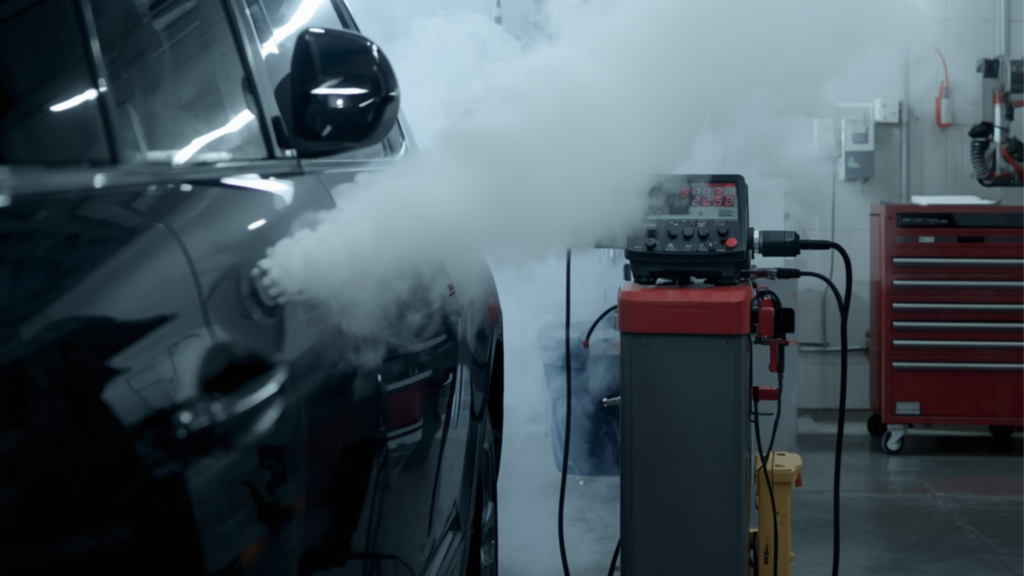
The test uses a device called an opacity meter to measure exhaust smoke.
Basic process:
- The probe is inserted into the exhaust pipe
- The engine is revved under controlled conditions
- The machine measures how much light is blocked by the smoke
- A reading is recorded as a percentage (%)
Example:
- Low % = clean exhaust
- High % = excessive smoke
Types of Diesel Smoke Tests
There are different testing methods depending on regulations and vehicle type.
1. Snap Acceleration Test
This is the most common method.
How it works:
- Engine is rapidly accelerated (revved)
- Smoke output is measured during acceleration
Used for:
- Trucks
- Buses
- Commercial diesel vehicles
2. Idle Test
- Measures smoke while the engine is idling
- Less common but used in some inspections
3. Loaded Test (Dynamometer Test)
- Vehicle is tested under load (driving simulation)
- Provides more accurate real-world results
What Is a Passing Result?
Each region has its own limits, but generally:
- 0–20% opacity → Excellent
- 20–40% → Acceptable
- Above 40% → May fail
If your vehicle exceeds the limit, it may require repairs before passing.
Common Reasons for High Smoke Levels
If your vehicle fails the test, here are common causes:
1. Dirty Air Filter
- Restricts airflow
- Causes incomplete combustion
2. Faulty Fuel Injectors
- Improper fuel spray
- Leads to excess smoke
3. Worn Engine Components
- Poor compression
- Inefficient burning of fuel
4. Turbocharger Issues
- Incorrect air-fuel ratio
5. Poor Quality Fuel
- Causes dirty combustion
6. Lack of Maintenance
- Carbon buildup over time
How to Prepare for a Diesel Smoke Test
To increase your chances of passing:
Before the test:
- Service your vehicle
- Replace air and fuel filters
- Use good quality diesel
- Check injectors and turbo
- Warm up the engine properly
A well-maintained vehicle is far more likely to pass.
What Happens If You Fail?
If your vehicle fails:
- You may need repairs
- A retest will be required
- You could face fines or restrictions
For fleets, repeated failures can impact operations and compliance.
Benefits of Passing the Test
Passing a diesel smoke test isn’t just about compliance.
Benefits include:
- Better fuel efficiency
- Lower maintenance costs
- Reduced engine wear
- Cleaner environment
- Improved vehicle performance
Who Needs Diesel Smoke Testing?
Typically required for:
- Commercial trucks
- Buses and school buses
- Diesel pickups (in some regions)
- Fleet vehicles
- Heavy-duty equipment
Mobile Diesel Smoke Testing
Many companies now offer mobile testing services, meaning they come to your location.
Advantages:
- Saves time
- No need to visit testing centers
- Convenient for fleets
Final Thoughts
A diesel smoke test is a simple but important way to ensure your vehicle is running cleanly and efficiently. It helps reduce pollution, improves engine performance, and keeps you compliant with regulations.
Regular maintenance and proper care are the keys to passing the test easily. Whether you manage a fleet or own a single diesel vehicle, staying on top of emission testing will save you money and trouble in the long run.