Developmental editing focuses on the core structure and substance of a manuscript. Instead of looking at individual sentences, it evaluates how well the entire book works as a cohesive piece. This includes narrative flow, organization, pacing, character development, and clarity of ideas. Industry data suggests that more than half of early-stage manuscripts especially from first-time authors require significant structural revision before they are ready for publication, which shows how essential this stage is. A developmental editor examines whether the story makes sense, whether chapters are logically arranged, and whether the content delivers value to the intended audience. For fiction, this often means strengthening plot arcs and deepening characters, while for nonfiction it involves refining arguments and improving clarity. Many professional book editors note that addressing these issues early can reduce total revision time significantly, often by up to 40%, because it prevents repeated rewrites later in the process.
What Is Proofreading?
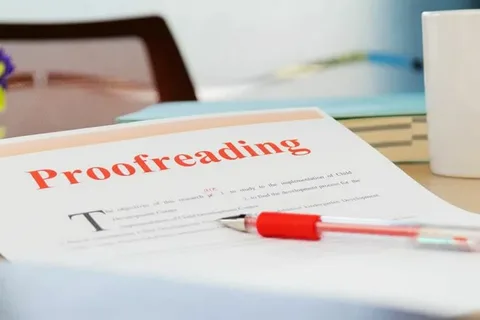
Proofreading is the final stage of editing and is primarily concerned with polishing the manuscript before publication. At this point, the content should already be complete and structurally sound. The goal is to eliminate surface-level errors that can distract readers or reduce credibility.
This process focuses on correcting grammar, punctuation, spelling, and formatting inconsistencies. Even well-written manuscripts can contain small errors; studies show that without proofreading, books may still have multiple mistakes per thousand words. These errors, while minor individually, can collectively impact reader perception. In fact, research indicates that a large percentage of readers notice typos and may judge the professionalism of a book based on them. Because of this, book editors emphasize proofreading as a non-negotiable step, particularly for self-published authors who do not have traditional publishing quality checks in place. It ensures that the final product is clean, consistent, and ready for readers.
Key Differences Between Developmental Editing and Proofreading
The primary difference between developmental editing and proofreading lies in their scope and purpose. Developmental editing operates at a macro level, shaping the manuscript’s overall structure and effectiveness, while proofreading works at a micro level, refining language and correcting technical errors.
Timing is another critical distinction. Developmental editing is done early in the writing process, often after the first or second draft, when major changes are still possible. Proofreading, on the other hand, is performed at the very end, just before publication. The level of intervention also differs significantly. Developmental editing may involve rewriting sections, reorganizing chapters, or even suggesting the removal or addition of content. Proofreading involves minimal changes, focusing only on correctness and consistency.
Data from publishing workflows shows that manuscripts that go through both stages are significantly more successful in terms of readability and reader satisfaction. Skipping either stage can leave a book either structurally weak or technically flawed.
Signs Your Book Needs Developmental Editing
A manuscript that requires developmental editing often shows signs of deeper structural or conceptual issues. One of the most common indicators is a lack of clear direction. If the story feels disjointed or the argument in a nonfiction book is hard to follow, it suggests that the foundation needs work. Research indicates that a large portion of readers abandon books early due to poor structure or confusing narratives.
Inconsistent pacing is another strong signal. Some sections may feel rushed, while others drag unnecessarily, making it difficult for readers to stay engaged. Similarly, weak or underdeveloped characters can reduce emotional connection, which is a key driver of reader retention in fiction. For nonfiction, unclear messaging or lack of focus can make the content less impactful.
Feedback from beta readers can also provide valuable insight. If multiple readers point out confusion, plot holes, or lack of engagement, it typically means the manuscript needs structural refinement rather than surface correction. Authors may also personally feel that something is “off” in the manuscript, even if they cannot pinpoint the issue. This instinct often aligns with the need for developmental editing.
In general, if major revisions are still being made or if the manuscript does not yet feel complete, proofreading would be premature. Addressing big-picture issues first ensures that later editing stages are more effective and efficient.
Signs Your Book Needs Proofreading
Proofreading becomes relevant when the manuscript is essentially finished and no longer requires major changes. At this stage, the focus shifts from improving content to ensuring accuracy and professionalism. A key sign is that the story or argument flows well and feels complete, but small errors are still present.
These errors often include minor grammar mistakes, punctuation issues, and typographical errors that can easily be overlooked during writing and revision. Formatting inconsistencies, such as uneven spacing or incorrect headings, are also common at this stage. While these issues may seem minor, they can significantly affect the reading experience.
Statistics show that professionally proofread books have a much lower error rate and tend to receive better reviews. Readers are more likely to trust and recommend books that appear polished and error-free. Even a few noticeable mistakes can disrupt immersion and reduce credibility.
Another sign that proofreading is needed is when the manuscript has already gone through earlier editing stages. After revisions, new errors can be introduced, making a final check essential. If feedback from others focuses only on small technical issues rather than content problems, it is a clear indication that proofreading is the appropriate next step.
Questions to Ask Yourself Before Choosing
Determining whether your book needs developmental editing or proofreading requires an honest evaluation of its current state. One of the most important questions to consider is whether the structure is complete and logical. If there are still uncertainties about the organization or flow, developmental editing is likely necessary.
It is also important to assess the type of revisions you are making. If you are still rewriting sections or making major changes, the manuscript is not ready for proofreading. Feedback from readers can provide further guidance. Comments about clarity, engagement, or structure point toward developmental editing, while feedback about grammar or typos suggests proofreading.
Another useful consideration is whether the issues you are facing are conceptual or technical. Conceptual problems involve the ideas, structure, or storytelling, whereas technical problems involve language and formatting. Understanding this distinction can help you choose the right type of editing.
Authors who accurately identify their editing needs tend to save both time and money, as they avoid investing in the wrong stage prematurely. This strategic approach leads to a more efficient editing process and a higher-quality final product.
Can You Need Both?
In most cases, both developmental editing and proofreading are necessary, but they should be done in sequence rather than as alternatives. Developmental editing comes first, ensuring that the manuscript is structurally sound and effective. Once those issues are resolved, proofreading provides the final layer of polish.
Publishing data shows that books that go through multiple editing stages perform better in terms of reader engagement and reviews. Skipping developmental editing can leave fundamental flaws that proofreading cannot fix, while skipping proofreading can result in a book that feels unprofessional despite strong content.
Each stage builds on the previous one, contributing to the overall quality of the book. Treating editing as a step-by-step process rather than a single task ensures that the manuscript reaches its full potential.
Conclusion
Understanding whether your book needs developmental editing or proofreading is essential for producing a high-quality manuscript. Developmental editing addresses the structure, clarity, and overall effectiveness of the content, while proofreading ensures that the final version is polished and free of errors. By recognizing the signs and evaluating your manuscript carefully, you can choose the right editing stage at the right time. This not only improves the quality of your work but also increases its chances of success in a competitive market, where both strong storytelling and professional presentation are critical.