custom app development cost
In today’s digital-first market, small businesses are increasingly investing in custom software solutions to improve operations, customer experience, and scalability. Whether it’s a CRM system, mobile application, inventory platform, or customer portal, custom solutions help businesses stand out in competitive industries.
However, one of the biggest questions business owners ask is: How much does custom software development cost for small businesses?
The answer depends on several factors, including project complexity, features, development time, and technology stack. In this guide, we’ll break down the real costs, pricing factors, and ways to reduce development expenses while maximizing ROI.
What is Custom Software Development?
Custom software development is the process of designing and building software tailored specifically to a business’s needs. Unlike off-the-shelf software, custom solutions are personalized to fit workflows, operational goals, and customer requirements.
Examples include:
- CRM systems
- Booking platforms
- ERP software
- Mobile applications
- E-commerce solutions
- Customer management portals
While ready-made software may appear cheaper initially, custom solutions provide better flexibility, scalability, and long-term value.
Average Custom Software Development Cost in 2026
The custom software development cost varies depending on project size and complexity. Here’s a general pricing estimate for small businesses:
| Software Type | Estimated Cost |
| Basic Business Software | $5,000 – $15,000 |
| Medium Complexity App | $15,000 – $50,000 |
| Enterprise-Level Software | $50,000 – $200,000+ |
A simple internal management system costs significantly less than a feature-rich enterprise platform with AI integrations, payment gateways, and advanced analytics.
Similarly, custom app development cost is much higher because enterprise solutions require stronger security, scalability, and integration capabilities.
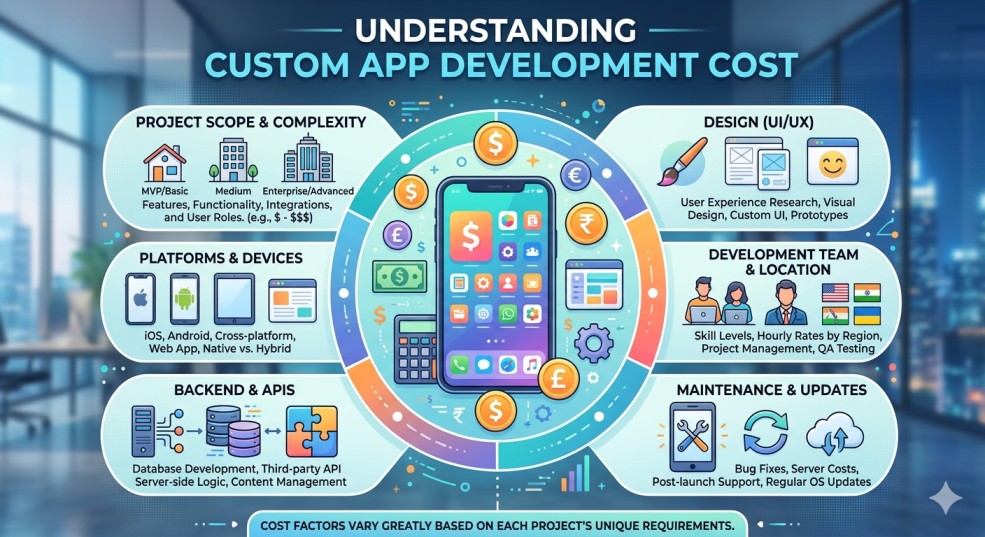
Factors That Affect Custom App Development Cost
Several elements directly influence the final development budget.
1. Project Complexity
Simple applications with limited features cost less, while advanced platforms with automation, dashboards, APIs, and real-time data require more resources.
2. Features and Functionalities
The more features you add, the higher the development cost. Features like:
- User authentication
- Payment integration
- Push notifications
- Live chat
- AI tools
increase pricing significantly.
3. UI/UX Design
A clean and user-friendly interface improves customer engagement but also adds to design and development time.
4. Technology Stack
Modern technologies like React Native, Flutter, Node.js, and cloud infrastructure affect pricing based on development expertise and scalability.
5. Development Team Location
Hiring developers in North America or Europe is usually more expensive than outsourcing to experienced agencies in Asia.
6. Maintenance and Support
Software development doesn’t end after launch. Businesses must budget for updates, bug fixes, and security maintenance.
Mobile App Development Pricing Explained
Many small businesses today prioritize mobile apps to improve customer engagement and accessibility.
Here’s a general breakdown of mobile app development pricing:
| App Type | Estimated Cost |
| Basic App | $10,000 – $25,000 |
| Medium Complexity App | $25,000 – $60,000 |
| Advanced Mobile App | $60,000 – $150,000+ |
Native vs Cross-Platform Development
- Native Apps (Android or iOS separately) offer better performance but higher costs.
- Cross-platform apps built with Flutter or React Native reduce development costs and launch time.
For small businesses, cross-platform development is often the most cost-effective solution.
Custom Software vs SaaS: Which is Better?
Small businesses often compare custom software with SaaS (Software as a Service) platforms.
SaaS Advantages
- Lower upfront cost
- Faster setup
- Subscription-based pricing
Custom Software Advantages
- Full ownership
- Better scalability
- Personalized features
- Improved security
- Long-term cost efficiency
Although SaaS tools seem affordable initially, monthly subscription fees and feature limitations can become expensive over time.
Custom software offers greater flexibility and business control, especially for growing companies.
Hidden Costs in Custom Software Development
One mistake many businesses make is only budgeting for the initial build.
Additional expenses may include:
- Hosting and cloud services
- API integrations
- Software licensing
- Security updates
- Maintenance support
- Feature upgrades
- Staff training
Understanding these hidden expenses helps businesses avoid unexpected costs later.
How Small Businesses Can Reduce Development Costs
Custom software doesn’t always need a massive budget. Here are practical ways to lower development costs:
Start with an MVP
Build a Minimum Viable Product (MVP) with core features first. This reduces initial investment and allows faster market testing.
Prioritize Essential Features
Avoid adding unnecessary functionalities during the first phase.
Use Cross-Platform Technologies
Frameworks like Flutter and React Native reduce both time and cost.
Outsource to Experienced Agencies
Working with reliable software development companies can provide high-quality solutions at competitive rates.
Choose Scalable Technologies
Scalable architecture prevents costly redevelopment in the future.
Cost Breakdown by Development Stage
Understanding where your budget goes is important for planning.
| Development Stage | Cost Percentage |
| Planning & Research | 10% |
| UI/UX Design | 15% |
| Development | 40% |
| Testing | 15% |
| Deployment | 10% |
| Maintenance | 10% |
Development itself takes the largest share because coding, integrations, and backend infrastructure require significant effort.
How an App Development Cost Calculator Helps
An app development cost calculator helps businesses estimate project budgets based on:
- App complexity
- Features
- Platform selection
- Development timeline
- Design requirements
While online calculators provide rough estimates, the final cost usually depends on custom business needs and technical requirements.
Consulting with an experienced software development company gives more accurate pricing.
Outsourcing vs In-House Development
Many small businesses struggle to choose between hiring an internal team or outsourcing development.
In-House Development
- Higher hiring costs
- Infrastructure expenses
- Longer recruitment process
Outsourcing Development
- Lower operational costs
- Access to experienced developers
- Faster project delivery
- Flexible scalability
For startups and small businesses, outsourcing is often the smarter and more affordable option.
Choosing the Right Software Development Company
Selecting the right development partner is crucial for project success.
Look for a company with:
- Strong portfolio
- Industry experience
- Transparent pricing
- Clear communication
- Post-launch support
A trusted technology partner like Space To Tech can help businesses build scalable and cost-effective software solutions tailored to their goals.
Final Thoughts
The custom software development cost for small businesses depends on multiple factors, including features, complexity, technology stack, and development approach.
While pricing may range from a few thousand dollars to enterprise-level investments, custom software delivers long-term business value through automation, scalability, and improved customer experience.
Instead of focusing only on upfront cost, businesses should evaluate ROI, operational efficiency, and future growth opportunities.
If you’re planning to build custom software or a mobile application, Space To Tech can help you estimate the right budget and develop a solution tailored to your business needs.