The plumbing industry has undergone significant changes over the past decade. As buildings become more complex and construction professionals focus on long-term performance, the demand for advanced piping solutions continues to grow.
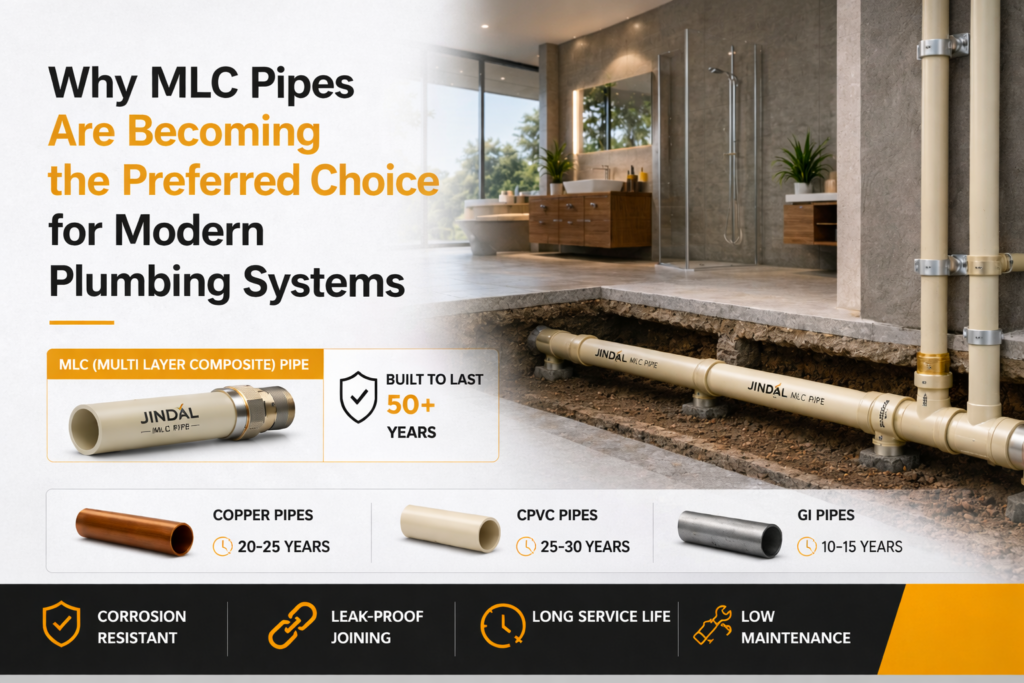
One technology gaining widespread attention is the MLC (Multilayer Composite) pipe. By combining the advantages of metal and plastic materials, MLC pipes offer a balance of durability, flexibility, corrosion resistance, and pressure performance that traditional piping systems often struggle to achieve.
As a result, many builders, consultants, and plumbing contractors are increasingly considering MLC pipes for modern residential and commercial projects.
Why Traditional Plumbing Materials Face Limitations
For many years, plumbing systems primarily relied on materials such as GI, copper, PVC, and CPVC. While these materials remain useful in specific applications, modern buildings often demand greater reliability and lower maintenance over longer periods.
Several common challenges can affect traditional piping systems:
- Corrosion and rust formation
- Scaling inside pipes
- Thermal expansion and contraction
- Leakage at joints
- Increased maintenance requirements
- Reduced efficiency over time
These concerns have encouraged the industry to adopt newer technologies designed to address long-term infrastructure challenges.
What Are MLC Pipes?
MLC pipes, or Multilayer Composite Pipes, are engineered using multiple layers of material, typically a PE-AL-PE structure.
This design combines:
- Inner polyethylene layer for smooth water flow
- Aluminium core for strength and dimensional stability
- Outer polyethylene layer for protection and durability
The result is a piping system that combines the flexibility of plastic with the structural advantages of metal.
According to the International Organization for Standardization (ISO), multilayer piping systems are increasingly used in modern construction because of their ability to provide consistent performance under varying operating conditions.
Better Resistance to Corrosion
Corrosion is one of the leading causes of plumbing deterioration worldwide. Metal pipes exposed to water over long periods can develop rust and internal scaling, affecting both performance and water quality.
MLC pipes are designed to eliminate many of these concerns because water flows through a corrosion-resistant inner layer.
Benefits of corrosion resistance:
- Cleaner water flow
- Reduced maintenance requirements
- Improved system lifespan
- Lower risk of internal blockages
The World Health Organization (WHO) continues to emphasize the importance of reliable water infrastructure and durable plumbing systems for maintaining long-term water quality.
Improved Performance Under Pressure
Modern plumbing systems are expected to handle varying pressure conditions throughout their lifespan.
Pressure fluctuations can place continuous stress on pipes, fittings, and connections. Over time, this may increase the risk of leakage and maintenance issues.
MLC pipes are often selected because they offer:
- High pressure resistance
- Better dimensional stability
- Reduced stress on joints
- Reliable long-term performance
This makes them particularly useful in high-rise residential and commercial buildings where pressure management is critical.
Reduced Thermal Expansion
One challenge associated with some traditional plastic piping systems is thermal expansion.
When pipes repeatedly expand and contract due to temperature changes, stress can develop around supports and fittings.
MLC pipes incorporate an aluminium layer that helps reduce thermal movement.
Advantages include:
- Improved dimensional stability
- Better performance in hot and cold water systems
- Reduced strain on fittings
- Enhanced long-term reliability
These characteristics make MLC technology suitable for a wide range of plumbing applications.
Why Installation Efficiency Matters
Construction projects increasingly prioritize systems that can improve productivity without compromising quality.
Compared to heavier traditional materials, MLC pipes offer practical installation advantages.
Installation benefits:
- Lightweight handling
- Easier transportation
- Faster installation
- Reduced labor effort
- Greater flexibility during routing
These factors can help improve overall project efficiency.
The Importance of Reliable Fittings
Even the most durable pipe system depends on the quality of its connections.
Industry experience shows that many plumbing failures begin at joints rather than within the pipe itself.
This is why modern plumbing systems increasingly use advanced fitting technologies designed to improve sealing consistency and reduce leakage risks.
Reliable fittings can help:
- Improve system durability
- Reduce maintenance frequency
- Support long-term performance
- Enhance connection reliability
Modern multilayer composite pipe solutions are often paired with high-quality connection systems to maximize plumbing performance and lifecycle value.
Growing Adoption Across Modern Construction Projects
As awareness of lifecycle costs increases, MLC pipes are being specified in a growing number of applications.
Common use cases include:
- Residential buildings
- Commercial complexes
- High-rise developments
- Hot and cold water systems
- Gas distribution networks
- Industrial piping applications
Modern MLC pipe systems have become an important part of discussions around long-term plumbing performance and infrastructure reliability.
Manufacturers such as Jindal Tubes have contributed to the growing adoption of multilayer piping technology in India through solutions designed for modern plumbing requirements. Industry professionals researching advanced MLC piping systems often evaluate factors such as pressure handling, corrosion resistance, and long-term maintenance requirements before selecting a plumbing solution.
MLC Pipes vs Traditional Pipe Materials
| Feature | MLC Pipes | GI Pipes | PVC/CPVC Pipes |
| Corrosion Resistance | Excellent | Poor | Good |
| Pressure Stability | High | High | Moderate |
| Thermal Expansion | Low | Low | Higher |
| Maintenance Requirement | Low | High | Medium |
| Lifespan | 50+ Years | Lower in corrosive conditions | Moderate |
FAQs
Why are MLC pipes becoming more popular?
MLC pipes offer a combination of corrosion resistance, pressure stability, reduced thermal expansion, and long service life, making them suitable for modern construction projects.
Can MLC pipes be used for hot and cold water systems?
Yes. MLC pipes are commonly used in both hot and cold water applications due to their temperature and pressure performance.
Do MLC pipes rust?
No. The inner water-carrying layer is corrosion resistant, helping prevent rust formation.
Are MLC pipes suitable for high-rise buildings?
Yes. Their pressure handling capabilities and dimensional stability make them a popular choice in high-rise plumbing systems.
Final Insight
The growing preference for MLC pipes reflects a broader shift within the construction industry toward durability, efficiency, and lifecycle value. Rather than focusing solely on upfront costs, builders and consultants increasingly evaluate how plumbing systems will perform over several decades.
As infrastructure expectations continue to evolve, multilayer composite pipes are becoming an important solution for projects seeking reliable performance, lower maintenance requirements, and long-term operational efficiency. For those exploring modern plumbing technologies, resources from manufacturers and organizations such as the WHO and ISO provide valuable insights into evolving industry practices and performance standards.