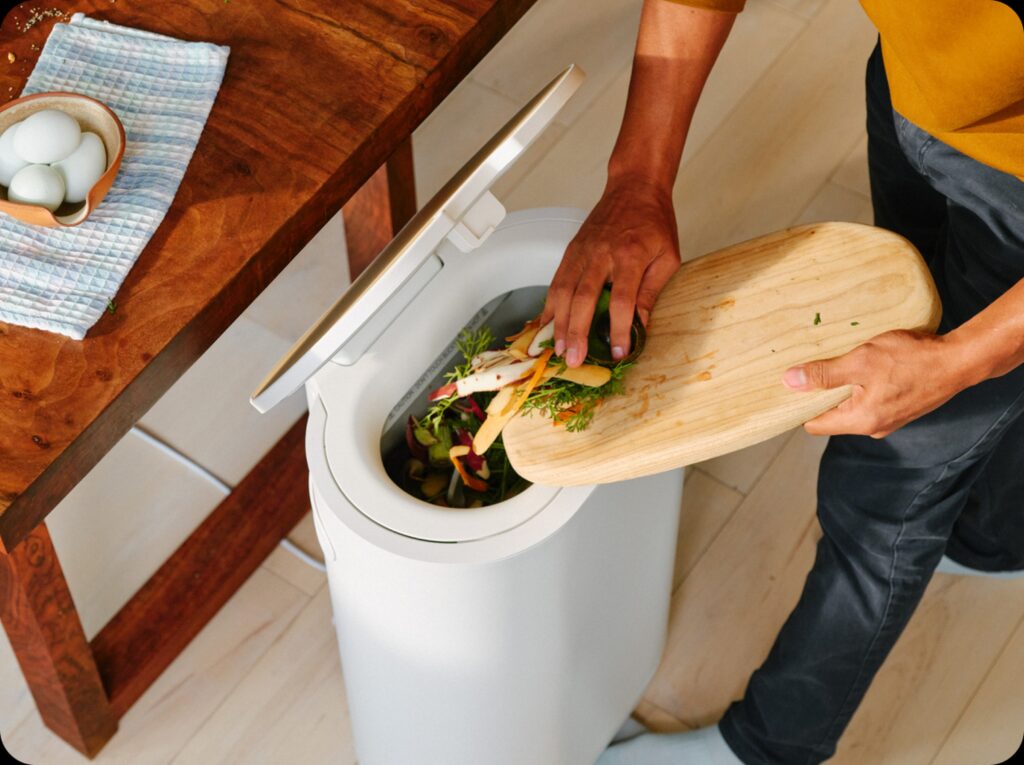
Two appliances can take the same handful of vegetable peels and send them to completely different destinations. One flushes them down the drain. The other transforms them into something you can feed your garden. Choosing between a garbage disposal and a food recycler is really a choice about where your scraps end up and what, if anything, you get back.
Both promise to solve the same daily nuisance of food waste piling up in the kitchen. But they solve it in different ways, and that difference is worth understanding before you commit counter or sink space to either.
How a Garbage Disposal Actually Handles Waste
A garbage disposal sits under your sink and shreds scraps into tiny particles that wash down the drain with running water. It is fast and invisible, and the mess is gone in seconds. From there, the slurry travels into the wastewater system, where it is treated alongside everything else that goes down household drains. The scraps leave your home entirely, along with a steady amount of water used to flush them through.
How A Food Recycler Handles The Same Scraps
An automatic composter takes a closed-loop approach. Instead of sending scraps away, it processes them in a sealed chamber using heat, grinding, and airflow, reducing them to a dry, nutrient-rich soil amendment. A soil amendment is simply a material you mix into soil to improve it, feeding plants and helping the ground hold nutrients. You can work it into garden beds, stir it into a potting mix, or spread it lightly over a lawn.
Convenience matters most to people without yards or time to manage a backyard pile. Everything happens indoors, on a countertop, with no turning, no pests, and no waiting through seasons. You feed the machine, let it run, and collect a finished product ready to nourish whatever you grow.
The Environmental Math
The two paths carry different costs. A disposal relies on water and shifts the load to wastewater treatment. Sending food scraps to a landfill, the other common path, lets them rot without oxygen and release methane. A food recycler avoids both outcomes by keeping scraps out of the drain and the dump, cutting the volume of what you discard and returning the material to the soil instead. The reduction in waste volume is substantial, often the large majority of what you put in.
Convenience, Noise, And Counter Space Compared
Here, the disposal has clear advantages. It takes no counter space, makes quick work of scraps, and asks nothing of you afterward. A recycler is larger, occupies more counter space, and runs a cycle that takes hours rather than seconds. It also runs quietly and seals in odor, but it does ask for a little patience and a little room in exchange for what it produces.
The tradeoff is less stark than it first appears. A disposal saves seconds at the sink but offers nothing beyond that moment, while a recycler trades a slot on the counter for an ongoing supply of usable material. Modern countertop units are also far quieter than the grinding roar of a disposal, and because they keep scraps sealed until a cycle ends, the kitchen stays free of the smell that loose food waste tends to spread.
Which One Fits Your Household?
The right choice depends on how you live. Renters without outdoor space and no interest in plants may find disposal simpler. Gardeners and eco-conscious families usually lean the other way, drawn to the idea of feeding their soil rather than their drain. If the thought of turning tonight’s peels into next month’s tomatoes appeals to you, the recycler is the appliance that delivers it.
It is also worth weighing the long view rather than the first impression. A disposal wins on instant convenience, but its job ends the moment the scraps disappear. An automatic composter asks for a bit more space and patience, then keeps giving back batch after batch in the form of material your plants can use. For a household that grows anything at all, that return changes the math entirely, turning a daily disposal task into a small, renewable source of food for the soil. The disposal makes waste vanish; the recycler makes it useful, and that distinction is what most people are really deciding between.